Choosing when to visit Uluwatu can make a significant difference to your trip. Whether you want glassy surf, golden sunsets, or simply dry days on the cliff, the timing matters in ways that are not always obvious from a simple weather forecast.
SatuSatu, a Bali travel platform that helps travelers discover and book experiences across the island, puts together this guide so you arrive knowing exactly what to expect.
Uluwatu’s Climate at a Glance
Uluwatu sits on the southern tip of the Bukit Peninsula in Bali, right on the edge of the Indian Ocean. Its position on elevated limestone cliffs means it catches more wind than coastal areas like Seminyak or Kuta, which actually makes it feel fresher and slightly cooler even when temperatures are technically the same.
The area has a tropical savanna climate, classified as Aw under the Koppen-Geiger system. Year-round temperatures are consistent and warm. Daytime highs sit between 27 and 31 degrees Celsius throughout the year, with the warmest month typically being November and the coolest being August.
Night temperatures drop to around 21 to 23 degrees Celsius, which is pleasant for sleeping and makes evenings comfortable without air conditioning for many travelers.
The Dry Season: May to October
The dry season is broadly considered the best time to visit Uluwatu, and for good reason. Rainfall is minimal, sunshine is consistent, and the southeast trade winds bring cooler, drier air across the Bukit Peninsula.
July and August are the driest months, with August averaging only around 36 to 38 millimeters of rainfall across the entire month and many days without any rain at all.
Importantly for surfers, the dry season also coincides with the best swells. The south and southwest swells that drive Uluwatu’s famous breaks peak between June and September.
Experienced surfers specifically time their trips around these months for the most reliable and powerful waves at breaks like Uluwatu, Padang Padang, and Bingin. One thing to be aware of: July and August bring strong winds, particularly in the afternoons.
This is not uncomfortable but it does mean the ocean surface can be choppy for snorkeling, and dining at clifftop restaurants will involve a noticeable breeze. Pack a light layer for evening meals outdoors.
The Wet Season: November to April
Wet season does not mean the whole trip is rained out. Bali’s wet season typically brings shorter bursts of heavy rain in the afternoon or evening, followed by clear skies. Many days during wet season are perfectly pleasant, especially in the mornings.
However, January is the wettest month, with averages of around 265 to 285 millimeters of rainfall and up to 19 to 20 rainy days in the month. February and December are also significantly wet.
Uluwatu’s clifftop location actually gives it slightly lower rainfall than the interior of Bali. The Bukit Peninsula’s dry limestone terrain drains quickly, and the elevated position catches fewer of the cloud formations that bring heavier rain to places like Ubud.
That said, wet season storms can be dramatic, and cliff-edge dining during heavy downpours is not ideal.
The upside to visiting in shoulder months like November or March is that crowd levels are noticeably lower, accommodation prices drop significantly, and the landscape is lush and green.
The famous Uluwatu Temple looks particularly dramatic against dark monsoon skies. Travel insurance and flexible booking policies are a good idea for wet season travel.
What the Surf Looks Like Year-Round
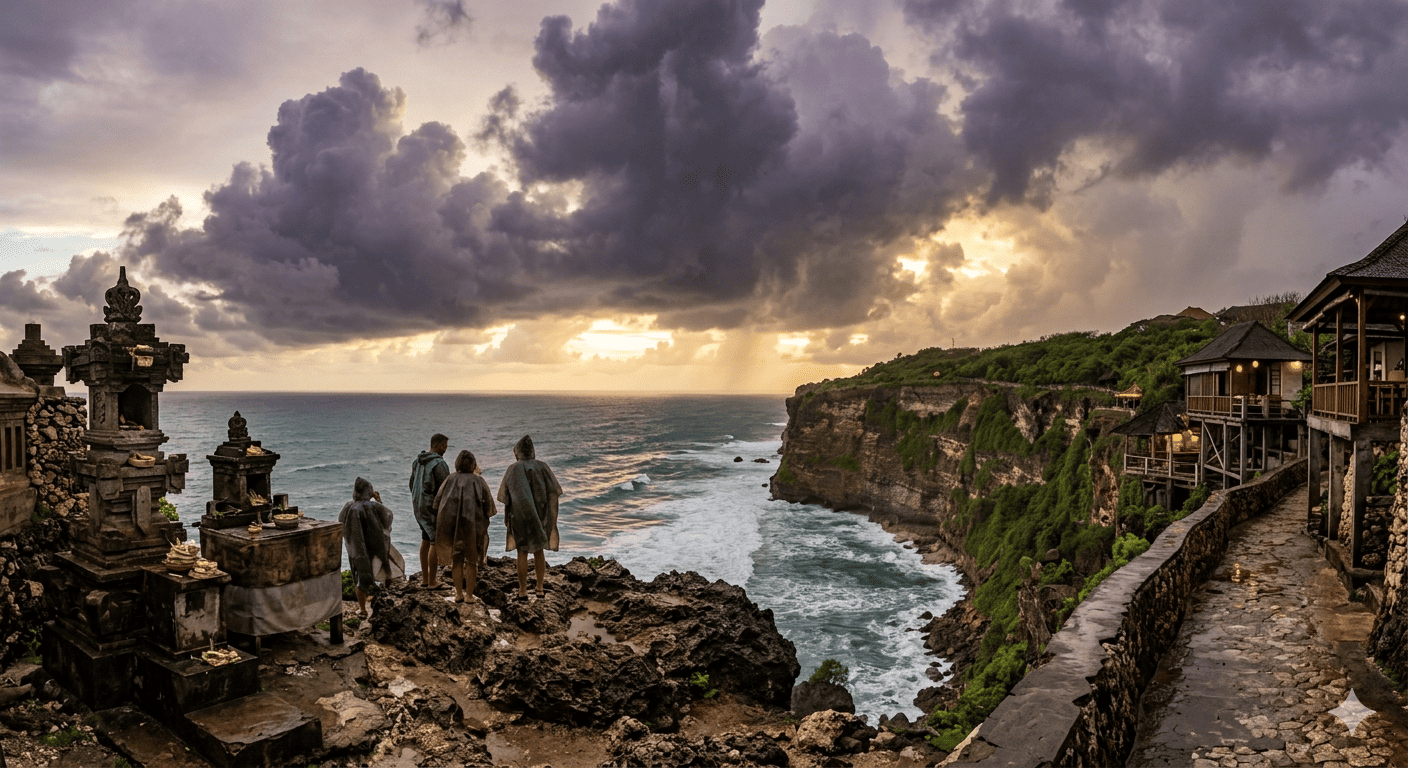
Uluwatu is one of the most famous surf spots in the world, and weather planning for surfers is slightly different from beach holiday planning. The Bukit Peninsula faces the open Indian Ocean to the south and southwest, which means it picks up swells year-round.
However, the peak window for consistent, powerful surf is May through September, when the Southern Hemisphere winter generates large south swells.
During the wet season, surf can still be excellent, but it is more inconsistent. Conditions change more rapidly, onshore winds can affect wave quality, and sudden storms can close out the breaks.
Beginners and intermediate surfers may find the dry season more manageable for this reason. Experienced surfers willing to track swell forecasts can find incredible, uncrowded surf in the wet season if they time it right.
Practical Tips for Every Season
Sunscreen is essential year-round. Uluwatu’s elevation and the reflective surface of the Indian Ocean mean UV exposure is high even on overcast days.
Lightweight, breathable clothing works for most of the year, with a light layer for evening cliff-side dining in the windy months. A rain jacket or small umbrella is worth packing for wet season travel.
Water temperature in Uluwatu ranges from around 25 to 26 degrees Celsius in August, the coolest month, to around 29 degrees Celsius in January and March.
It is comfortable for swimming year-round, though the limestone reef breaks that make Uluwatu famous also mean that most of the best surf spots are not particularly suited for casual swimming. Stick to beaches like Bingin or Padang Padang for a proper swim.
Explore Uluwatu Further with SatuSatu
Planning a trip to Uluwatu and want every detail sorted before you land? SatuSatu.com is a Bali travel platform that makes getting around and experiencing Uluwatu straightforward, from airport arrivals to sunset performances, bookable directly with local payment methods.
One experience that works in every season is the Uluwatu Temple Kecak and Fire Dance, a SatuSatu Curated Experience. Held at the clifftop amphitheater at Pura Luhur Uluwatu every evening at sunset, this is Bali’s most iconic cultural performance with chanting, fire, and the backdrop of the Indian Ocean.
Same-day booking is available, a bonus merchandise pack is included, and it has sold over 1,000 tickets through SatuSatu.
The SatuSatu Airport Transfer covers the 40 to 50-minute drive from Ngurah Rai International Airport to the Bukit Peninsula with transparent pricing and no haggling.
For exploring beyond your accommodation, the SatuSatu Exclusive Car Charter provides a dedicated local driver for day trips across Uluwatu, the Bukit Peninsula, or further afield. All bookings are made directly on SatuSatu.com with support for BCA, Mandiri, OVO, DANA, credit cards, and more.
FAQ About Uluwatu Weather
What is Uluwatu weather like year-round?
Uluwatu has a warm tropical climate year-round with daytime temperatures between 27 and 31 degrees Celsius. The dry season runs from May to October with minimal rainfall, and the wet season from November to April brings more frequent but often short afternoon rain showers.
What is the best month to visit Uluwatu?
July and August are considered the best months for dry weather, consistent sunshine, and peak surf conditions. May, June, September, and October are also excellent and slightly less crowded.
Does it rain a lot in Uluwatu?
In the dry season, rainfall is very low, especially in August. In the wet season, rain is more frequent but typically comes in short afternoon bursts rather than all-day downpours.
How hot does it get in Uluwatu?
Daytime highs range from around 27 to 31 degrees Celsius. The clifftop location and sea breeze mean Uluwatu often feels cooler than other parts of Bali at the same temperature.
Is Uluwatu windy?
Yes, particularly between June and August. The southeast trade winds are noticeable on the cliffs and at beachside restaurants. They make the heat more bearable but can create choppy sea conditions.