Every year on the eve of Nyepi, the streets of Bali transform into a procession of towering, grimacing demon effigies paraded through villages in an explosion of colour, drumming, and fire.
These are ogoh-ogoh, the elaborate hand-crafted monsters that represent the negative spirits the Balinese seek to purge before their day of silence. The Ogoh-Ogoh Bali Museum is the only dedicated space on the island where you can see these extraordinary creations up close, outside the frenzy of the annual parade.
SatuSatu, a Bali travel platform that helps travelers discover and book experiences across the island, recommends this museum for anyone who wants to understand Balinese culture on a deeper level. It is one of the island’s most distinctive and undervisited cultural attractions.
What is The Ogoh-Ogoh Bali Museum?
The Ogoh-Ogoh Bali Museum is a cultural institution dedicated to the preservation and display of ogoh-ogoh, the giant papier-mache and bamboo sculptures created by Balinese communities each year for the Nyepi parade.
The museum houses a permanent collection of past ogoh-ogoh from various years and regions, giving visitors the rare chance to study these intricate works of folk art in a calm, accessible environment.
Beyond the physical displays, the museum also provides context about the spiritual meaning of ogoh-ogoh, the community effort involved in their creation, and their role in the broader Nyepi and Hindu Balinese calendar.
For anyone curious about Balinese art, craft, and religion, this is one of the most educational stops you can make on the island.
Location and How to Get There
The Ogoh-Ogoh Bali Museum is located in Bali, making it accessible from most tourist areas on the island. The exact location is best confirmed by searching the museum directly online before your visit, as it draws visitors from both the southern resort areas and the central highlands.
The museum is most easily reached by private car or chartered vehicle. A driver from Seminyak or Kuta would typically take 30 to 45 minutes depending on traffic and the exact location. From Ubud, travel times vary but typically fall within a similar range.
Arranging a dedicated car charter for the day is the most practical way to combine the museum with other cultural stops.
Entry Options and Pricing
Entry to the Ogoh-Ogoh Bali Museum is typically priced affordably, consistent with other small to mid-size cultural museums in Bali. Prices may vary and are best confirmed directly with the museum before your visit, as they can change with seasonal promotions or updates to the admission structure.
The museum does not operate like a large commercial attraction. It functions more like a community cultural space, which is part of what gives it its genuine, unpolished character. Photography is generally permitted, though visitors are encouraged to be respectful of the ceremonial significance of the objects on display.
Top Facilities and Highlights
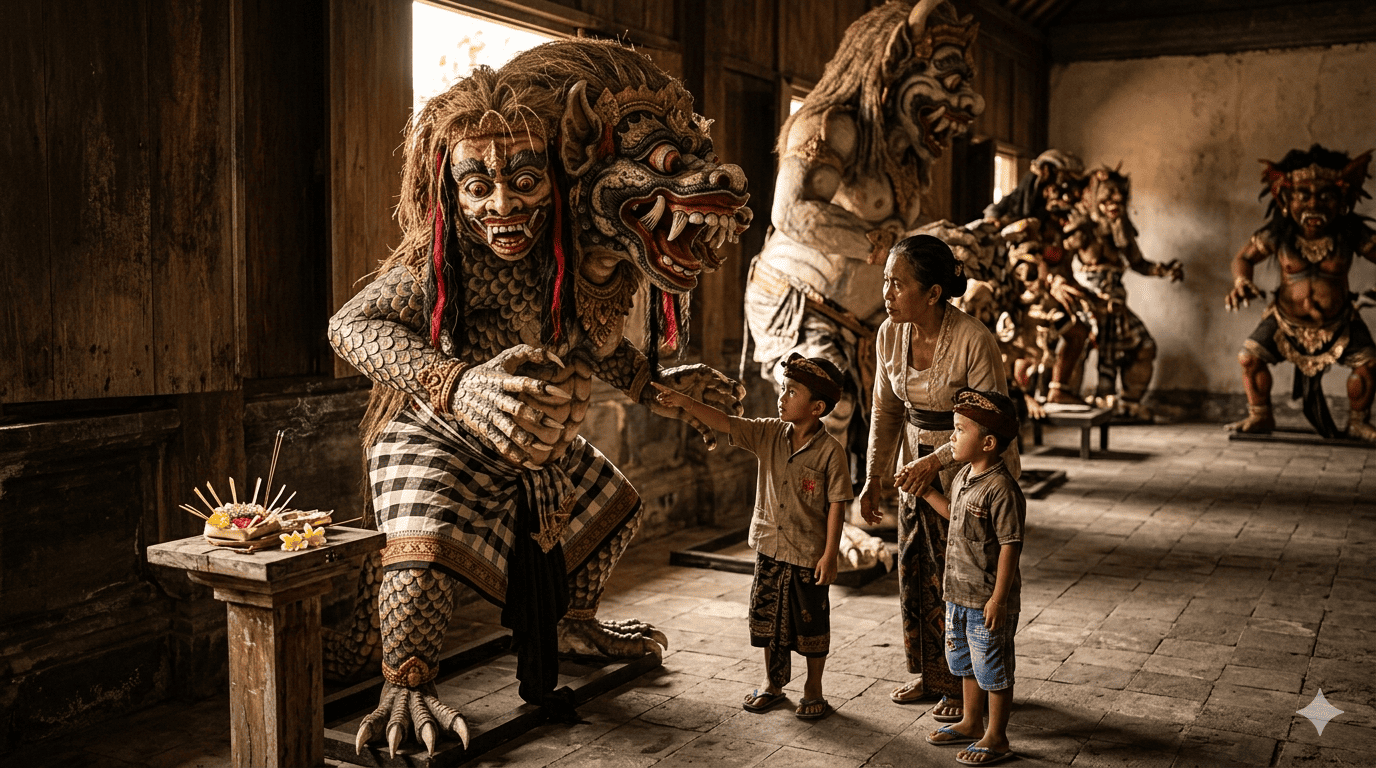
- Permanent Ogoh-Ogoh Collection: The museum’s core collection features ogoh-ogoh from different years and different villages, allowing visitors to compare styles, sizes, and thematic approaches across Bali’s diverse communities.
- Cultural and Spiritual Context: Display information explains the significance of ogoh-ogoh within the Balinese Hindu calendar, Nyepi, and the concept of Bhuta Kala (dark spirits) that the effigies represent.
- Community Craft Showcase: The museum celebrates the extraordinary craftsmanship involved in making ogoh-ogoh, from bamboo framing to detailed painting, helping visitors appreciate the months of community effort behind each sculpture.
- Photography Opportunities: The scale and detail of the ogoh-ogoh make this one of the most photogenic indoor cultural experiences available in Bali.
- Educational Value for All Ages: The museum works well for curious adults and children alike, providing a tangible and visually engaging way to learn about Balinese traditions.
What Makes It Special
The ogoh-ogoh parade during Nyepi eve is one of the most spectacular public events in Bali, but it lasts only one evening and attracts enormous crowds.
The museum gives you the rare opportunity to stand directly in front of these creations at your own pace, to notice the hand-painted scales on a demon’s body, the individual strands of hair made from dyed fibres, and the expressive faces that Balinese artists have been perfecting for generations.
There is also something quietly moving about understanding the community behind the art. Ogoh-ogoh are not made by professionals in a factory.
They are built by groups of young men from each banjar (village community unit), who spend months planning, constructing, and decorating their creation. The museum carries this human story alongside the visual spectacle.
Explore The Ogoh-Ogoh Bali Museum Further with SatuSatu
For travelers fascinated by Balinese culture and ceremony, SatuSatu.com offers a full range of curated experiences and transport to help you explore the island’s traditions more deeply.
SatuSatu is a Bali travel platform that makes it easy to discover and book authentic experiences with the convenience of local payment support. Pair your museum visit with the Uluwatu Temple Kecak and Fire Dance, one of SatuSatu’s most popular experiences with over 1,000 tickets sold.
Set at the clifftop Uluwatu Temple at sunset, this performance draws directly from the same Hindu Balinese cosmology that gives ogoh-ogoh their meaning, making it a natural companion experience.
For seamless travel between Bali’s cultural sites, the SatuSatu Exclusive Car Charter provides a dedicated local driver and fully flexible routing, ideal for combining the museum with other stops in the same day.
And for a stress-free start to your Bali trip, the SatuSatu Airport Transfer handles your pickup from Ngurah Rai International Airport with transparent pricing and no negotiation.
All bookings are made directly on SatuSatu.com which supports BCA, Mandiri, OVO, DANA, credit cards, and more.
FAQ about The Ogoh-Ogoh Bali Museum
What is the Ogoh-Ogoh Bali Museum?
The Ogoh-Ogoh Bali Museum is a cultural institution dedicated to displaying and preserving ogoh-ogoh, the giant demon effigies handcrafted each year for Bali’s Nyepi eve parade.
What is an ogoh-ogoh?
An ogoh-ogoh is a large papier-mache and bamboo effigy depicting demonic or supernatural beings from Balinese Hindu mythology, created annually by community groups for the Pengerupukan parade the night before Nyepi.
When is the best time to visit the Ogoh-Ogoh Bali Museum?
The museum can be visited year-round, though visiting before or after Nyepi season adds cultural context. In the weeks before Nyepi (usually in March), communities across Bali will be building fresh ogoh-ogoh, which can be seen in village courtyards.
Is the Ogoh-Ogoh Bali Museum suitable for children?
Yes, though younger children may find the large demonic figures startling. The sculptures are visually dramatic, so parental guidance on the cultural context is helpful.
Do I need to book in advance to visit?
Advance booking is not always required, but checking directly with the museum before your visit is recommended to confirm opening hours and admission.