There are places in this world that make you feel like you have genuinely stepped off the edge of the known map. Baliem Valley Resort is one of them.
Perched at around 1,900 meters above sea level in the highlands of West Papua, the resort sits at the rim of a vast valley, and on clear mornings the view from your bungalow window over the Baliem Valley floor, with Wamena town just visible in the distance and the Jayawijaya Mountains rising behind it, is the kind of thing that stays with you long after you return home.
SatuSatu is a Bali travel platform, and while Baliem Valley is a Papua experience rather than a Bali one, many travelers making the journey to this remote part of Indonesia begin or end their trip through Bali’s Ngurah Rai Airport, making it a natural destination for the SatuSatu audience seeking Indonesia’s most extraordinary adventures.
What Is Baliem Valley Resort?
Baliem Valley Resort is the premier accommodation in the Baliem Valley region of West Papua, Indonesia. It is the only lodging in the area that offers genuine resort-level comfort in what is otherwise a very remote and underdeveloped destination.
The resort is owned and operated by Papua Explorer, a local travel company that has been running guided cultural expeditions in the highlands for over 20 years.
The property covers more than 1,000 hectares of private land left in its natural state, which means guests are effectively living on the edge of intact highland forest and traditional Dani tribal villages.
The resort consists of 15 bungalows, each designed in the traditional Honai style of the Dani people: round structures with thatched grass roofs and large picture windows that frame the valley below.
The interiors combine these traditional forms with modern comforts, including handmade wooden furniture, natural stone bathroom walls, hot-water showers, and double beds with clean linens and multiple blankets, which are needed as temperatures drop considerably after dark.
What makes Baliem Valley Resort genuinely special is not the facilities in isolation. It is the complete package: the unobstructed 180-degree view of one of the most remote inhabited valleys on earth, the access to Dani tribal culture and ceremonial life, and the rare feeling of being somewhere very few travelers have ever been.
Location and Getting There
The resort is located in Sekan Village, approximately 20 to 21 kilometers from Wamena, the main town in the Baliem Valley.
The journey from Wamena to the resort takes about 40 to 45 minutes by road, and it is worth knowing that a portion of the road, particularly the final stretch closer to the property, is unpaved and rough. Four-wheel-drive vehicles are essential.
To reach Wamena, you must fly from Jayapura, the capital of Papua province. Jayapura is served by direct flights from major Indonesian cities. From Jayapura, WingsAir and Trigana Air operate regular flights to Wamena’s Wamena Airport.
As a general rule, you should aim to arrive in Jayapura before 2pm to catch a connecting flight to Wamena on the same day. Resort staff typically arrange airport pickup from Wamena directly.
One important requirement for visiting: all foreign nationals wishing to travel to Papua and the Baliem Valley must obtain a special travel permit called a Surat Jalan.
The application process can take time, and Baliem Valley Resort arranges this permit for guests as part of the booking process. This is a critical step that cannot be skipped.
The Bungalows and Stay Experience
The 15 bungalows are all positioned to face the valley, and the view is the centerpiece of every room. The round Honai-style design means the layout is compact, but the bungalows feel spacious thanks to the large terrace with sun chairs and a table, the high thatched ceilings, and the floor-to-ceiling windows.
Bathrooms are fitted with natural stone walls, hand-carved wooden fixtures, and excellent hot water showers. WiFi is available in the restaurant and lobby area, where the connection is described by multiple guests as reliable.
The bungalows themselves do not have WiFi access, but a Telkomsel SIM card with 4G coverage works well throughout the property. Electricity is connected to the Indonesian national grid, though occasional cuts do occur, a minor reality of life this far from urban infrastructure.
Guests booking through Papua Explorer typically choose from package options, which include accommodation, all meals, guide services, and selected cultural activities.
The resort can only accept payments in Indonesian Rupiah cash, so guests should plan accordingly and bring sufficient funds from Jayapura, where ATMs are more reliably available. Bungalows 1, 2, and 3 are reportedly the ones with the best valley views, according to long-term guests.
The Restaurant, Food, and Atmosphere
The restaurant and lobby building is one of the most architecturally striking spaces you will encounter anywhere in Papua. It is an open structure filled with an impressive collection of Papuan tribal art, including ceremonial objects, carvings, and textiles, displayed in a way that feels more like a living museum than a hotel lobby.
Meals are served here on an open terrace overlooking the valley, and the setting for dinner as the sun drops behind the mountains is extraordinary.
Food is prepared from locally sourced highland ingredients and guests on full-board packages receive a set menu for dinner, with breakfast and lunch also included. Meals are consistently described as delicious and well-presented, with hearty soups being a particular highlight at evening meals as temperatures drop.
Fresh highland vegetables, local proteins, and Indonesian staples form the backbone of the kitchen’s output. Note that the entire area around the resort is effectively alcohol-free, so guests who want beer or spirits will need to bring their own from Jayapura.
Top Highlights
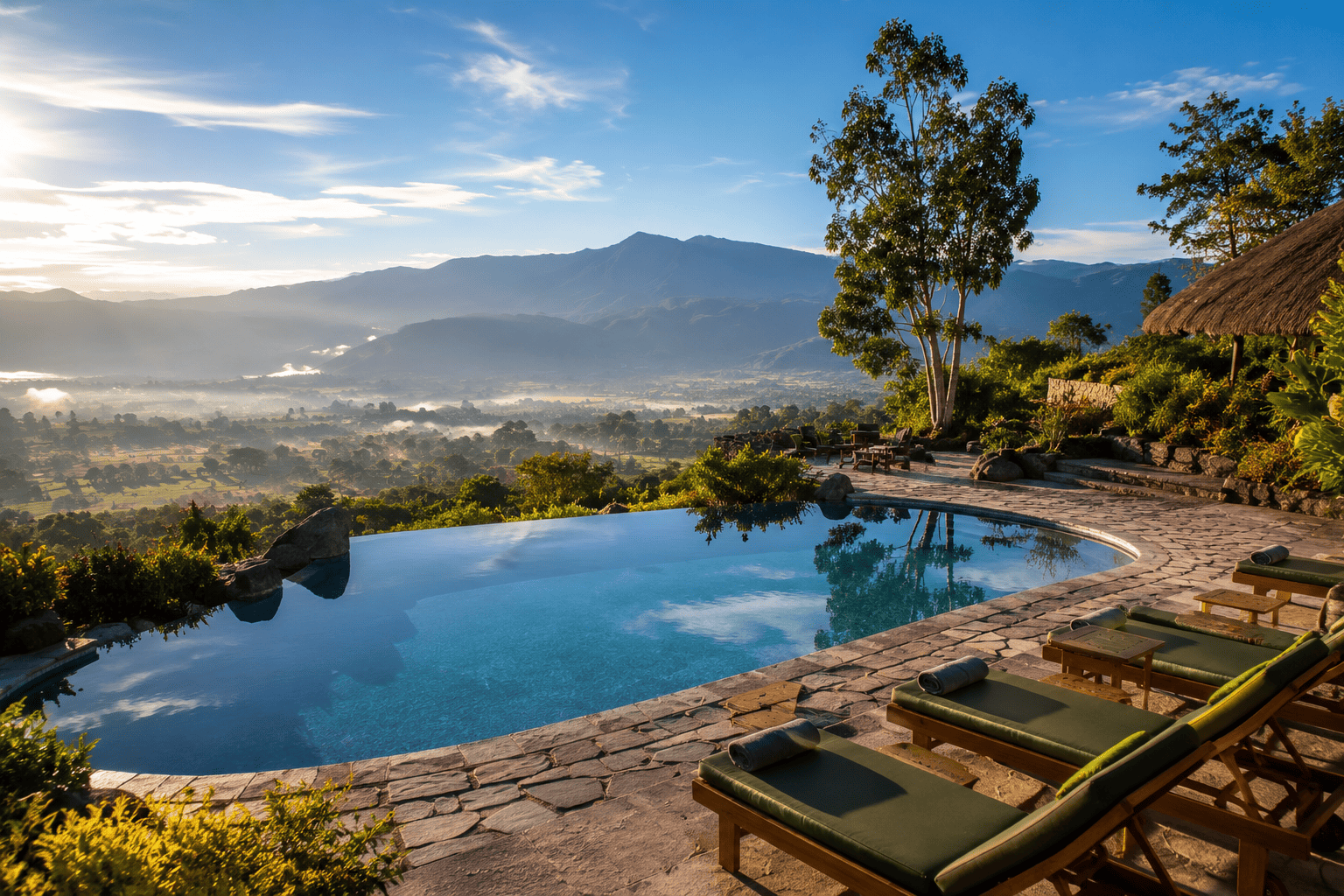
- The view. Waking up to a 180-degree panorama of the Baliem Valley with morning mist still draped over the valley floor is a genuinely once-in-a-lifetime experience that defies easy description.
- Dani tribal cultural access. Guided visits to traditional villages where Dani men still wear kotekas (traditional penis gourds) in daily life, participation in pig festivals, and interaction with local Dani farmers surrounding the resort represent a depth of cultural access that is rare anywhere in the world.
- Private guided excursions. All tours are conducted privately with your own guide and vehicle. This means every trekking route, village visit, and cultural activity is tailored specifically to your group.
- The restaurant atmosphere. Dining surrounded by Papuan tribal art while overlooking one of the most remote valleys in Southeast Asia is an experience that extends well beyond the food itself.
- Conservation and community. Over 1,000 hectares of private land is preserved from deforestation, and the majority of staff come from surrounding villages. A stay here directly supports the local Dani community.
- The Stoneage Bar. A candlelit evening bar within the property that sets a fittingly atmospheric end to a day in the highlands.
The Honest Verdict: Is Baliem Valley Worth It?
Baliem Valley Resort is not a luxury resort by international standards, and it does not try to be. It is, quite simply, the best place to stay in one of the most extraordinary and remote destinations in Indonesia, and possibly in all of Southeast Asia.
If you are expecting marble floors, a pool, and a wellness menu, you will be disappointed. If you come with a genuine appetite for remote cultural adventure, spectacular highland scenery, and the kind of travel stories that set your experience apart from every other Bali-and-back trip, this is extraordinary.
The road to the resort is rough, the bungalows are simple by international standards, and the logistics of getting here require planning and patience. But every guest who invests that effort consistently describes the stay as one of the most memorable of their lives.
Reviews use phrases like “an unforgettable experience” and “paradise,” and they come from travelers who have stayed in some of the world’s finest hotels. Plan for at least three to four nights.
Two nights is too short. Bring warm layers for the evenings, solid walking shoes, a flashlight, a raincoat, and enough cash. Come with curiosity and respect for the Dani culture you will encounter. And bring a camera, because the view from bungalow number one at sunrise will need to be documented.
Explore Further with SatuSatu
SatuSatu is a Bali-based travel platform that helps visitors navigate Indonesia’s most extraordinary destinations with ease. Whether you are starting or ending your Papua adventure through Bali, SatuSatu.com is your go-to place for seamless travel arrangements across the island.
Begin any Indonesia trip with SatuSatu Airport Transfer, ensuring a smooth, no-hassle pickup from Ngurah Rai Airport with transparent pricing and same-day booking available.
For exploring Bali’s own highlands and cultural sites between legs of your journey, SatuSatu’s Exclusive Car Charter gives you a dedicated local driver and the flexibility to set your own pace.
Pair your journey into Papua’s tribal heartland with one of Bali’s most iconic cultural experiences: the SatuSatu Kecak Fire Dance, a spellbinding performance bookable directly on SatuSatu.com

And if you want to do more across Bali without the hassle of planning each activity separately, the SatuSatu Bali All-Access Pass is the smartest way to stretch your trip further.
Choose from a 1-day pass at $59.95 (IDR 999K), a 2-day pass at $104.95 (IDR 1.799M), or a 3-day pass at $144.95 (IDR 2.499M), and unlock access to 50+ top Bali experiences spanning destinations across the island, from the Kecak Fire Dance at Uluwatu to snorkeling in Padang Bai and wellness & spa experiences across Bali.
Every pass includes a free eSIM and a dedicated Bali concierge to handle all the planning for you, saving you up to 60% compared to booking individually, with 90-day validity from purchase for maximum flexibility.
All bookings are made on SatuSatu.com with support for local payment methods including BCA, Mandiri, OVO, DANA, credit cards, and more.
FAQ About Baliem Valley
What is Baliem Valley known for?
Baliem Valley is known as one of the most remote inhabited highland valleys in the world, home to the Dani tribe whose traditional way of life, including pig festivals and traditional village structures, has remained largely intact. It is considered one of Indonesia’s most extraordinary cultural destinations.
Do I need a special permit to visit Baliem Valley?
Yes. All foreign nationals must obtain a Surat Jalan travel permit before visiting Papua and the Baliem Valley. Baliem Valley Resort arranges this permit for guests as part of the booking process, which is one of the main advantages of booking directly through the resort.
How do I get to Baliem Valley?
You fly to Jayapura (DJJ) first, then take a domestic connecting flight to Wamena (WMX). WingsAir and Trigana Air operate this route. Aim to arrive in Jayapura before 2pm to connect to Wamena the same day. Resort staff arrange road transfers from Wamena.
Is Baliem Valley safe for tourists?
The Baliem Valley itself is considered safe, and the resort is surrounded by cooperative local villages. The resort has been operating for over 20 years and takes care of guests from the moment they arrive at Wamena airport. The Surat Jalan permit system also means the authorities are aware of your presence in the region.
What should I pack for Baliem Valley?
Pack warm layers (temperatures drop significantly at night at 1,900 meters), waterproof rain gear, solid walking or hiking shoes, a flashlight, insect repellent, and sufficient cash in Indonesian Rupiah. Note that the entire resort area is alcohol-free, so bring your own from Jayapura if needed.