There is something quietly delightful about discovering that one of the most comforting Indonesian breakfast dishes you had during your time in Bali was a bowl of fragrant, coconut-steamed rice served from a warung that seemed to have been there forever.
Nasi uduk is one of those dishes, and Ibu Jum is one of those names that comes up whenever locals and Indonesian food lovers talk about where to find the real thing.
For travelers visiting Bali who want to go beyond the tourist-trail nasi goreng and experience Indonesian comfort food at its most honest, understanding what nasi uduk is and where to find it in Bali is a meaningful addition to any trip.
SatuSatu, a Bali-focused travel platform dedicated to helping visitors explore the island’s genuine experiences, is a good place to start planning exactly that kind of culinary adventure.
What Is Nasi Uduk?
Nasi uduk is a traditional Indonesian rice dish cooked in coconut milk rather than water. The result is a rice that is fragrant, slightly rich, and deeply savory, with a faint sweetness from the coconut and the distinct aroma of spices like pandan leaf, lemongrass, and bay leaf that are added during cooking.
The name itself comes from Sundanese and Betawi culinary tradition, and the dish has its strongest roots in Jakarta and West Java, where it is a breakfast staple found at roadside stalls, markets, and modest family-run kitchens across the city. What makes nasi uduk more than just rice is what surrounds it.
It is traditionally served with a selection of complementary dishes chosen by the diner: ayam goreng (fried chicken), tahu and tempe goreng (fried tofu and tempeh), telur balado (egg in chili sauce), kering tempe (crispy sweet tempeh), bihun goreng (fried vermicelli), and a range of sambals.
The combination of textures and flavors, the fragrant rice anchoring the sharpness of sambal and the crunch of fried shallots, creates a genuinely satisfying and layered eating experience that is worth seeking out deliberately.
Ibu Jum and the Warung Tradition in Indonesia
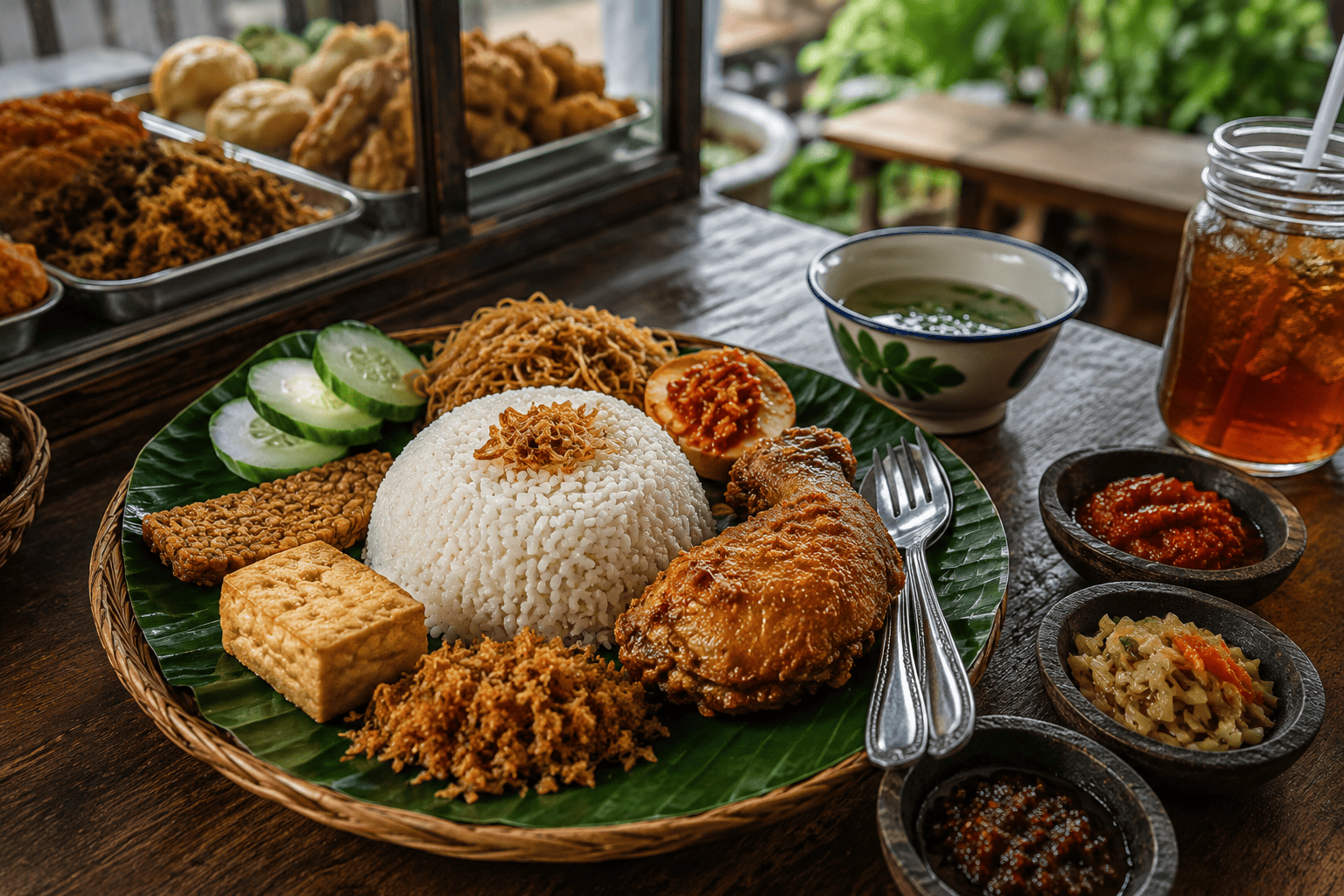
The name “Ibu Jum” in the context of nasi uduk refers to a beloved chain of Indonesian warung restaurants that originated in Jakarta.
Warung Nasi Uduk Ibu Jum built its reputation around the Betawi style of nasi uduk: aromatic and well-seasoned rice paired with a wide selection of traditional Indonesian side dishes displayed behind glass for customers to point and choose at their own pace, much like a pasar malam (night market) food stall experience.
The Kelapa Gading and Pantai Indah Kapuk outlets in Jakarta have long been popular local favorites, with the pick-your-own lauk system, free sambal stations, and reliably good ayam goreng earning the brand a loyal following.
While the Ibu Jum brand itself is based in Jakarta rather than Bali, the warung tradition that defines it is very much alive across Bali’s towns and villages.
Travelers who encounter the name and come to Bali expecting to find an Ibu Jum outlet here should know that the brand’s footprint is primarily in Java, but the nasi uduk experience, the philosophy of simple, honest Indonesian food made well, is entirely accessible in Bali through its own network of traditional warungs.
Where to Find Nasi Uduk in Bali
Nasi uduk in Bali is most commonly found in the morning hours, typically between 6am and 10am, when local warungs open their shutters and set out the day’s dishes.
In Denpasar, the island’s capital, there is a longstanding local tradition of nasi uduk as a breakfast option, particularly around residential neighborhoods and local markets where Indonesian expats, migrant workers from Java, and locals who grew up eating this dish gather in the early morning.
In Ubud, the warung culture focuses more heavily on nasi campur (Bali’s version of a mixed rice plate) and nasi goreng, but the underlying philosophy is the same: a base of rice surrounded by thoughtfully chosen accompaniments, eaten at a simple table with the sounds of a Balinese morning around you.
Warung Wardani in Denpasar is one of the most consistently recommended spots for traditional Indonesian rice dishes prepared in the Javanese and Betawi style, while spots like Warung Mak Oni in Kerobokan have featured nasi uduk on their menus alongside other Indonesian classics.
In the local markets of Seminyak, Canggu, and Kuta, early-morning food stalls frequently offer nasi uduk alongside bubur ayam (chicken congee) and lontong sayur as the morning meal of choice for working Balinese and Indonesian residents.
How to Order and What to Try
Ordering nasi uduk at a traditional warung is a delightfully simple process. You approach the counter, indicate that you want nasi uduk (as opposed to nasi putih, which is plain steamed rice), and then point to the side dishes laid out behind the glass that you want to accompany it.
Most warungs will offer at least five to ten options at any given time, and the price varies based on the number and type of dishes you choose.
A solid introductory combination for first-timers is: nasi uduk as the base, ayam goreng as the main protein, one serving of tahu or tempe goreng, and either kering kentang (crispy spiced potato) or orek tempe alongside a scoop of sambal terasi.
The sambals at good nasi uduk warungs are often set up self-serve on a counter, and it is absolutely acceptable to take as much as you like. A full plate with rice, two to three side dishes, and a drink will typically cost between IDR 20,000 and IDR 60,000, making it one of the best-value meals available anywhere on the island.
Why Nasi Uduk Is Worth Seeking Out in Bali
Bali’s food scene is genuinely international and diverse, and the island caters to every palate and budget. But for travelers who want to understand what Indonesians actually eat, nasi uduk sits at the heart of that story in a way that no nasi goreng from a tourist-facing restaurant ever quite captures.
The dish is an act of simplicity elevated by care: the quality of the coconut milk, the freshness of the spices, the timing of the fry.
Finding a genuinely good bowl of nasi uduk in Bali, particularly in the early morning when the steam is still rising from the pot and the warung is just beginning to fill with locals, is one of those small travel moments that turns out to be a highlight of the trip.
It is also a dish that rewards curiosity. Different warungs have different lauk combinations, different sambal styles, and different regional inflections depending on where the cook originally learned the recipe.
Asking the ibu behind the counter which dish she recommends today is a conversation that often opens into something much more interesting than a meal.
Explore Bali’s Flavors Further with SatuSatu
SatuSatu is a Bali travel platform created to help visitors get more out of their time on the island, from practical logistics to curated cultural experiences. If you want to explore Bali’s food culture alongside its natural and spiritual highlights, SatuSatu.com is the place to start.
Arrive in Bali the easy way with SatuSatu Airport Transfer, which offers transparent pricing, same-day booking, and a stress-free start to your trip without the hassle of negotiating rides outside the terminal.
For days when you want to explore Bali’s local markets and warung culture across multiple neighborhoods, SatuSatu’s Exclusive Car Charter gives you a dedicated driver and the freedom to set your own route at your own pace.
No culinary trip through Bali is complete without experiencing the island’s cultural soul, and the SatuSatu Kecak Fire Dance is one of the most moving performances the island has to offer, bookable directly on SatuSatu.com

And if you want to do more across Bali without the hassle of planning each activity separately, the SatuSatu Bali All-Access Pass is the smartest way to stretch your trip further.
Choose from a 1-day pass at $59.95 (IDR 999K), a 2-day pass at $104.95 (IDR 1.799M), or a 3-day pass at $144.95 (IDR 2.499M), and unlock access to 50+ top Bali experiences spanning destinations across the island, from the Kecak Fire Dance at Uluwatu to snorkeling in Padang Bai and wellness & spa experiences across Bali.
Every pass includes a free eSIM and a dedicated Bali concierge to handle all the planning for you, saving you up to 60% compared to booking individually, with 90-day validity from purchase for maximum flexibility.
All bookings are made on SatuSatu.com with local payment support including BCA, Mandiri, OVO, DANA, credit cards, and more.
FAQ About Nasi Uduk Ibu Jum Bali
What is nasi uduk and how is it different from nasi goreng?
Nasi uduk is rice cooked in coconut milk with spices like pandan and lemongrass, served with a selection of side dishes. Nasi goreng is fried rice. The two are very different dishes: nasi uduk is a fresh, fragrant, soft rice eaten primarily at breakfast, while nasi goreng is a more substantial stir-fried dish eaten at any hour.
Is Ibu Jum a restaurant in Bali?
The Ibu Jum brand operates primarily in Jakarta, with branches in areas like Kelapa Gading and Pantai Indah Kapuk. However, the nasi uduk warung tradition that Ibu Jum represents is very much alive in Bali through local warungs across Denpasar, Kuta, and other neighborhoods.
Where is the best place to find nasi uduk in Bali?
Look for early-morning food stalls near local markets in Denpasar, Seminyak, Canggu, and Kuta. Warung Wardani in Denpasar is a well-known name for traditional Indonesian rice dishes. Arriving before 9am gives you the best chance of finding the day’s dishes freshly cooked.
How much does nasi uduk cost in Bali?
A typical plate of nasi uduk with two to three side dishes costs between IDR 20,000 and IDR 60,000 at a traditional warung, making it one of the most affordable and satisfying meals available anywhere on the island.
Can vegetarians eat nasi uduk?
Yes, with careful selection. The rice itself is vegetarian, and many of the common side dishes such as tahu goreng, tempe goreng, orek tempe, and various vegetable preparations are plant-based. Check with the warung owner about the specific dishes available on the day.