As the sun begins its slow descent over the Indian Ocean, the cliffs of Uluwatu glow in amber light. Waves crash rhythmically below, while the scent of sea breeze drifts through ancient temple gates. Then, almost suddenly, a chorus rises — dozens of voices chanting “cak… cak… cak…” in hypnotic unison.
Watching the Kecak Fire Dance at Uluwatu is not just a performance. Instead, it is a sensory encounter where culture, nature, and storytelling converge in one of Bali’s most dramatic settings.
For travelers seeking experiences that feel both cinematic and deeply rooted in tradition, this is an evening worth planning carefully.
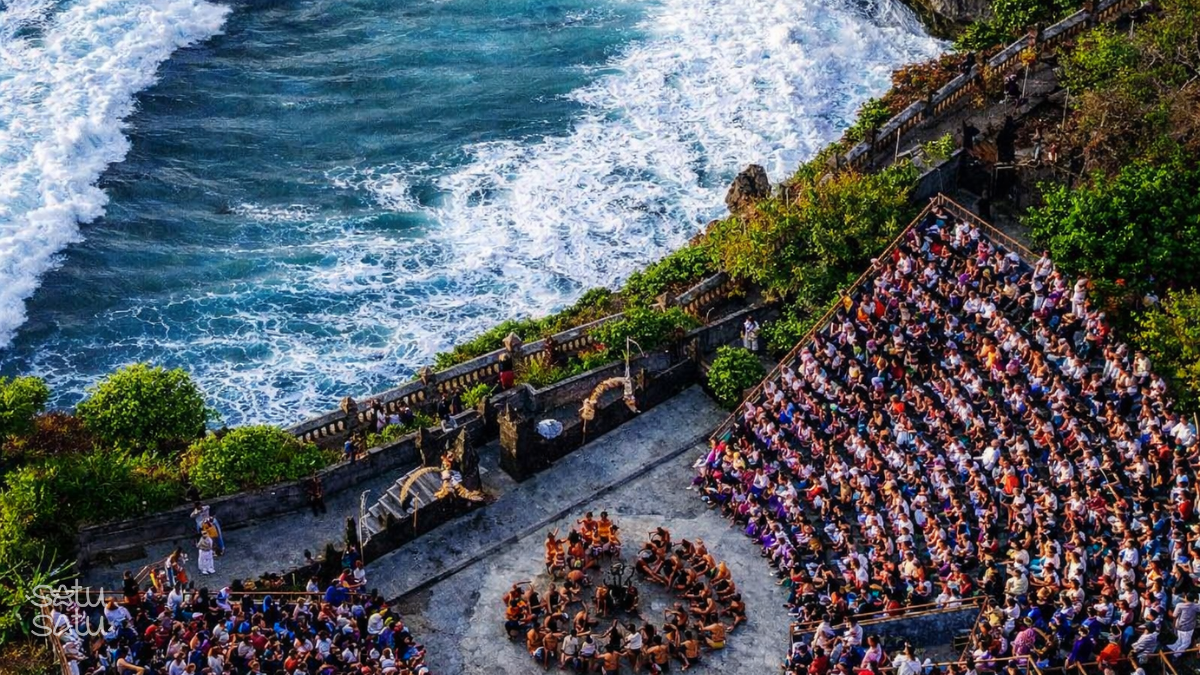
Why the Kecak Dance Feels Unlike Any Other Performance
Unlike most traditional dances in Southeast Asia, Kecak uses no musical instruments. Rather, the rhythm comes entirely from human voices, creating a powerful, almost trance-like atmosphere.
Originally inspired by sacred Balinese rituals, the dance later evolved into a theatrical retelling of the Ramayana epic. However, despite its stage adaptation, the performance still carries spiritual undertones that feel authentic rather than commercial.
Meanwhile, the open-air amphitheater amplifies the experience. As daylight fades, torches flicker, shadows stretch across the stage, and the story intensifies. Consequently, the transition from sunset to darkness becomes part of the narrative itself.
If you’re mapping out golden-hour moments across the island, you may enjoy exploring some of the best sunrise and sunset spots in Bali, since few locations rival Uluwatu’s coastal drama.
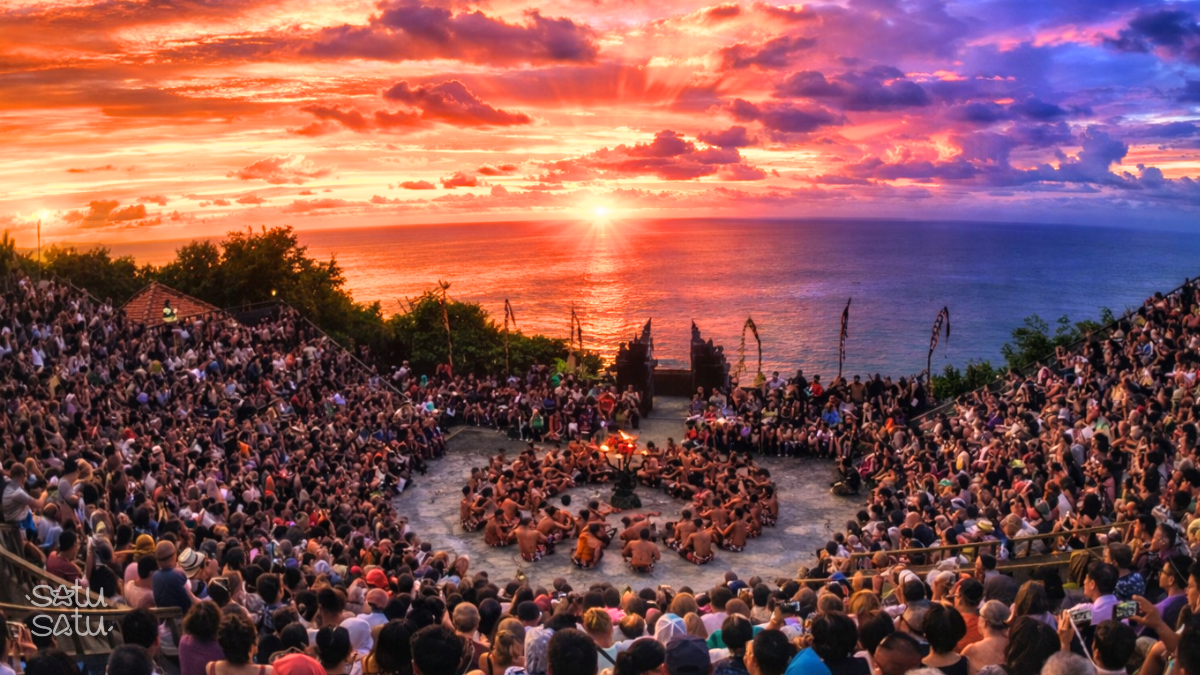
Set Above One of Bali’s Most Iconic Coastlines
Uluwatu Temple stands on a towering limestone cliff roughly 70 meters above the ocean. Because of this vantage point, the area delivers uninterrupted horizon views that feel almost endless.
Before the performance begins, many travelers wander the temple paths, watching surfers carve through distant waves. Others pause simply to absorb the atmosphere.
Additionally, the temple sits near several spectacular shorelines. Therefore, pairing your visit with time at some of the best beaches in Bali creates a naturally balanced day — ocean calm before cultural immersion.
What Makes This Experience Worth Planning Ahead
Even though Uluwatu feels expansive, seats for the Kecak Dance often fill quickly, especially during peak travel seasons. Consequently, travelers who arrive without preparation may face long lines or limited entry options.
Choosing a well-arranged ticket removes that uncertainty. More importantly, it allows you to focus on the experience rather than logistics.
Here’s what many travelers appreciate most:
- Same-Day Booking Flexibility
Plans change while traveling. Therefore, having the option to secure tickets on the same day adds welcome spontaneity. - Smooth Entry Without the Queue
Few things disrupt a sunset like waiting in a crowded ticket line. A streamlined entry helps preserve the mood of the evening. - Thoughtfully Priced Access
Value matters; however, so does reliability. When both align, the experience feels effortless from start to finish.
You can explore the curated Kecak experience HERE
Limited-Time Travel Perk
For travelers already shaping their Bali itinerary, a small detail can make the evening even better.
- Voucher Code: KECAKBALI
- Benefit: 10% discount (up to IDR 500,000 / approx. USD 30)
- Validity: Until 31 March 2026
- Note: Limited quota applies
While the performance itself remains the highlight, thoughtful perks like this simply enhance the journey.
What the Evening Typically Feels Like
Arriving about an hour before sunset allows time to explore the temple grounds without rushing. Shortly afterward, the sky begins its transformation — first gold, then tangerine, and finally deep indigo.
As the chanting starts, attention naturally shifts toward the performers. Yet, the setting never fades into the background. Instead, ocean winds, firelight, and distant waves blend into the show.
Even travelers who rarely attend cultural performances often describe the Kecak Dance as unexpectedly moving. Perhaps it is the rhythm. Perhaps it is the setting. More likely, it is the combination.
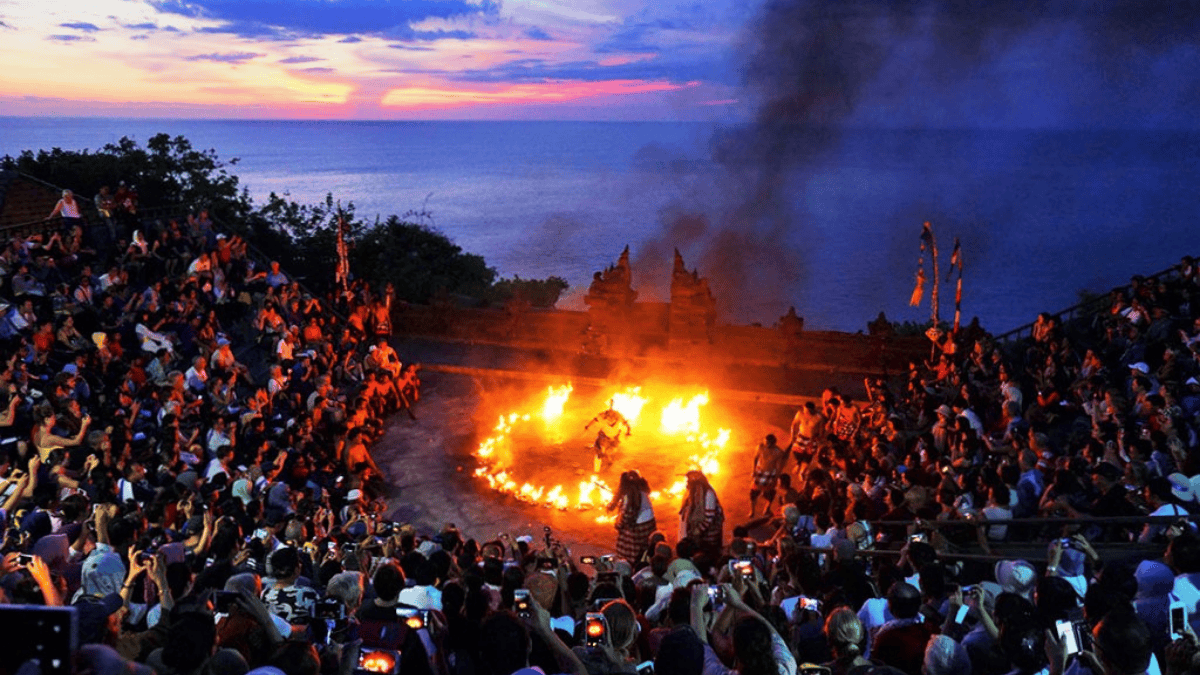
A Cultural Experience That Complements Adventure
Many travelers pair Uluwatu with daytime exploration — maybe cliffside walks, beach visits, or coastal cafés. Others arrive after discovering Bali’s interior landscapes.
For example, if your trip includes jungle trails or sacred landmarks, reading about some of the most famous temples in Bali can help connect the island’s spiritual narrative from mountains to sea.
Because Bali reveals itself in layers, evenings like this often become emotional anchors within a larger journey.
Helpful Tips for a Seamless Visit
- Arrive Early
Not only does this secure better seating, but it also gives you space to experience the temple before crowds grow. - Dress Respectfully
Sarongs are typically provided; however, wearing modest attire shows cultural awareness. - Keep Belongings Secure
The resident monkeys are curious. Therefore, sunglasses and loose items deserve extra attention. - Stay Through the Finale
Many visitors focus on the sunset. Yet the fire sequence that follows often becomes the most unforgettable moment.
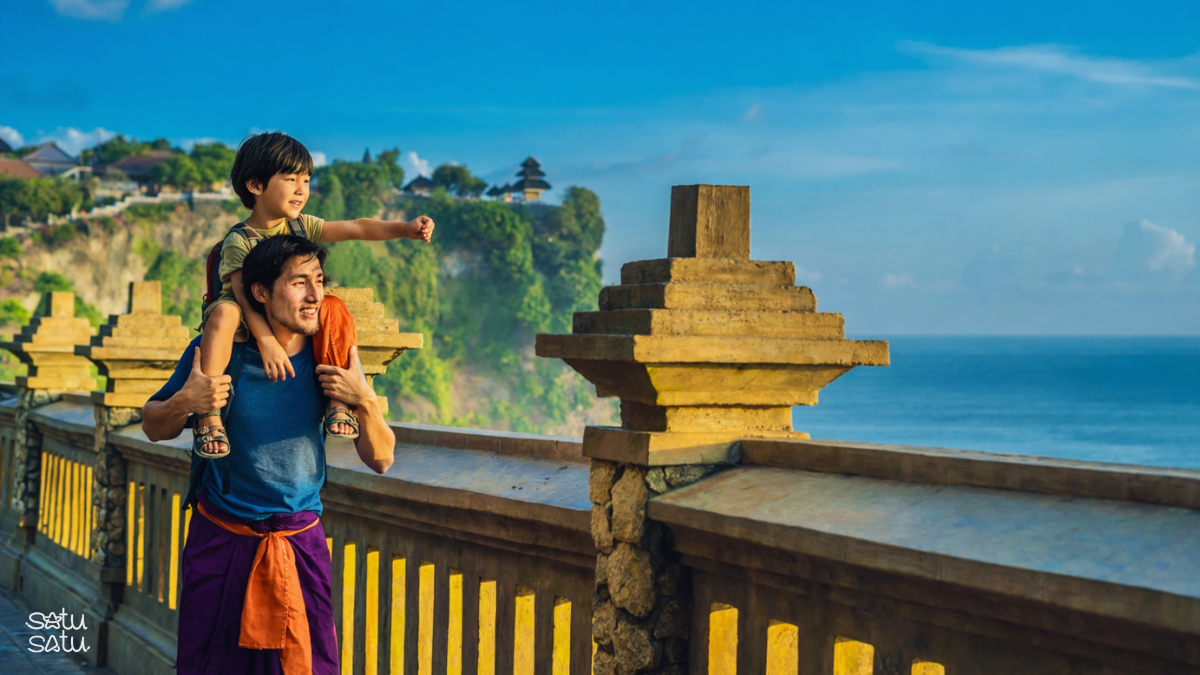
Why This Evening Stays With Travelers
Long after flights home, travelers tend to remember feelings rather than schedules. The Kecak Dance lingers because it captures Bali at its most expressive — spiritual yet theatrical, dramatic yet grounding.
Moreover, it reminds us that meaningful travel rarely comes from rushing between landmarks. Instead, it emerges when you pause long enough to witness something extraordinary.
Discover more thoughtfully curated experiences to enrich your Bali journey at SatuSatu, experience the local way.