Ask anyone who has eaten their way through Indonesia which dish makes the most lasting impression, and rendang comes up faster than almost anything else.
The Minangkabau dish from West Sumatra, slow-cooked in coconut milk and an intricate blend of spices until the liquid is nearly gone and the beef is dark, rich, and intensely concentrated, has been recognized internationally as one of the world’s great dishes. In Bali, the story of beef rendang is an interesting one.
It is not traditionally a Balinese dish, but the island’s cosmopolitan food scene has made it something you can find almost everywhere, from tiny Padang warungs to fine dining restaurants plating it with Wagyu and architectural garnishes.
SatuSatu, a Bali travel platform helping travelers navigate the best the island has to offer, often points curious visitors toward the question: where do you actually find good rendang in Bali, and what should you know before you order?
What Is Beef Rendang?
Rendang is a dry-style braised meat dish originating from the Minangkabau culture of West Sumatra, Indonesia.
The cooking process is long, typically several hours, during which beef is simmered in coconut milk with a paste made from galangal, lemongrass, turmeric, ginger, garlic, chilies, and a combination of other spices depending on the family recipe.
As the liquid reduces and eventually evaporates, the meat absorbs the spice mixture and begins to caramelize in the remaining coconut oil, producing the characteristic dark, dry exterior and deeply flavored interior.
The texture and moisture level of rendang varies depending on how long it is cooked. A wetter, earlier-stage rendang is sometimes called kalio, while the drier, more fully reduced version is what most people refer to as rendang.
The drier style can keep for weeks at room temperature, which is part of what made it practical for long-distance Minangkabau traders to carry across the archipelago centuries ago.
CNN included rendang in its list of the World’s 50 Best Foods, and it is considered by many food writers to be one of the most complex and labor-intensive dishes in Indonesian cuisine.
Rendang in Bali: What Makes It Different
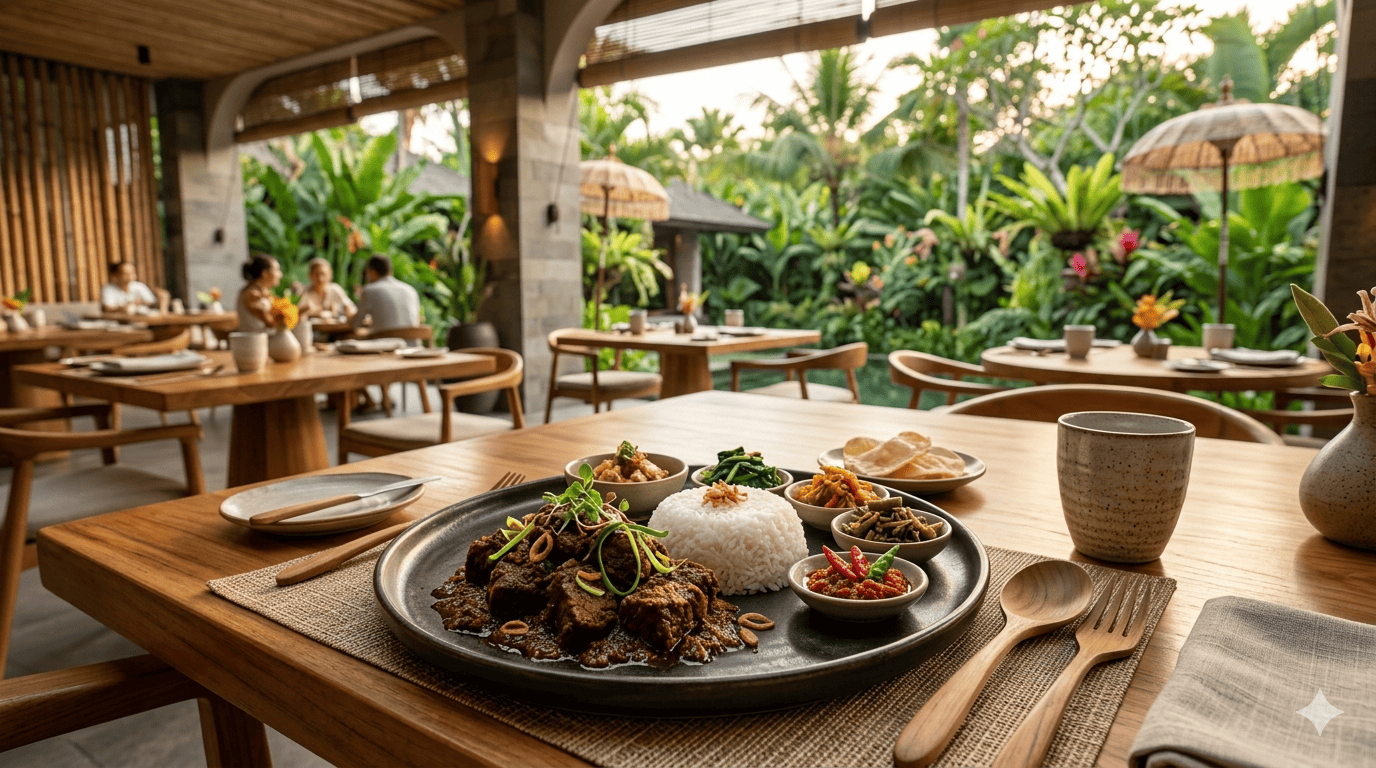
An important cultural note: beef rendang is not traditionally a Balinese Hindu dish. Balinese Hindus generally do not eat beef, which means authentic beef rendang in Bali typically comes from Padang or Minangkabau restaurants run by Muslim communities from Sumatra and Java.
These establishments are often called Rumah Makan Padang or Warung Padang, and they serve rendang in the traditional way, displayed in stacked dishes in the front window, ready to be spooned over rice to order.
What makes Bali interesting as a place to eat rendang is that the island’s diverse visitor and resident population has also driven demand for modern interpretations of the dish.
Fine dining restaurants in Seminyak and Ubud now serve rendang using premium cuts like Wagyu short rib or Australian beef, plated with modern technique while keeping the spice profile broadly faithful to the original.
Where to Find Good Beef Rendang in Bali
For the authentic Padang-style experience, warung padang restaurants are scattered across Denpasar, Kuta, and Seminyak. Look for the characteristic stacked dish displays in the windows.
In Seminyak, Waroeng Bernadette on Jalan Kayu Aya is frequently recommended for its signature rendang, which is described by regulars as melt-in-your-mouth and made fresh daily. For a more upscale interpretation, Merah Putih in Seminyak is one of Bali’s most celebrated Indonesian restaurants.
Set in a stunning double-height space on Jalan Petitenget, the restaurant serves a Braised Beef Short Rib Rendang that takes the Minangkabau template and elevates it to fine dining standards. Sangsaka, also in Seminyak, does a Rendang Wagyu Beef using wood fire techniques that has drawn consistent praise.
In Ubud, Hujan Locale, the restaurant by Chef Will Meyrick, serves a slow-cooked beef rendang as part of a menu built around family-style Indonesian cooking refined rather than reimagined. Reviewers consistently describe the rendang there as authentic, creamy, and well-spiced.
Practical Tips for Ordering Rendang in Bali
At a Padang warung, rendang is typically served at room temperature, which is correct and traditional. Do not expect it to arrive steaming. Ask the staff for the freshest batch available, as rendang made earlier in the day will be softer and more tender than a portion that has been sitting since morning.
It is almost always served with steamed white rice, sambal, and a selection of vegetable sides.
Pricing at Padang warungs is very affordable, typically IDR 25,000 to 50,000 for a full rice plate with rendang and accompaniments. At upscale restaurants like Merah Putih or Hujan Locale, expect to pay IDR 150,000 to 250,000 or more for a plated rendang course, which reflects the ingredient quality and preparation time involved.
It is also worth knowing that most dedicated Padang restaurants do not serve alcohol, as they operate as halal establishments. If you want to pair rendang with a cold Bintang, a modern Indonesian restaurant or a beach club with rendang on the menu will be the better fit.
Rendang Beyond the Restaurant
One thing visitors to Bali may not expect is how frequently rendang appears on casual menus across the island. Nasi campur plates, which are Bali’s mixed rice dishes served at warungs everywhere, sometimes include a small portion of rendang alongside the other proteins.
Some hotel breakfast buffets also feature it as part of an Indonesian selection. It is worth trying a bite wherever you encounter it, because even a modest warung rendang, made with a practiced hand, can be surprisingly good.
Explore Bali Further with SatuSatu
Finding the best food in Bali is one part of the experience, and getting around the island to reach the right restaurants is another. SatuSatu is a Bali travel platform that covers both, with curated transport and experiences bookable directly at SatuSatu.com
The SatuSatu Airport Transfer is a transparent, fixed-price private transfer from Ngurah Rai International Airport, with same-day booking and no arrival surprises.
Getting from your hotel to restaurants in Seminyak, Ubud, or anywhere across Bali is smooth and flexible with the SatuSatu Exclusive Car Charter, a dedicated driver for the full day with no set schedule, bookable on SatuSatu.com
Before or after a great dinner, the SatuSatu Kecak Fire Dance at Uluwatu Temple is one of Bali’s most iconic cultural experiences, with tickets available directly through SatuSatu.com

And if you want to do more across Bali without the hassle of planning each activity separately, the SatuSatu Bali All-Access Pass is the smartest way to stretch your trip further.
Choose from a 1-day pass at $59.95 (IDR 999K), a 2-day pass at $104.95 (IDR 1.799M), or a 3-day pass at $144.95 (IDR 2.499M), and unlock access to 50+ top Bali experiences spanning destinations across the island, from the Kecak Fire Dance at Uluwatu to snorkeling in Padang Bai and wellness & spa experiences across Bali.
Every pass includes a free eSIM and a dedicated Bali concierge to handle all the planning for you, saving you up to 60% compared to booking individually, with 90-day validity from purchase for maximum flexibility.
All bookings are made directly through the platform, which supports local payment methods including BCA, Mandiri, OVO, DANA, credit cards, and more.
FAQ about Beef Rendang Bali
What is beef rendang?
Beef rendang is a slow-cooked Indonesian dish from the Minangkabau culture of West Sumatra. Beef is braised in coconut milk and a complex spice paste for several hours until the liquid reduces and the meat becomes dark, dry, and intensely flavored.
Is beef rendang a Balinese dish?
No. Rendang is Sumatran in origin. In Bali, it is served primarily at Padang restaurants run by Muslim communities from Sumatra and Java, as well as at modern Indonesian restaurants that offer elevated versions of the dish.
Where can I find the best beef rendang in Bali?
For authentic Padang-style rendang, seek out Warung Padang establishments in Denpasar, Kuta, or Seminyak. For a refined dining experience, Merah Putih and Hujan Locale are frequently recommended. Waroeng Bernadette in Seminyak is a popular choice for rendang at casual restaurant prices.
How spicy is beef rendang?
Rendang is moderately to significantly spicy depending on the cook. The spice level comes from fresh chilies in the paste. Most warung rendang will be spicier than restaurant versions. You can ask about spice level before ordering.
Can you eat beef rendang at most Bali restaurants?
Rendang appears widely across Bali’s restaurant scene. You will find it at Padang warungs, nasi campur stalls, modern Indonesian restaurants, and some beach clubs. It is less common at Balinese Hindu restaurants, which traditionally avoid beef.