Before travelers fall in love with Bali’s beaches or jungles, they often feel something quieter yet deeper: a spiritual rhythm woven into daily life. Across the island, thousands of temples — known locally as pura — anchor communities, guide ceremonies, and honor the balance between humans, nature, and the divine.
However, not all temples serve the same purpose. Understanding their types adds an entirely new dimension to your journey.
Understanding the Types of Temples in Bali
Balinese Hinduism organizes temples into several key categories. Pura Kahyangan Jagat are directional temples that spiritually protect the island. Meanwhile, Pura Tirta focus on sacred water and purification rituals. Village temples support local ceremonies, while family temples maintain ancestral connections.
Therefore, visiting Bali’s most important temples is not simply sightseeing — it is an invitation to witness a living belief system that continues to shape the island today.
If you want to pair cultural exploration with dramatic scenery, consider reading about the island’s best sunrise and sunset spots on SatuSatu Inspiration, as many temples sit in locations where light transforms the landscape.
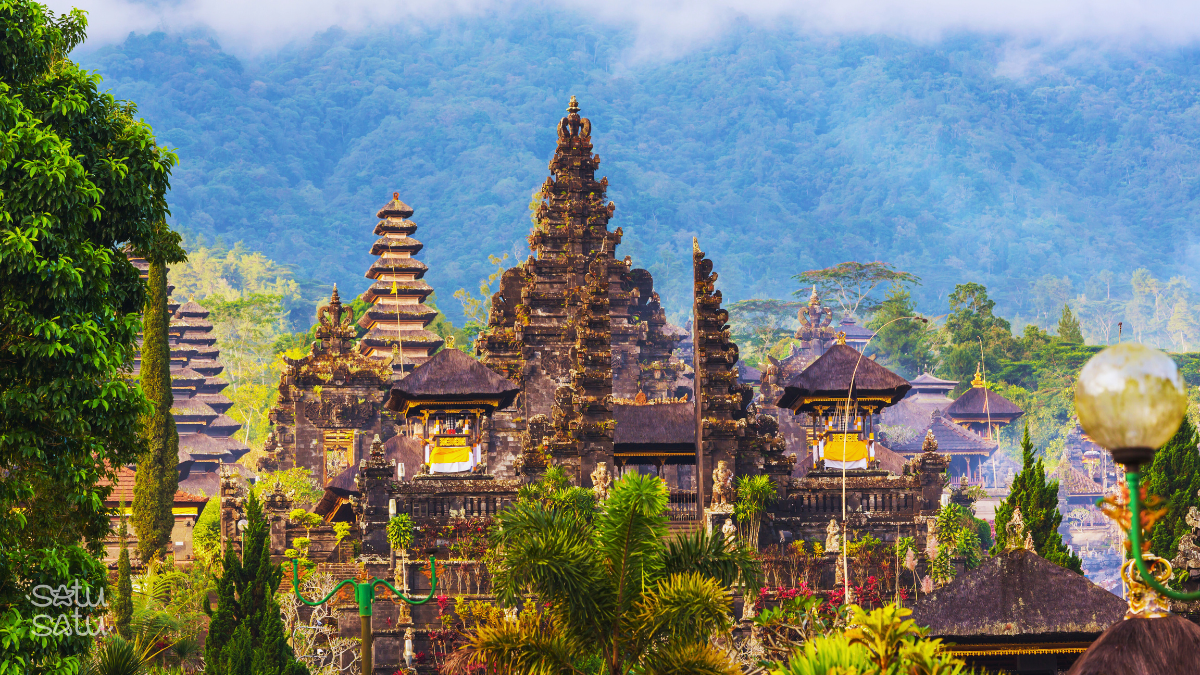
1. Pura Besakih — The Mother Temple
Location: Mount Agung slopes, East Bali
Often called Bali’s most important temple, Besakih dates back over 1,000 years. Because it sits nearly 1,000 meters above sea level, the complex feels both majestic and deeply sacred.
Rare insight: During the catastrophic eruption of Mount Agung in 1963, lava flows narrowly missed the temple — a moment many locals still consider miraculous.
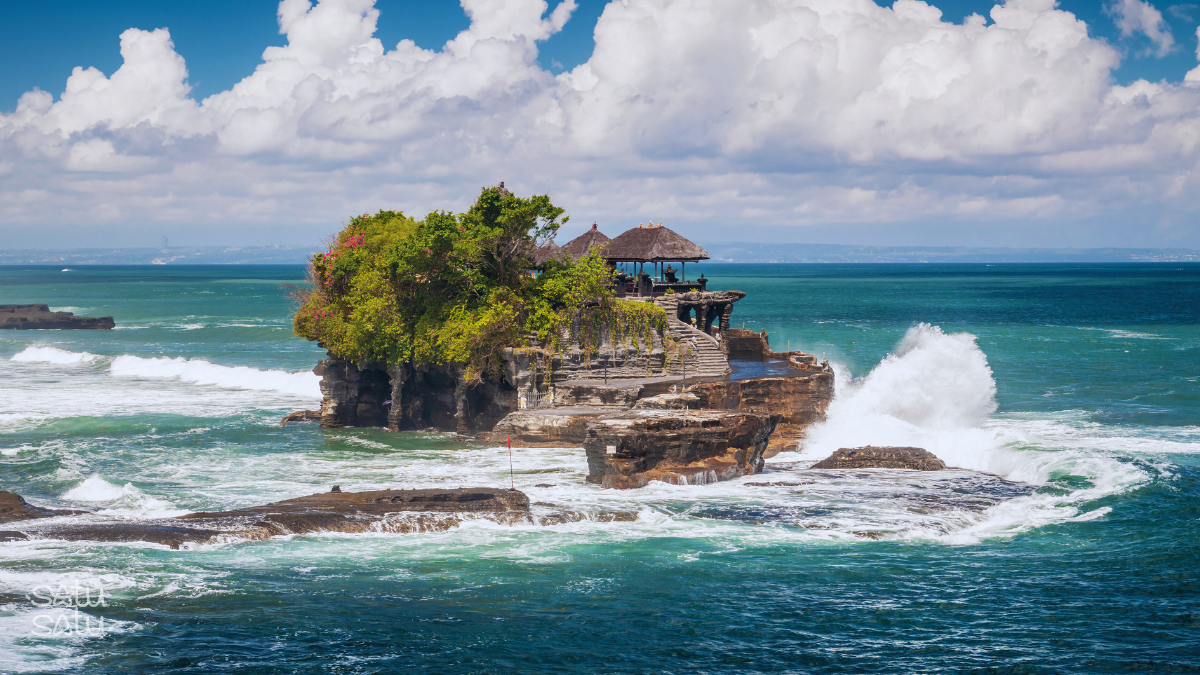
2. Tanah Lot — The Sea Temple
Location: Tabanan, Southwest Bali
Built in the 16th century by the priest Dang Hyang Nirartha, Tanah Lot appears to float offshore during high tide. Consequently, it has become one of Bali’s most photographed landmarks.
Rare insight: Sea snakes believed to guard the temple inhabit nearby caves.
For a deeper look at this coastal icon, explore the guide to Tanah Lot’s golden sunset experience on SatuSatu Inspiration.
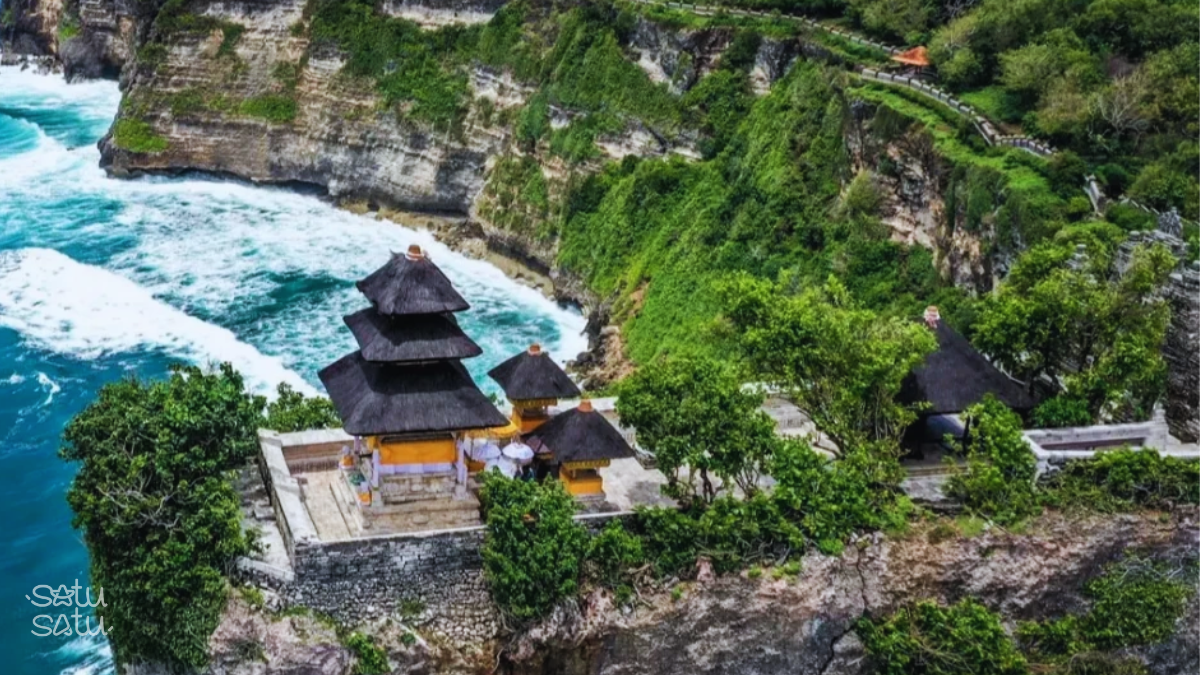
3. Uluwatu Temple — Guardians of the Cliff
Location: Bukit Peninsula, South Bali
Perched 70 meters above the Indian Ocean, Uluwatu functions as a directional temple that protects Bali from negative sea spirits.
Rare insight: The resident monkeys are known to “trade” stolen items for food — behavior researchers believe reflects learned negotiation patterns.
Additionally, the temple overlooks some of the best beaches in Bali, making it ideal for combining culture with coastal exploration.
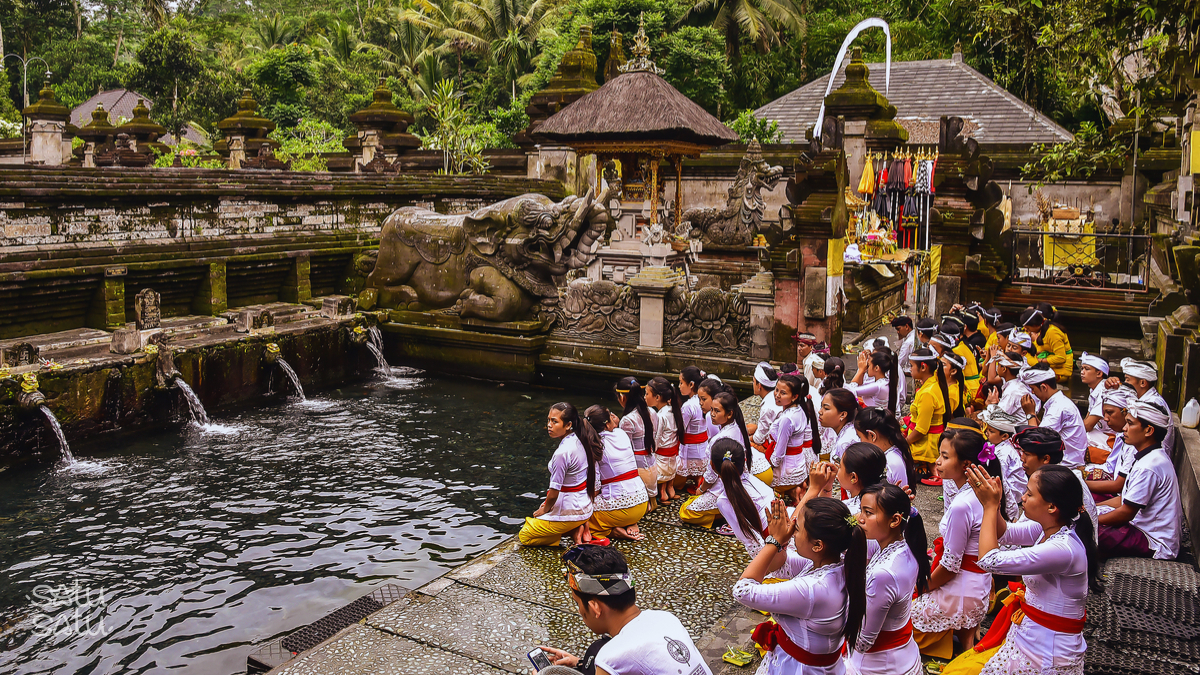
4. Tirta Empul — Temple of Holy Water
Location: Tampaksiring, near Ubud
Founded in 962 AD, Tirta Empul centers around a natural spring believed to possess purifying properties. Visitors often join locals in ritual bathing.
Rare insight: Each fountain serves a different spiritual purpose, although a few are reserved exclusively for funerary rites.
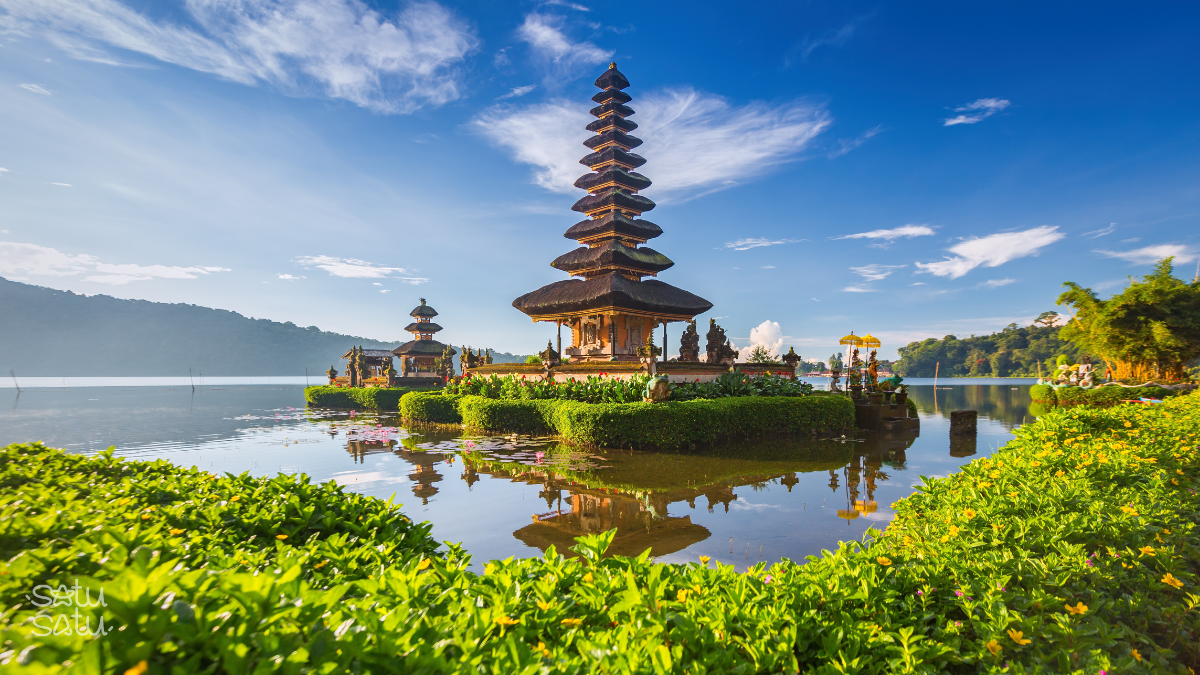
5. Ulun Danu Beratan — The Floating Temple
Location: Lake Beratan, Bedugul
Wrapped in mountain mist, this 17th-century temple honors Dewi Danu, the goddess of water.
Rare insight: When lake levels rise, the temple appears to hover — an illusion that has made it one of Bali’s most recognizable images.
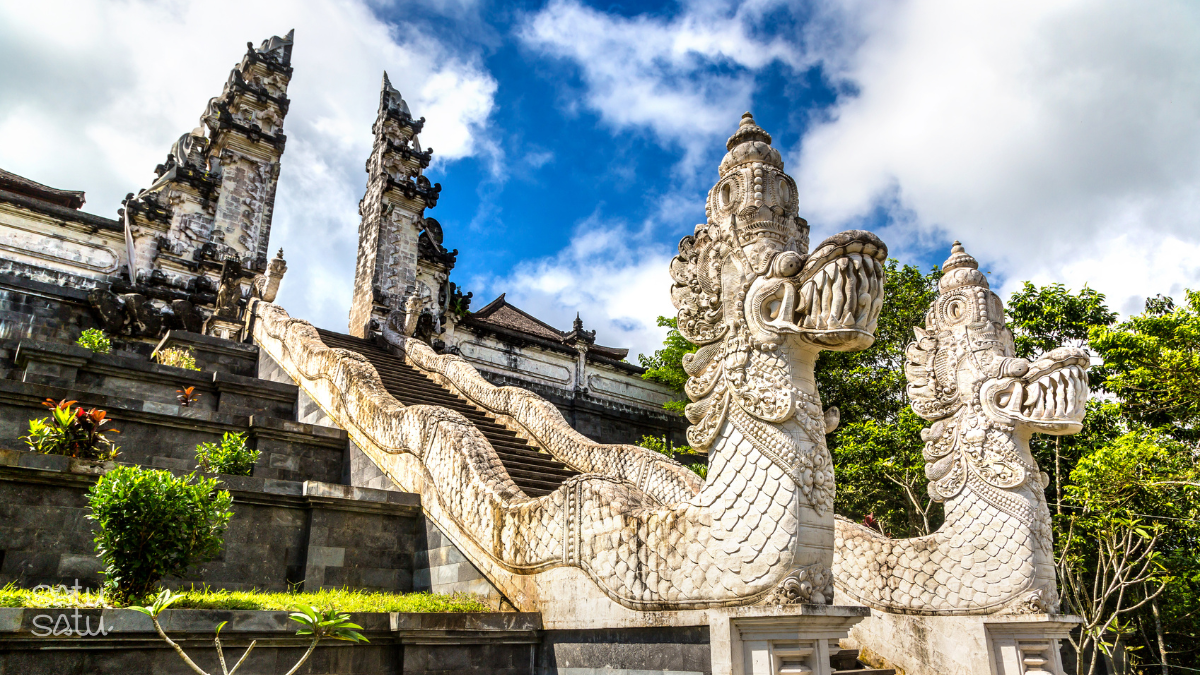
6. Lempuyang Temple — The Gateway to Heaven
Location: Karangasem, East Bali
This temple complex predates most Hindu structures on the island. However, reaching the upper temples requires climbing more than 1,700 steps.
Rare insight: Did you know? the famous “mirror reflection” photos are often created using a simple reflective surface — not water.
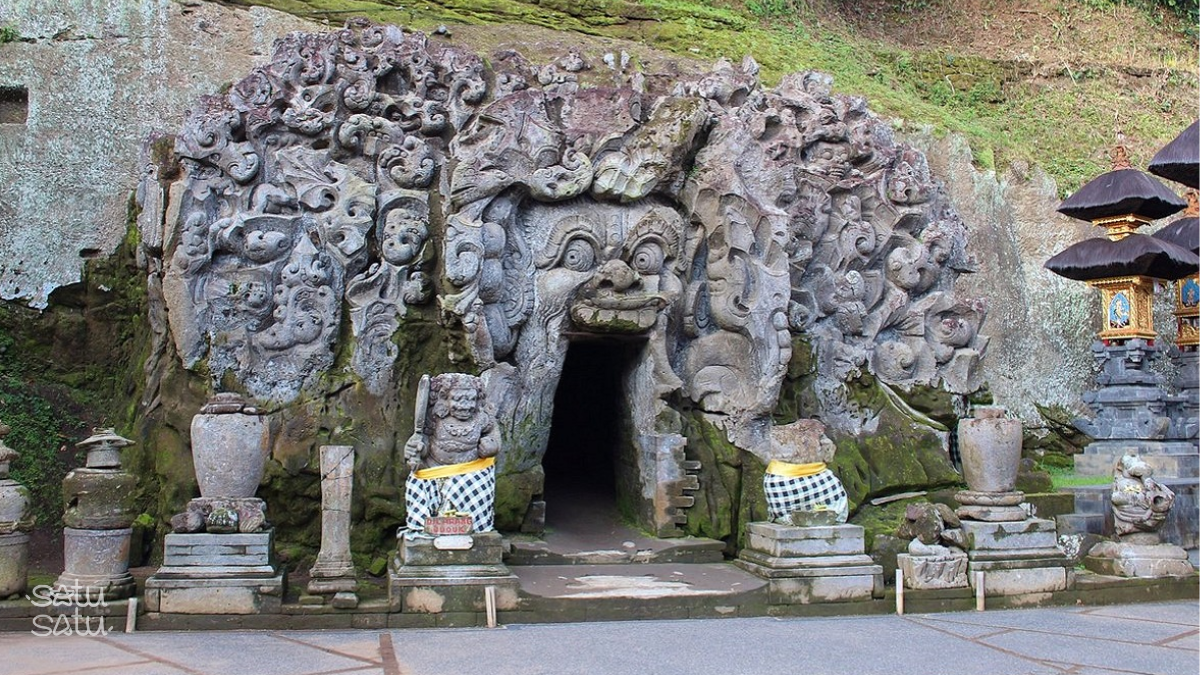
7. Goa Gajah — The Elephant Cave
Location: Near Ubud
Dating to the 9th century, this archaeological site blends Hindu and Buddhist symbolism.
Rare insight: Despite its name, no elephants ever lived here; historians believe the term derives from the nearby Petanu River.
After visiting, many travelers continue toward Ubud’s rice fields — a landscape beautifully captured in the Tegallalang Rice Terraces guide on SatuSatu Inspiration.
8. Taman Ayun — The Royal Temple
Location: Mengwi, Central Bali
Constructed in 1634 by the Mengwi Kingdom, Taman Ayun features elegant multi-tiered shrines surrounded by tranquil canals.
Rare insight: The layout symbolizes Mount Meru, the mythical cosmic mountain.

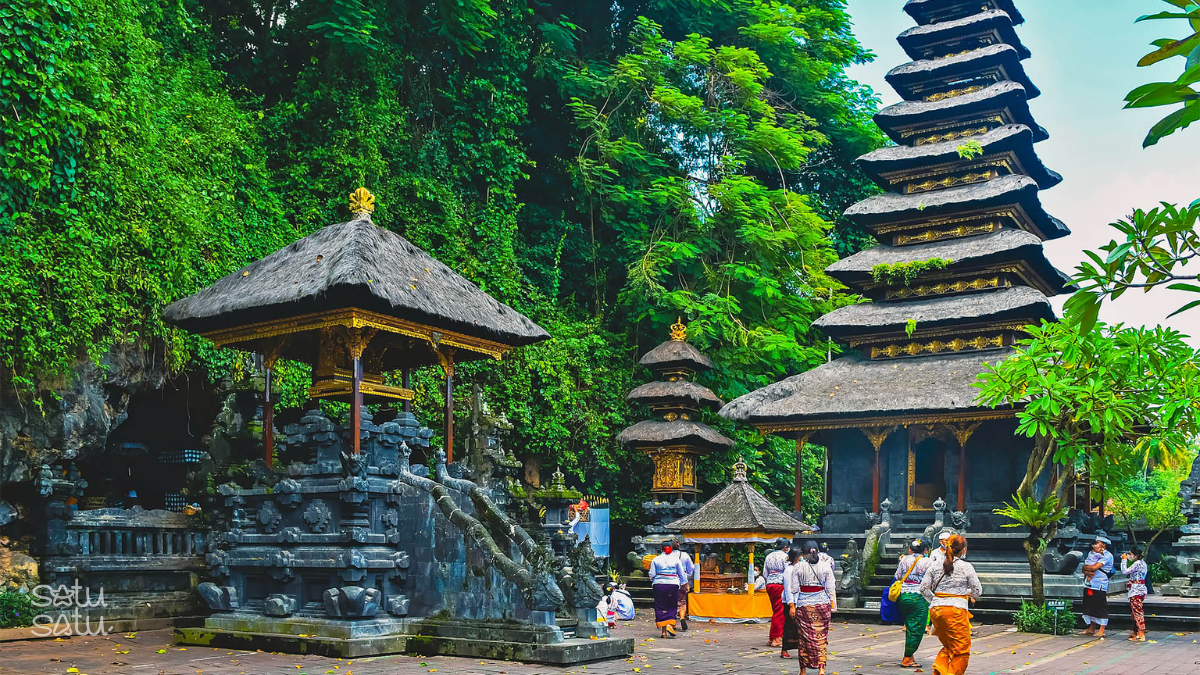
9. Pura Goa Lawah — The Bat Cave Temple
Location: Klungkung, East Bali
Goa Lawah is one of Bali’s six key directional temples and guards the island from evil spirits arriving from the sea. The temple’s name means “Bat Cave,” referencing the thousands of bats that inhabit the cavern behind the shrine.
Rare insight: Locals believe the cave connects spiritually to Mount Agung, forming an unseen protective line across the island.
10. Pura Taman Saraswati — The Lotus Temple
Location: Ubud
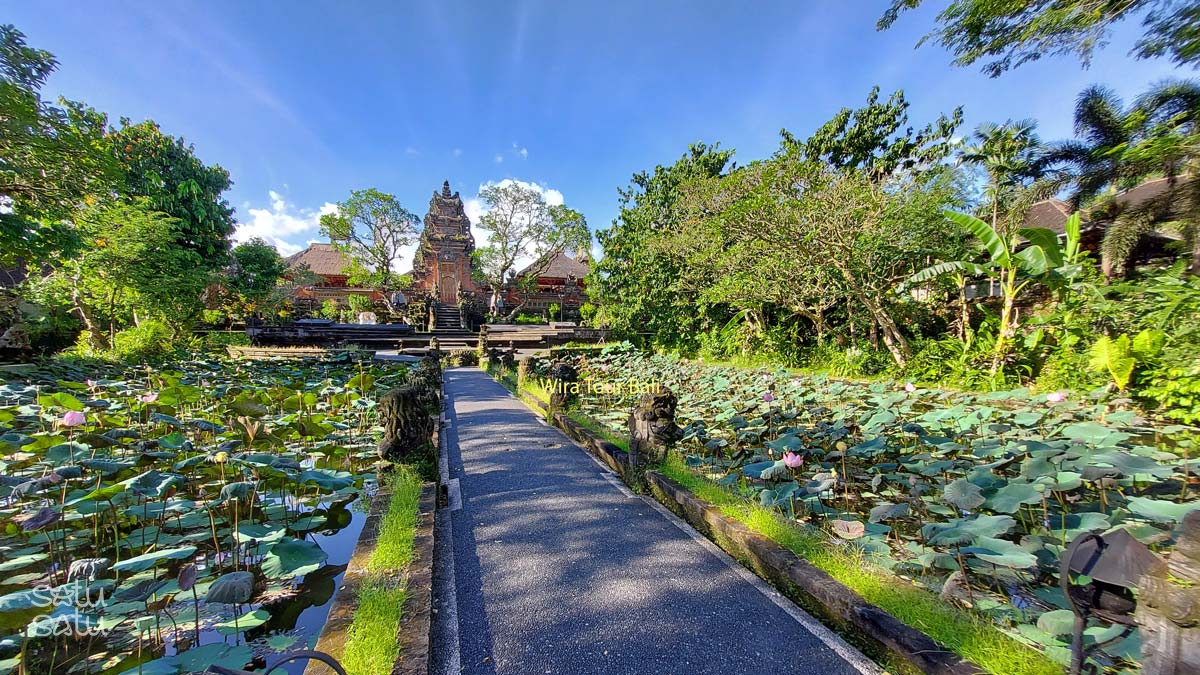
Dedicated to Saraswati, the Hindu goddess of knowledge and arts, this temple sits gracefully behind a lotus-filled pond in central Ubud.
Rare insight: While many visitors photograph the lotus lagoon, fewer stay for the evening dance performances held within the temple — intimate cultural moments often missed by daytime crowds.
Experiencing Bali’s Temples with Intention
Although temple visits inspire awe, respectful behavior remains essential. Wear a sarong, speak softly, and observe ceremonies from a distance. Moreover, consider timing your visits early in the morning or late afternoon, when crowds thin and the atmosphere feels more contemplative.
Because temples often sit within extraordinary landscapes, many journeys naturally blend culture with nature. As a result, travelers leave with a deeper understanding of Bali — not just as a destination, but as a spiritual ecosystem.
Ultimately, these temples reveal the island’s quiet strength: a harmony between devotion, architecture, and environment that continues to guide everyday life.
Discover more thoughtfully curated experiences across the island by visiting SatuSatu,com — and let your Bali journey unfold with deeper meaning.