There is a particular kind of pleasure in sitting down to a proper plate of nasi campur Bali, the mixed rice dish that defines everyday eating across the island.
When the plate arrives, it is a composition: a mound of steamed rice surrounded by small portions of shredded chicken or pork, lawar, sate lilit, crispy fried tempeh, and a generous scoop of sambal matah, the raw shallot and lemongrass chilli relish that brings everything to life.
For travelers who want to understand Bali through its food rather than just through its landscapes, nasi Bali is the single most important dish to know.
SatuSatu, a Bali travel platform built around curating authentic local experiences, considers eating at a genuine Balinese warung one of the most meaningful things a visitor can do on the island.
What Is Nasi Bali?
Nasi Bali, at its most literal, simply means Balinese rice. But in practice, it refers to a full nasi campur experience built around the specific spice palette and cooking traditions of Bali.
The key differentiation from other Indonesian rice dishes lies in the base seasoning called base genep, a complex Balinese spice paste made from shallots, garlic, turmeric, galangal, ginger, lesser galangal, coriander, and pepper, among other aromatics.
It is this spice base that gives Balinese cooking its distinctive warm, layered flavor profile, quite different from the sweeter or more peanut-forward profiles found in Java.
A complete nasi Bali plate typically includes some combination of the following: ayam betutu, which is slow-cooked chicken in a rich spiced paste; lawar, a finely chopped vegetable and shredded coconut dish seasoned with blood or without depending on the vendor; sate lilit, the distinctive Balinese satay made by wrapping spiced minced fish or chicken around a lemongrass stalk; crispy fried pork skin called kulit babi for non-halal versions; and sambal matah alongside a small bowl of soup or broth.
The dish is served on rattan trays at traditional warungs or on banana leaf-lined plates at more ceremonial occasions.
The Warung Sari Nadi Experience
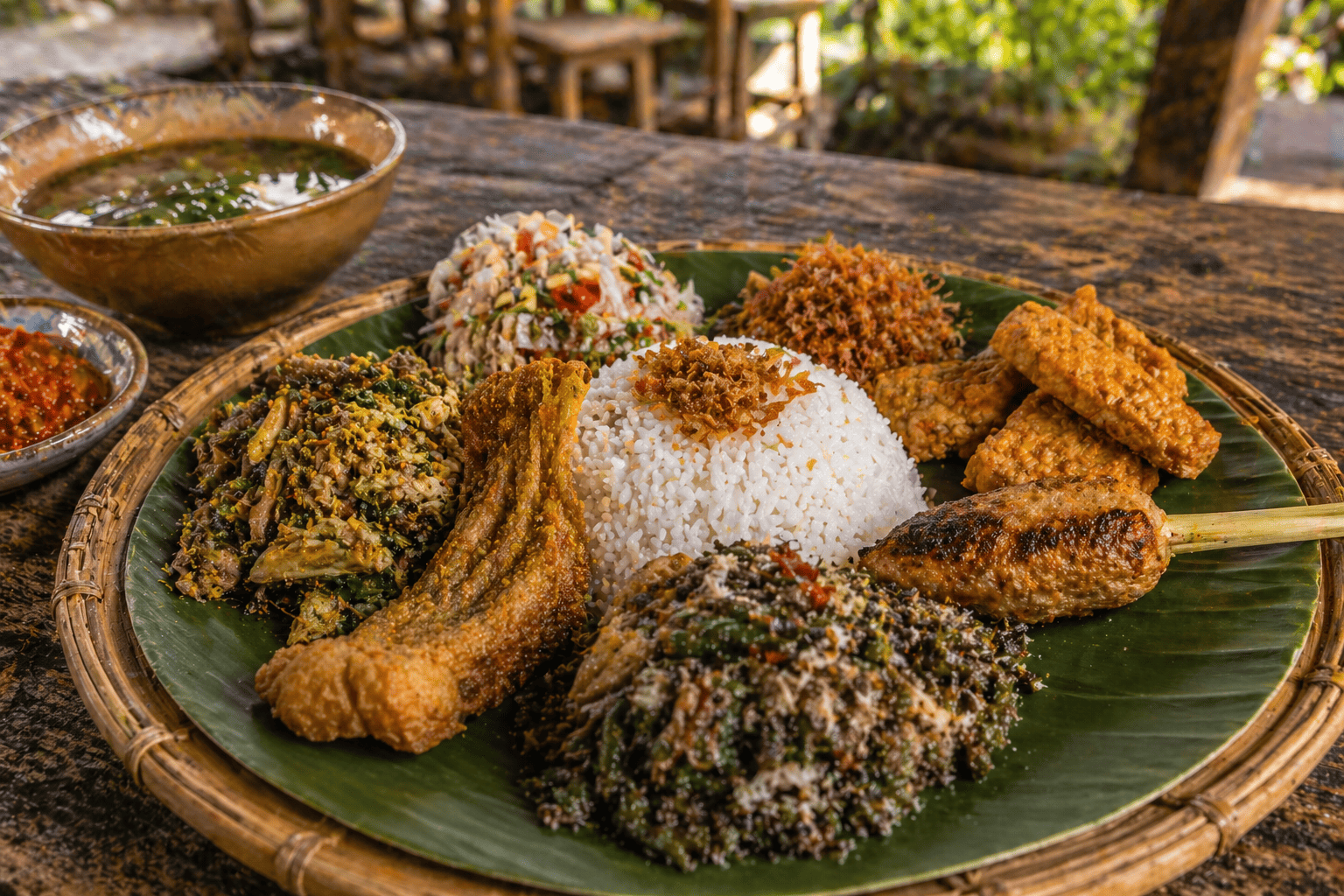
Warung Sari Nadi is a name associated with nasi Bali food culture in several locations across Indonesia. The most reviewed Warung Sari Nadi operates in the Cikarang-Bekasi area of West Java, where it has built a strong following for bringing authentic Balinese flavors to a non-Bali setting.
Reviews consistently praise the use of genuine Balinese spice preparation, with the sate lilit described as having the right balance of sweet and savory, and the ayam betutu goreng drawing particular praise.
The warung offers three main package menus: Nasi Campur Bali, Nasi Betutu Goreng, and Nasi Ayam Betutu Kuah, with prices in the 25,000 to 40,000 IDR range per person.
For travelers visiting Bali itself, the spirit of Warung Sari Nadi reflects a broader warung culture that defines how locals eat. A warung is simply a small, family-run food stall or restaurant, and across Bali, thousands of warungs specialize in nasi Bali in its many local variations.
Eating at a warung is not just a budget option; it is often where the most honest and deeply flavored food on the island lives. Bali’s best-known nasi campur spots operate out of small open-air premises, serve from a communal display of dishes, and change their daily offering based on what is freshest.
Where to Eat Nasi Bali in Bali
Across the island, nasi Bali is available everywhere from roadside warungs to dedicated restaurants that have built reputations specifically around this dish. In the Denpasar and Gianyar areas, warungs specializing in bebek and ayam betutu, the slow-smoked duck and chicken preparations, are a particular draw.
The Ubud area is surrounded by small warungs serving nasi campur fresh from morning displays. In Kuta and Seminyak, locally owned spots tucked a block or two off the main tourist drags offer the best versions without the tourist markup.
A few practical things to know about ordering nasi Bali as a visitor: the dish is often assembled from a display behind glass, where you can point to what you want on top of your rice.
Telling the staff your heat preference matters, because sambal matah and other condiments can be added or held back to suit your tolerance. In traditional non-halal warungs, pork is a standard component and appears in lawar and crackling. Halal warungs exist widely and substitute chicken or duck-based sides throughout.
The price of a proper nasi Bali meal at a local warung in Bali generally ranges from 20,000 to 50,000 IDR per person, making it one of the island’s great value eating experiences. Tourist-facing restaurants in Seminyak or Canggu may charge more, but the quality gap does not always match the price difference.
The Cultural Meaning Behind the Meal
Nasi Bali is not simply food. In Balinese Hindu culture, rice holds spiritual significance as a gift from Dewi Sri, the goddess of rice and fertility.
The preparation of ceremonial offerings in Bali almost always involves rice in some form, and the act of cooking and sharing a meal together carries social and religious weight that extends beyond nourishment.
When you eat nasi campur at a traditional warung, you are participating in a food culture that has been shaped by this spiritual relationship with rice over centuries. Base genep, the spice blend that underpins Balinese cooking, is itself prepared with an awareness of balance between hot, cool, bitter, and fragrant.
This is not incidental. Balinese cooking philosophy is deeply connected to the broader Hindu Balinese concept of harmony and balance in daily life. The flavors on your plate reflect a worldview, not just a recipe.
Understanding this background deepens the simple act of eating nasi Bali from something you do out of hunger into something you do with genuine curiosity about where you are and who prepared it for you.
Explore Bali’s Food Culture Further with SatuSatu
Discovering nasi Bali is just one part of understanding what the island tastes like, and SatuSatu is the best platform to help you go deeper. SatuSatu is a Bali travel platform that connects travelers with curated local experiences across the island, from food and culture to transport and day trips, all bookable at SatuSatu.com
Arriving on the island without the stress of negotiating airport taxis is easy with the SatuSatu Airport Transfer, which provides fixed-price, same-day bookable pickups from Ngurah Rai International Airport directly to your accommodation.
Getting around to the best local eating spots across different parts of the island is simple with the SatuSatu Exclusive Car Charter, which pairs you with a knowledgeable local driver at flexible hours so you can follow your nose without worrying about transport logistics.
For an evening experience that captures the spiritual dimension of Balinese culture that informs so much of its food and daily life, the SatuSatu Kecak Fire Dance at Uluwatu Temple is the island’s most iconic cultural performance. Tickets are bookable directly on SatuSatu.com
If you want to connect your food interest to the source, the Bali Cooking Class also available through SatuSatu.com takes you through the preparation of authentic Balinese dishes, including the base genep spice paste and nasi campur components, guided by local cooks who prepare this food every day.
All bookings are made at SatuSatu.com with full support for local payment methods including BCA, Mandiri, OVO, DANA, credit cards, and more.
FAQ: Nasi Bali and Warung Sari Nadi
What is nasi Bali?
Nasi Bali refers to Balinese-style mixed rice, typically served as nasi campur with a combination of spiced meats, lawar, sate lilit, fried tempeh, and sambal matah alongside steamed rice. The defining characteristic is the use of base genep, Bali’s complex traditional spice paste.
What makes Warung Sari Nadi known for nasi Bali?
Warung Sari Nadi is a well-reviewed warung known for preparing nasi Bali with authentic Balinese spice traditions, including ayam betutu and sate lilit. It has built a loyal following particularly among Balinese diaspora and food lovers seeking genuinely flavored nasi campur outside of Bali.
Is nasi Bali spicy?
It can be, depending on how much sambal matah or chilli paste is included. At most warungs, you can request a milder preparation or ask for the sambal on the side. The base spice paste itself is aromatic and warm rather than aggressively hot.
Is nasi Bali halal?
Traditional nasi Bali often includes pork components like lawar and crackling. Many warungs offer halal versions that substitute chicken or duck throughout. It is always worth asking when ordering if this is important to you.
How much does nasi Bali cost at a local warung in Bali?
Prices at local warungs typically range from 20,000 to 50,000 IDR per person for a full plate. More tourist-facing restaurants in areas like Seminyak or Canggu may charge higher prices for similar dishes.