There is a moment on the Ayung River when the jungle closes in on both sides, the sound of rushing water fills your ears, and you realize you are somewhere most tourists never get to see.
That is what rafting in Bali feels like. It is not just an adrenaline hit, it is a full sensory plunge into the island’s wild interior. Whether you have never held a paddle in your life or you are chasing serious whitewater, Bali’s rivers have something genuinely thrilling to offer.
The team at SatuSatu, a Bali travel platform built for travelers who want to do the island properly, has helped countless visitors find their way to these experiences, and this guide covers everything you need to know before you go.
What Is Rafting?
Rafting, or white water rafting, is an outdoor adventure activity where a group of people ride an inflatable raft down a river, navigating through moving water and natural obstacles using paddles.
The rapids are classified by difficulty levels, from Class I (calm and flat) through to Class V (extremely challenging, expert only). In Bali, the rivers used for tourism-grade rafting are mostly Class II to Class III, meaning they are exciting and splashy without being dangerous for first-timers.
The sport requires no prior experience. Before setting off, guides give every participant a full safety briefing covering paddle technique, weight distribution, and what to do in the unlikely event you fall out.
Most tours last between one and a half to three hours on the water, depending on the river, and typically include equipment like a helmet, life jacket, and paddle.
The Main Rivers for Rafting in Bali
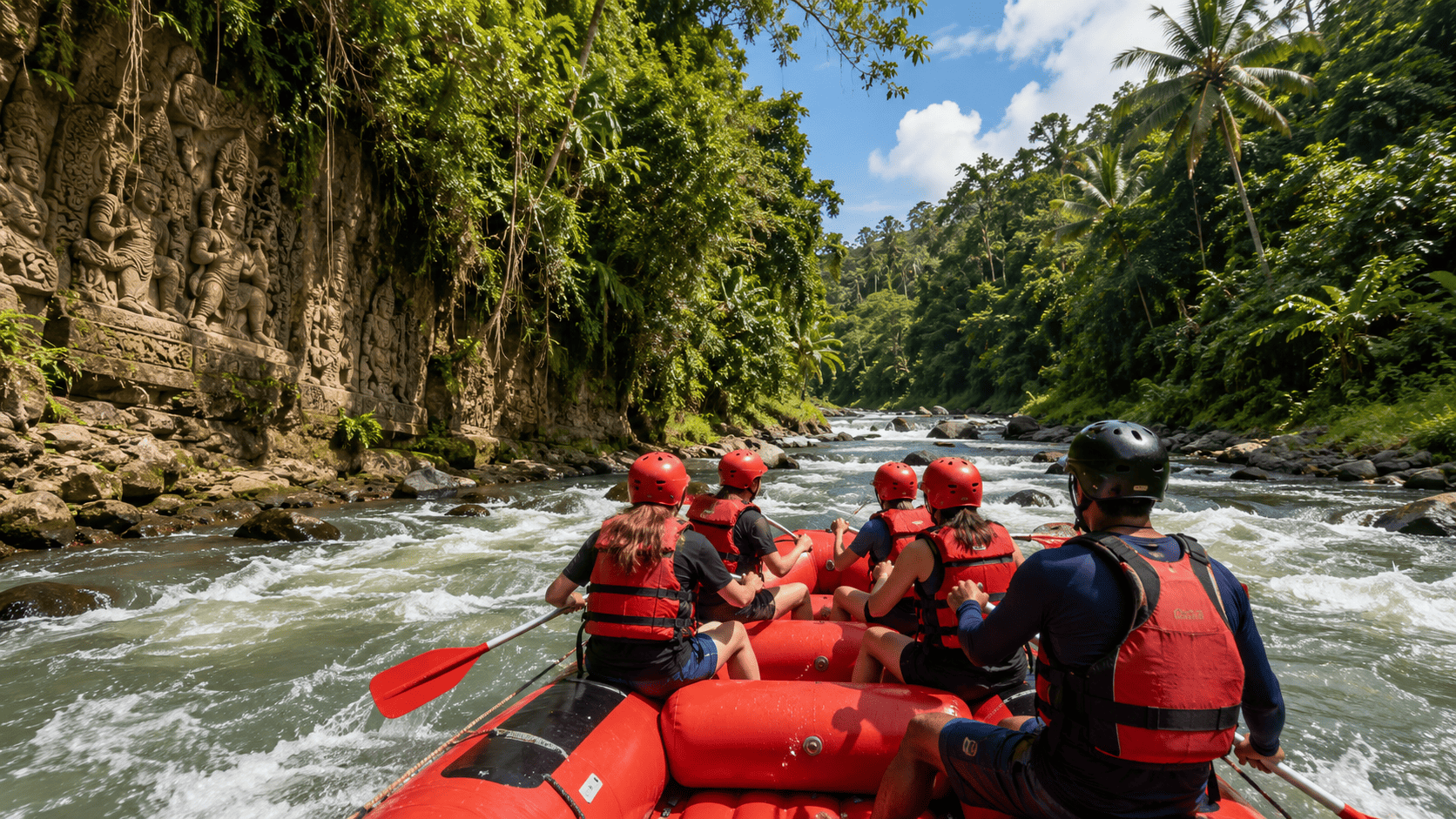
Bali has three rivers used regularly for rafting, each with its own personality. The Ayung River near Ubud is the most popular and the one most first-timers start with. It winds through a deep jungle gorge, past ancient stone carvings etched into the riverbanks, rice terraces, and hanging tropical vines.
The rapids here are mostly Class II, making it ideal for families and newcomers. The route is around nine to ten kilometers and takes approximately one and a half to two hours on the water.
The Telaga Waja River in Karangasem is the one for those who want more. It features consistent Class III rapids with a few Class IV stretches, a longer track of roughly seventeen kilometers, and the backdrop of Mount Agung’s cone on clear days.
This river takes two and a half to three hours to complete and is widely considered the most technically demanding rafting experience in Bali suitable for recreational visitors. The water here runs fast and the valley is steep and dramatic.
The Melangit River in Klungkung is quieter and less visited, offering a gentler introduction that suits families with younger children or travelers looking for more of a scenic float than an adrenaline workout. It is a solid choice if the idea of Class III water feels like too much.
What to Expect on the Day
Most rafting tours include hotel pickup and drop-off, which takes the logistics stress out of the day. You will arrive at a base camp or launching point, where guides run through safety procedures and let you practice basic paddle strokes before the raft hits the water.
Helmets and life jackets are standard gear provided at every reputable operation. On the river, your guide sits at the back of the raft and directs the paddling. You will work as a team through the rapids, which is part of what makes the experience so enjoyable even for complete beginners.
Between the fast sections, the river slows and gives you time to take in the jungle scenery, the sound of waterfalls, and the occasional glimpse of local life along the banks.
After the run, most operators provide a meal, a shower, and time to dry off before the return transfer. Budget around three to five hours for the full experience from pickup to drop-off.
Practical Tips Before You Go
Wear clothes you do not mind getting soaked. Quick-dry shorts and a lightweight shirt are ideal. Leave valuables at the hotel since everything on the raft will get wet. Most operators supply waterproof bags for phones and cameras on request.
Minimum age requirements vary by river and operator, but the Ayung is generally accessible to children from around six years old. The Telaga Waja has a higher age and fitness requirement.
Neither river requires swimming ability since life jackets keep everyone afloat, but it is worth flagging any medical conditions or pregnancy before booking.
Prices for rafting in Bali typically start around IDR 350,000 to IDR 500,000 per person for the Ayung, and tend to be slightly higher for the longer Telaga Waja route. Combo packages that pair rafting with ATV riding are also widely available and can work out more economical than booking separately.
Top Highlights
- No experience needed: Bali’s rafting rivers are designed for everyone, and guides provide a full briefing before departure so even complete first-timers can paddle with confidence from the first rapid.
- Stunning river landscapes: The Ayung route in particular passes ancient stone carvings, lush jungle gorges, and working rice terraces that you simply cannot access any other way.
- Suitable for families: The Ayung River is one of the most family-friendly adventure activities on the island, with calm enough stretches to keep younger paddlers comfortable.
- More than just rapids: Between the exciting sections, the pace drops and the scenery takes over, making the experience as much about Bali’s natural beauty as the adrenaline.
- Telaga Waja for serious thrill-seekers: If you want a genuine challenge, the seventeen-kilometer run on the Telaga Waja with its Class III-IV rapids and Mount Agung backdrop delivers an unforgettable half-day adventure.
The Honest Verdict: Is Rafting in Bali Worth It?
Yes, genuinely. Rafting in Bali sits in that rare sweet spot where the scenery is extraordinary and the activity is accessible to almost everyone.
The Ayung River route is particularly hard to fault for families or first-timers: the jungle setting is stunning, the guides are experienced and safety-focused, and the rapids are exciting without being intimidating. It is the kind of activity that tends to be a highlight reel moment for most trips.
The Telaga Waja is the right choice if you want a longer, harder, more dramatic ride. Just expect a good two-plus hours of active paddling through some genuinely fast water. The Melangit is the quiet alternative for those who want the river experience without the rapids.
The one honest caveat: quality varies between operators, so it is worth choosing a well-reviewed provider. Safety briefings should be thorough, gear should be in good condition, and guides should be clearly experienced on their section of river. When you book through a platform that vets its activities, that peace of mind comes built in.
Explore Bali’s Rivers Further with SatuSatu
Rafting is one of the most rewarding ways to see Bali’s wild interior, and SatuSatu makes it easy to plan and book the rest of your island adventure around it.
SatuSatu is a Bali travel platform that brings together transport, cultural experiences, and curated activities in one place, all bookable directly on SatuSatu.com with support for local payment methods including BCA, Mandiri, OVO, DANA, credit cards, and more.
Starting your Bali trip smoothly matters, and SatuSatu’s Airport Transfer takes the stress out of arrival with fixed pricing, same-day booking, and a reliable ride from Ngurah Rai straight to your accommodation.
Once you are settled in, SatuSatu’s Exclusive Car Charter gives you a dedicated local driver and the freedom to build your day around the rivers, temples, or rice terraces that interest you most, with no fixed schedule and no negotiating.
After a day on the water, few things round off a Bali experience quite like an evening at Uluwatu Temple. The Kecak Fire Dance at Uluwatu is one of the island’s most iconic performances: a hypnotic fire ritual set against the cliffs at sunset that stays with you long after you leave.

And if you want to do more across Bali without the hassle of planning each activity separately, the SatuSatu Bali All-Access Pass is the smartest way to stretch your trip further.
Choose from a 1-day pass at $59.95 (IDR 999K), a 2-day pass at $104.95 (IDR 1.799M), or a 3-day pass at $144.95 (IDR 2.499M), and unlock access to 50+ top Bali experiences spanning destinations across the island, from the Kecak Fire Dance at Uluwatu to snorkeling in Padang Bai and wellness and spa experiences across Bali.
Every pass includes a free eSIM and a dedicated Bali concierge to handle all the planning for you, saving you up to 60% compared to booking individually, with 90-day validity from purchase for maximum flexibility.
FAQ about What Is Rafting in Bali?
What is rafting in Bali and is it suitable for beginners?
Rafting in Bali involves paddling an inflatable raft through river rapids under the guidance of a trained professional. The Ayung River near Ubud is specifically designed for beginners and families, with Class II rapids and experienced guides who provide a full safety briefing before you hit the water. No prior experience is necessary.
Which is the best river for rafting in Bali?
The Ayung River is the best starting point for most visitors thanks to its beautiful jungle scenery and beginner-friendly rapids. The Telaga Waja River in Karangasem is the top choice for those wanting longer runs and more challenging Class III-IV water.
How long does a rafting trip in Bali take?
On the water, the Ayung route takes around one and a half to two hours. The Telaga Waja route runs two and a half to three hours. When you include hotel pickup, safety briefing, and the return transfer, budget around three to five hours total for the day.
What should I wear for rafting in Bali?
Quick-dry shorts and a lightweight top are ideal. You will get wet, so leave valuables at your accommodation and bring a change of clothes. Helmets and life jackets are provided by all operators.
Is rafting in Bali safe for children?
Yes, particularly on the Ayung River, which is generally accessible to children aged six and above. Life jackets are provided to all participants regardless of swimming ability, and guides are trained to manage the safety of the whole group throughout the run.