Adventure reveals a different side of Bali. While many travelers focus on beaches, the island’s rivers carve through jungles, volcanic valleys, and remote villages. Consequently, rafting offers one of the most immersive ways to experience Bali’s natural landscapes.
Imagine paddling through foaming rapids as rainforest rises around you. Then, moments later, the river slows, allowing you to drift beneath ancient carvings while birds echo overhead. Therefore, white water rafting in Bali delivers both adrenaline and serenity within a single journey.
This guide explains why rafting deserves a place on your itinerary, highlights the best rivers, and provides practical insights for planning a safe and memorable adventure.
Why White Water Rafting Elevates the Bali Experience
Bali’s interior contrasts sharply with its coastline. Instead of beach clubs and sunsets, you encounter dense rainforest, steep gorges, and terraced farmland.
As rivers cut through these landscapes, they create natural corridors for exploration. Therefore, rafting becomes more than a sport—it becomes a gateway into parts of Bali many travelers never see.
Moreover, rafting combines physical activity with cultural exposure. Routes often pass temples, village pathways, and traditional farming areas. Consequently, the experience feels both adventurous and deeply contextual.
For travelers seeking meaningful outdoor activities, rafting stands among the most rewarding things to do in Bali.
Best Rivers for White Water Rafting in Bali
Ayung River: Scenic and Beginner-Friendly
The Ayung River flows through Ubud’s lush jungle and remains Bali’s most popular rafting destination. Because its rapids typically range from Class II to III, beginners and families often choose this route.
Meanwhile, carved stone reliefs and hanging vines add visual drama along the riverbanks.
- Adventure Level: Easy to moderate
- Best For: Families, first-time rafters, mixed-skill groups
- Highlights: Jungle scenery, cultural carvings, calm floating sections
- Practical Insight: Morning departures usually provide cooler temperatures and lighter river traffic.
Telaga Waja River: High-Energy Rapids with Volcano Views
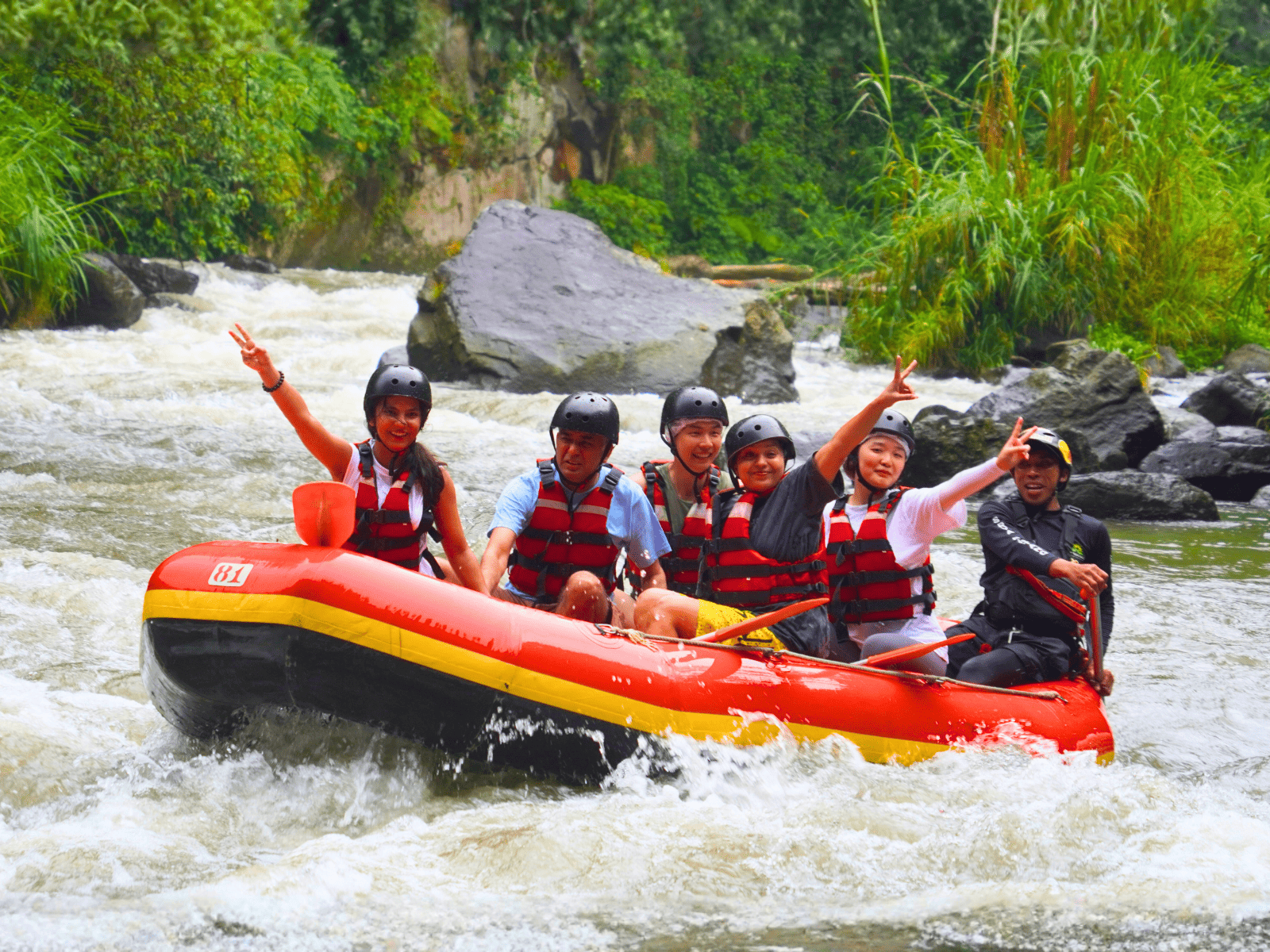
For travelers craving intensity, Telaga Waja delivers faster currents and longer runs. Fed by mountain streams near Mount Agung, the river maintains consistent flow throughout much of the year.
Additionally, the route includes technical passages and a memorable dam drop.
- Adventure Level: Moderate to challenging
- Best For: Active travelers and adrenaline seekers
- Highlights: Continuous rapids, rice terrace views, dramatic landscapes
- Safety Tip: Choose operators with strong safety records and experienced guides.

Melangit River: Quiet and Off the Beaten Path
Melangit offers a more intimate rafting experience. Because fewer tours operate here, the river often feels peaceful compared to larger routes.
Dense vegetation and narrow passages create a sense of discovery throughout the journey.
- Adventure Level: Moderate
- Best For: Couples, solo travelers, small groups
- Highlights: Minimal crowds, lush jungle corridors
- Planning Note: Advance booking helps secure availability.
Pakerisan River: Cultural Scenery and Gentle Waters
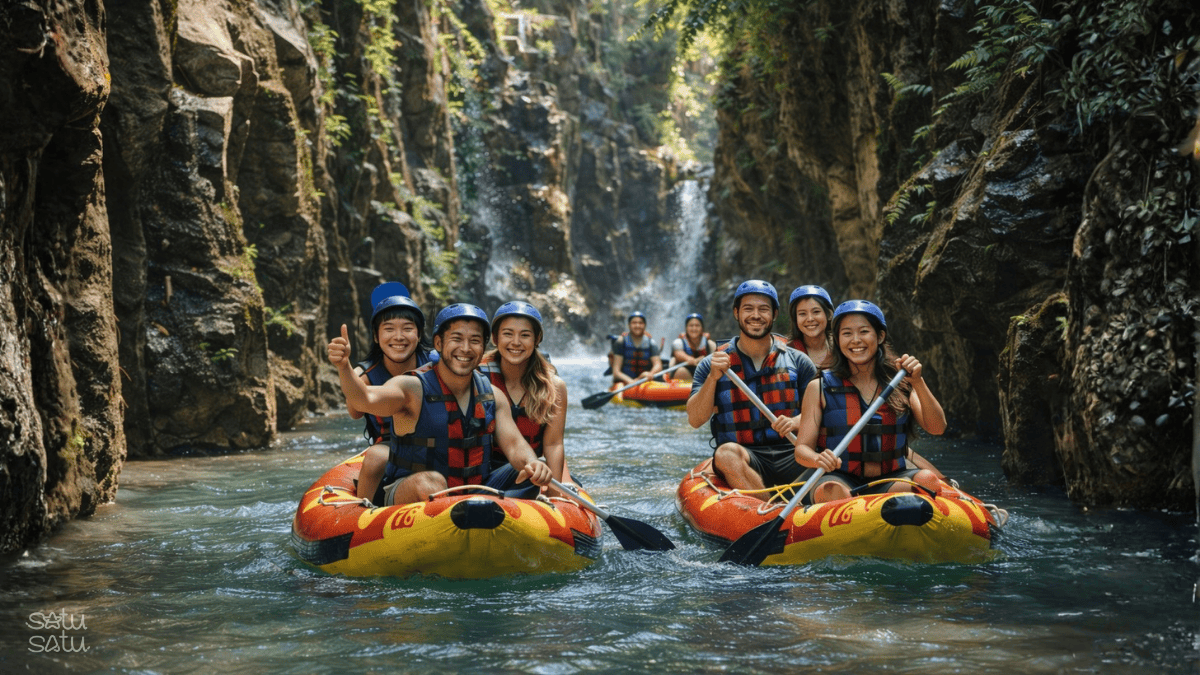
Travelers interested in heritage often gravitate toward the Pakerisan River. Calm sections allow more time to appreciate nearby temples and historic landscapes. Therefore, the route suits families and culturally curious explorers.
- Adventure Level: Easy
- Best For: Families and relaxed adventurers
- Highlights: Temple views, UNESCO-recognized landscapes
How to Plan a Smooth Rafting Adventure
Thoughtful preparation significantly improves your experience.
First, match the river to your comfort level. Beginners typically prefer the Ayung, whereas experienced rafters often select Telaga Waja.
Next, book reputable operators that provide certified guides and modern equipment. Most packages include helmets, life jackets, paddles, transfers, and post-rafting meals.
Additionally, wear quick-dry clothing and secure footwear. Bringing waterproof protection for electronics also prevents unnecessary stress.
Finally, depart early. Not only does this reduce crowds, but it also improves lighting and temperature conditions.
Combine Rafting with Other Bali Adventures
Rafting pairs naturally with other outdoor activities. For example, many travelers combine river journeys with ATV rides or jungle treks. Others add scenic swings or waterfall visits to create a full-day adventure.
Consequently, structuring your itinerary around complementary experiences maximizes both time and energy.
Travel Responsibly Along Bali’s Rivers
Many rafting routes pass sacred or environmentally sensitive areas. Therefore, responsible behavior protects both local culture and natural ecosystems.
Follow guide instructions, avoid littering, and remain mindful near temples or ceremonial spaces. Small actions help preserve these landscapes for future travelers.
Why Rafting Represents a Curated Adventure
Modern travelers increasingly seek experiences rather than passive sightseeing. Rafting reflects this shift because it encourages participation, movement, and discovery.
Instead of observing Bali from a distance, you engage directly with its terrain. As a result, the journey becomes personal and memorable.
Curated outdoor adventures provide structure without limiting exploration, allowing travelers to experience Bali with both excitement and intention.
Discover Rafting Adventures with Local Insight
Exploring Bali’s rivers with local expertise unlocks routes and perspectives that typical itineraries overlook. From scenic jungle floats to technical rapids, curated journeys reveal the island’s untamed character.
SatuSatu curates adventure experiences that connect travelers with Bali’s landscapes and communities, creating journeys that feel immersive, intentional, and unforgettable.