Tianmen Mountain National Forest Park
Tianmenshan National Forest Park, Tianmenshan Cableway, Dayong Road, Yongding District, Zhangjiajie City
Get Help
From USD 22.87
/ person
Start from
Tianmenshan National Forest Park, Tianmenshan Cableway, Dayong Road, Yongding District, Zhangjiajie City
Get Help
/ person
A Type VIP Ticket
B Type VIP Ticket
General VIP Ticket
General A Zone Ticket
General B Zone Ticket
Line B (Express Cableway up + Tianmen Mountain Cableway down)
Package A (Tianmen Mountain Cableway Up - Tianmen Cave express Cableway Down)
Line C (Express Cableway up + Express Cableway down)
Tianmen Mountain National Forest Park is one of China's most dramatic and visually extraordinary natural attractions, located just 8 kilometres from the city centre of Zhangjiajie in Hunan Province, central China. Rising to an elevation of 1,518 metres above sea level and cloaked in dense subtropical forest, Tianmen Mountain — whose name translates as Heaven's Gate Mountain — is celebrated across China and the world for its combination of spectacular karst limestone scenery, vertiginous cliffside walkways, the legendary Tianmen Cave natural arch, and the world's longest cable car journey, which delivers guests from the city of Zhangjiajie to the mountain summit in a breathtaking 7.5-kilometre aerial voyage across some of the most dramatic mountain terrain in Asia. The mountain has been revered in Chinese culture for over 1,500 years and holds deep Taoist and Buddhist spiritual significance — its temples, pavilions, and sacred sites woven into the forested landscape alongside the natural wonders that draw millions of visitors from across China and the world each year.
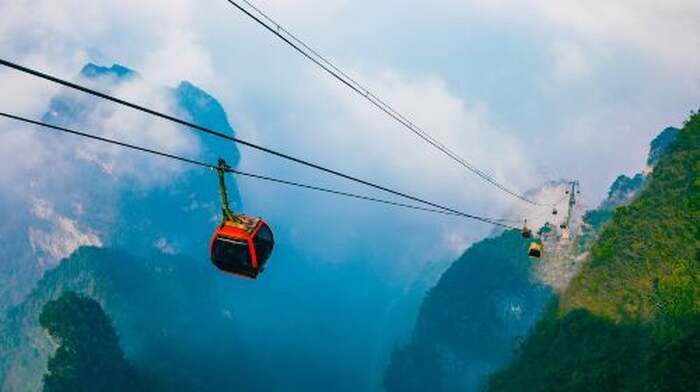
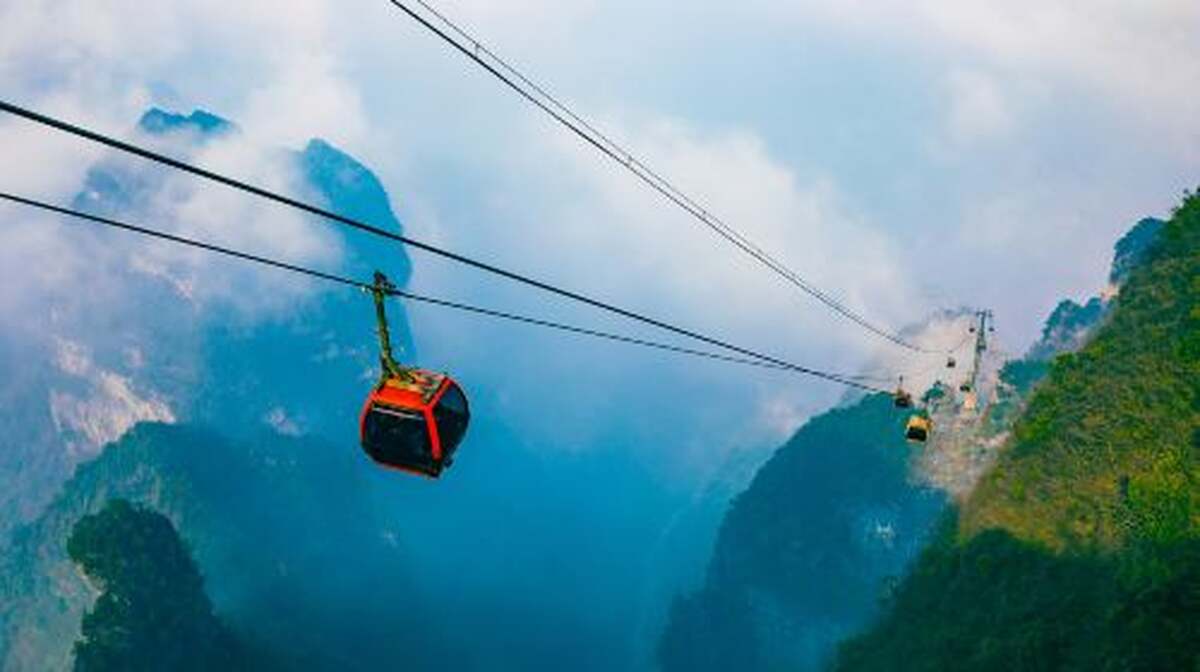
The mountain experience is built around four signature attractions that together deliver one of the most complete and sensationally varied natural heritage experiences available anywhere in China. The Tianmen Mountain Cableway — at 7.5 kilometres the longest passenger cable car in the world — ascends from the Zhangjiajie city base station to the mountain's summit plateau in a journey of approximately 30 minutes, passing through dramatic changes in altitude, vegetation, and cloud cover that make the ride itself one of the most spectacular in the world regardless of the destination at its upper end. The mountain summit plateau is home to an extensive network of walking trails, forested pathways, and viewpoint terraces that weave through ancient woodland and along the edges of sheer limestone cliffs — including the celebrated Coiling Dragon Cliff glass-bottomed skywalk, a 1,600-metre transparent walkway cantilevered directly out from the cliff face at a height of over 1,430 metres that delivers an experience of vertiginous intensity matched by very few natural attractions anywhere on earth. The 999 Steps — a steep stone staircase ascending directly through the cliff face to Tianmen Cave — provide an alternative and physically demanding approach to the mountain's most iconic feature. Tianmen Cave itself is the centrepiece of the entire mountain experience — a vast natural arch approximately 131 metres high and 57 metres wide that pierces entirely through the cliff face to frame a perfectly circular window of sky on the far side, creating one of the most dramatically beautiful natural formations in the world and the image most closely associated with Tianmen Mountain in Chinese and international popular culture.
A full visit to Tianmen Mountain typically requires between 6 and 8 hours to cover the cableway, summit plateau trails, glass skywalk, and Tianmen Cave at a comfortable and rewarding pace. The park operates an internal bus system connecting the various summit attractions for guests who prefer not to walk the full trail network between sites. Entry tickets cover the cableway, internal buses, and access to all summit attractions within the park boundary. Advance booking is strongly recommended during Chinese public holidays and the peak summer and autumn seasons when visitor numbers are at their highest. The mountain is fully operational year-round, though winter visits offer dramatically different conditions — snow-covered landscapes and mist-filled valleys of extraordinary atmospheric beauty — compared to the lush green subtropical environment of the warmer months.