If you’re looking for a Bali experience that feels raw, peaceful, and genuinely magical, SatuSatu has you covered. Sangeh Monkey Forest is one of those rare spots that hasn’t been completely taken over by crowds and that’s exactly what makes it so worth visiting.
You can explore more hidden gems like this straight from SatuSatu.com a locally curated travel platform built for travelers who want the real Bali, not just the highlight reel.
Tucked away in the village of Sangeh, Abiansemal, Badung, this ancient forest is home to hundreds of long-tailed macaques, towering nutmeg trees, and a 17th-century Hindu temple that still holds deep spiritual significance for the local community.
It’s one of those places where nature, history, and culture all meet in one shady, mystical corner of the island.
What Is Sangeh Monkey Forest?
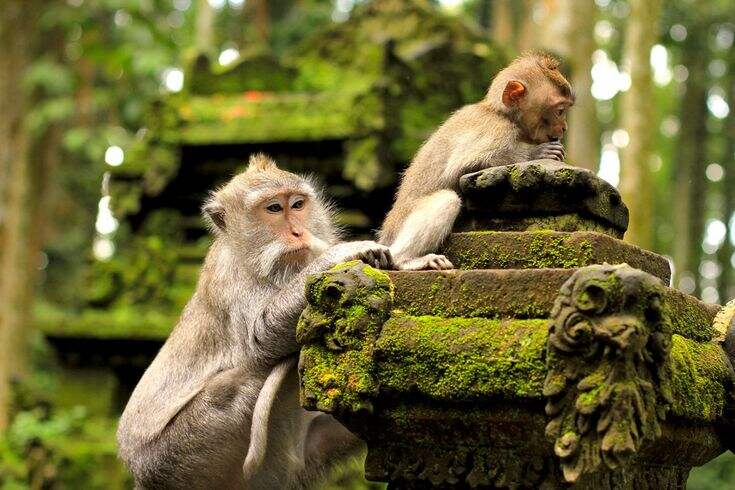
Sangeh Monkey Forest is a protected nature reserve and sacred temple area covering approximately 14 hectares in central Bali. It’s been a conservation site since 1919, making it one of the oldest nature reserves on the island.
The forest is home to around 600 grey long-tailed macaques (Macaca fascicularis) wild, but relatively calm and well-adjusted to human visitors. What separates Sangeh from other monkey spots in Bali is the atmosphere.
The towering nutmeg trees, some over three centuries old, create a dense green canopy that keeps the air cool and the light beautifully filtered. Walking through the forest feels like stepping into another world one where the monkeys are in charge and you’re just a guest passing through.
The forest is also deeply tied to Balinese Hindu tradition. At its heart sits Pura Bukit Sari, a sacred temple built in the 17th century by a son of the King of Mengwi.
Local legend says the forest itself “walked” from Mount Agung to surround and protect the temple which is why the nutmeg trees here are considered sacred and cannot be cut or disturbed. A second temple, Pura Melanting, also sits within the forest grounds, adding another layer of spiritual significance to the site.
Location & How to Get There
Sangeh Monkey Forest is located in Jl. Brahmana, Sangeh Village, Abiansemal, Badung Regency, about 25 kilometers north of Denpasar. From Ngurah Rai International Airport, expect around a 45 to 60-minute drive depending on traffic.
From Seminyak or Canggu it’s roughly 45 to 60 minutes, from Ubud about 30 minutes heading northwest, and from Denpasar around 45 minutes via Jl. Raya Denpasar-Petang.
The best way to get there is by hiring a private driver or renting a scooter. Public transportation to Sangeh is very limited, so having your own ride gives you far more flexibility especially if you’re planning to combine the visit with other central Bali spots like Taman Ayun Temple or the Jatiluwih Rice Terraces.
Ticket Prices & Opening Hours
Sangeh Monkey Forest is open daily from 08:00 AM to 5:00 PM. Ticket prices are very reasonable one of the most affordable attractions in Bali. International visitors pay IDR 75,000 per adult, while domestic tourists pay IDR 15,000.
Parking costs IDR 2,000 for motorbikes and IDR 5,000 for cars. For those looking to do a pre-wedding photo shoot, the fee is IDR 500,000 for international visitors and IDR 300,000 for domestic tourists from outside Bali.
There are local food vendors and small art stalls near the entrance and parking area, so you can grab a snack or a souvenir before or after your visit.
What to See & Do Inside
Once you’re inside, the forest rewards slow exploration. The 600+ macaques that call this place home are the obvious main draw and unlike some of Bali’s more tourist-heavy monkey spots, the Sangeh macaques tend to be calmer and less frantic simply because they aren’t dealing with overwhelming visitor numbers every single day.
Local staff walk the grounds and can help you with guided monkey interactions, including getting that iconic monkey-on-the-shoulder photo. A small tip for their help is always appreciated.
The 17th-century Pura Bukit Sari at the heart of the forest is a genuinely beautiful structure still actively used for Hindu ceremonies.
The temple carries a quiet, reverent energy that’s worth slowing down to absorb the architecture and stone carvings are striking, and the atmosphere here feels entirely different from Bali’s more commercial temple sites.
The nutmeg trees themselves deserve just as much attention as the wildlife. Giant trees tower up to 40 meters overhead, their roots gnarled and dramatic. There’s also a unique sacred tree near the entrance called Lanang Wadon meaning “male-female” a milkwood pine known for its unusual form and deep significance in Balinese tradition.
Beyond the monkeys, the forest is also habitat for around 22 bird species plus reptiles and amphibians, so nature lovers will find plenty to take in beyond the main attractions.
Tips for a Great Visit
A few practical things to keep in mind before you go. Don’t bring visible food the monkeys are smart and persistent, so keep snacks in a securely zipped bag or leave them in the car.
Remove sunglasses and keep jewelry tucked away, as the macaques are attracted to shiny objects and won’t hesitate to grab them. Avoid running or making direct eye contact with the larger males, as this can be read as a challenge.
Visit early in the morning when the light is stunning, the monkeys are most active, and the crowd is at its smallest. Dress modestly with covered shoulders and knees, and note that women during menstruation are asked not to enter the forest in line with local Balinese Hindu customs.
What Makes Sangeh Monkey Forest Special
Sangeh isn’t trying to be a theme park. It’s a functioning conservation area and a living sacred site and that authenticity is precisely what makes it stand out from the crowd. The monkeys here are wild but well-adjusted, the temple is genuinely used for active worship, and the forest itself feels ancient and untouched in the best possible way.
There’s a stillness to the place that’s increasingly rare to find in Bali’s more visited corners.
It’s also significantly less crowded than Ubud’s famous monkey forest, which means you get real space to breathe, wander at your own pace, and take everything in without feeling rushed.
Locals even use it as a favourite backdrop for traditional Balinese pre-wedding photo shoots a testament to just how photogenic and meaningful this setting truly is.
If you’re pairing Sangeh with a central Bali day trip, it slots in perfectly alongside Taman Ayun Temple and the Bedugul highlands for a full and deeply satisfying day out on the island.
Explore Sangeh with SatuSatu
Getting to Sangeh from most parts of Bali means sorting out a ride and that’s where SatuSatu genuinely makes your life easier. SatuSatu is a locally curated travel platform where every booking is made directly through SatuSatu.com with instant confirmation, dedicated local support, and no middlemen involved.
Their Airport Transfer service is a smooth, no-hassle way to get from Ngurah Rai Airport straight to your accommodation same-day booking is available and pricing is fully transparent with no haggling involved. It’s the perfect starting point for visitors who want to get settled quickly and start exploring Bali right away.
For the actual day trip to Sangeh, their Exclusive Car Charter gives you a dedicated local driver with completely flexible timing so you can build your own central Bali route, linger as long as you like at the forest, and add stops along the way without any pressure.
All bookings are made directly on SatuSatu.com and support a wide range of local payment methods including BCA, Mandiri, OVO, DANA, credit cards, and more.
FAQ about Sangeh Monkey Forest
Is Sangeh Monkey Forest safe to visit?
Yes, it’s generally very safe as long as you follow the basic guidelines keep food hidden, avoid loose jewelry or sunglasses, and don’t run near the monkeys. Local staff are always on-site and happy to help throughout your visit.
How long does a visit to Sangeh Monkey Forest take?
Most visitors spend between one to two hours exploring the forest and temple grounds. If you’re combining it with nearby attractions, plan for at least half a day.
Is Sangeh Monkey Forest better than Ubud Monkey Forest?
Both are worth visiting, but they offer different vibes. Sangeh is quieter, less commercialized, and the monkeys tend to be noticeably calmer. If you want a more relaxed, authentic experience away from bigger crowds, Sangeh is the one to pick.
Can I take photos with the monkeys?
Yes, local staff can help you get up-close shots with the monkeys. A small tip for their assistance is customary and very much appreciated.
What should I wear to Sangeh Monkey Forest?
Comfortable clothes covering your shoulders and knees are ideal out of respect for the sacred site. Sturdy, closed footwear is also recommended since some forest paths can be uneven underfoot.