Planning a journey between the southern luxury enclave of the Bukit and the cultural heart of the highlands requires a bit of local insight into Balinese traffic. To help you navigate these transitions, SatuSatu acts as a dedicated Bali travel platform that helps travelers discover and book experiences across every corner of the island.
Understanding the logistics of your trip is essential for maximizing your relaxation time rather than spending it stuck in a car. While the map might show a relatively short distance, the reality of island transit depends heavily on the time of day and the specific route you choose to take.
Understanding the Physical Distance and Typical Duration
The straight-line distance between these two popular hubs is roughly 40 kilometers, but the actual road distance is closer to 45 or 50 kilometers. In many parts of the world, a 50-kilometer drive would take less than an hour, but Bali operates on its own unique timeline.
On an exceptionally clear day with no traffic, you might be able to complete the journey in about 75 minutes. however, this is rarely the case for most travelers moving during daylight hours.
A more realistic expectation for a one-way trip is anywhere from 1.5 to 2.5 hours. The duration fluctuates based on several factors, including local ceremonies, road construction, and the inevitable bottlenecks in areas like Sanur or Batubulan.
If you are traveling during peak holiday seasons or during the late afternoon rush, it is always wise to add an extra 30 to 45 minutes to your estimated arrival time to avoid stress.
Knowing how far is Nusa Dua to Ubud in terms of time is often more important than the kilometer count. Most travelers find that leaving early in the morning, around 8:00 AM, provides the smoothest experience before the heavy midday congestion begins.
Alternatively, traveling later in the evening after 7:30 PM can significantly cut down on the transit time, though you will miss out on the scenic views along the way.
The Primary Route via the Mandara Toll Road
The most common and efficient way to start this journey is by using the Bali Mandara Toll Road. This impressive over-water highway connects Nusa Dua to the Benoa and Sanur areas, bypassing the heavily congested bypass road in Jimbaran.
The toll road offers a fast start to your trip and provides beautiful views of the mangroves and the ocean, making the first 10 to 15 kilometers feel effortless. Once you exit the toll road in the Benoa or Sanur area, you will continue north along the Jalan Bypass Ngurah Rai.
This stretch of road is a major artery for the island, so expect to encounter several large intersections with traffic lights. This is usually the section where you will first encounter significant traffic, as vehicles from Kuta and Denpasar merge into the northbound flow.
As you move past Sanur, the road transitions into smaller local streets as you approach the Gianyar Regency. You will pass through Tohpati and Batubulan, areas famous for their stone carvings and batik workshops.
While these areas are culturally interesting, the roads here are narrower and can be prone to slow-moving traffic, especially if there is a religious procession taking place in one of the local villages.
Alternative Scenic Routes through Local Villages
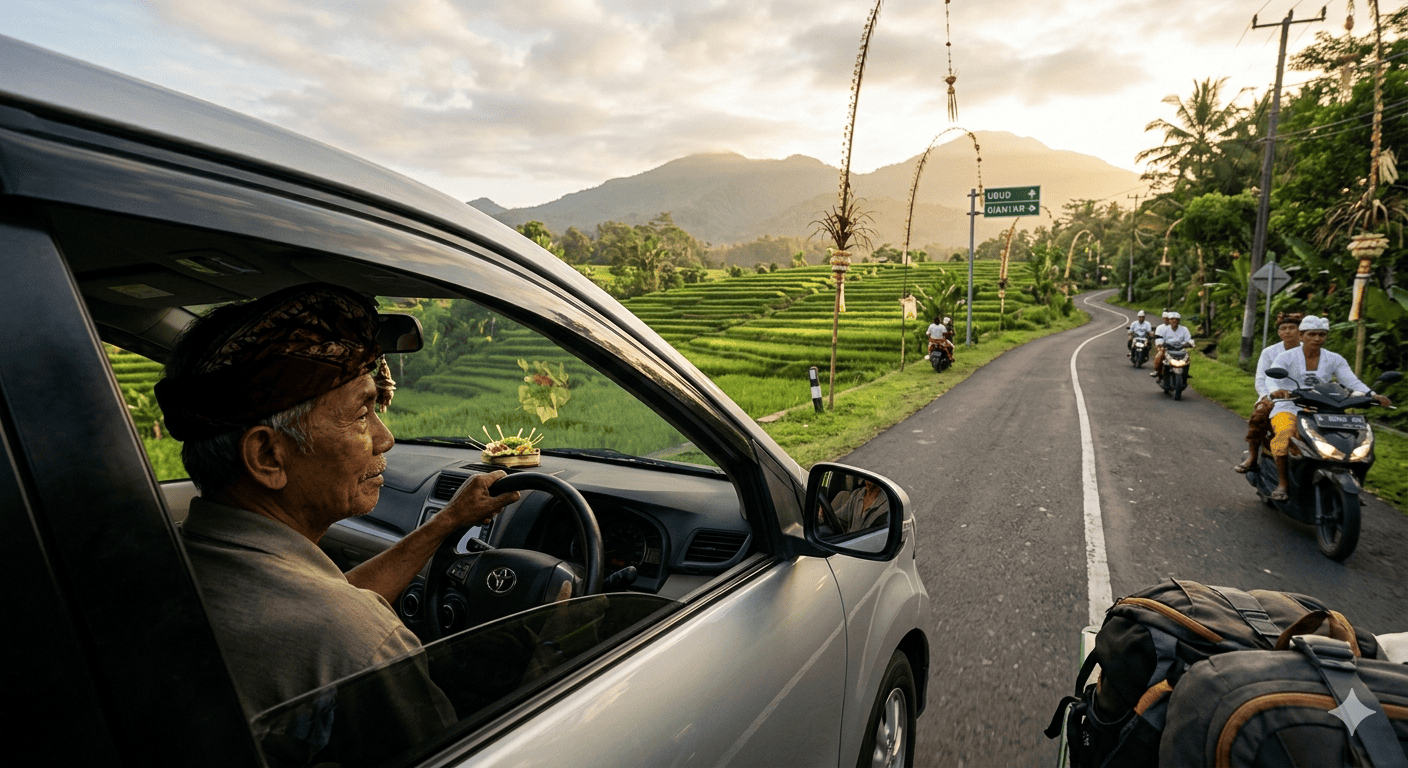
For those who aren’t in a rush and want to see more of the island, there are alternative paths that veer off the main highway. Instead of sticking strictly to the bypass, a driver might take you through the smaller backroads of Sukawati or Mas.
These routes might not always be faster, but they offer a much more intimate look at Balinese daily life, passing through lush green landscapes and traditional family compounds.
The Sukawati route is particularly popular for those who want to stop at the famous art market or the nearby hidden canyon. Moving through these villages allows you to see the transition from the manicured, resort-focused environment of Nusa Dua to the more rustic and artistic vibe of the Ubud outskirts.
You will notice the architecture changing and the air becoming slightly cooler as you gain elevation. However, be aware that these local roads are often used for village ceremonies and funeral processions.
In Bali, a ceremony always takes precedence over vehicular traffic, and roads may be temporarily closed or restricted. A local driver with experience will usually know how to navigate these detours or will have heard about them through the local community network, saving you from getting stuck in a dead-end street.
Factors That Influence Your Travel Time
Traffic is the most obvious variable, but the weather also plays a significant role in how far is Nusa Dua to Ubud feels. During the monsoon season, heavy tropical downpours can lead to localized flooding on some of the lower-lying roads.
This causes traffic to slow to a crawl as drivers navigate large puddles and reduced visibility, potentially adding an hour to your trip. The day of the week is another crucial consideration for your logistics. Weekend traffic can be particularly heavy as locals from Denpasar head toward the cooler climate of the mountains for a day trip.
Conversely, Friday afternoons often see a surge in traffic as people leave the city for the weekend. Planning your transit for a Tuesday or Wednesday is often the best strategy for a predictable and faster journey.
Public holidays and major religious festivals like Galungan or Kuningan will also impact the roads significantly. During these times, many shops may be closed, but the streets are filled with beautiful penjor decorations and people dressed in traditional attire heading to temples.
While this is a wonderful sight to see, it inevitably leads to slower speeds and road diversions that your driver will need to navigate carefully.
Practical Tips for a Comfortable Journey
Since you will likely be in the car for at least two hours, comfort is key. Most private transport options in Bali are air-conditioned, which is essential for the humid climate.
It is always a good idea to carry a bottle of water and perhaps a light snack, especially if you are traveling with children who might get restless during the longer stretches of traffic. Communicating with your driver about your preferred route or any planned stops is also helpful.
Many travelers like to combine the transfer from Nusa Dua to Ubud with a few sightseeing stops to make the most of the day. For example, you could stop at the Tegenungan Waterfall or the Bird Park, which are located roughly midway between the two destinations. This turns a simple transit into a half-day tour.
Lastly, always check the operational status of the toll road and any major roadworks before you depart. While the Mandara Toll is generally very reliable, there are occasional maintenance windows or special events that might affect access.
Staying informed ensures that you can adjust your departure time or route accordingly, keeping your Bali holiday as smooth and enjoyable as possible.
Explore Further with SatuSatu
Navigating the distance between the southern resorts and the cultural heart of Bali is much simpler when you have the right transport partner. SatuSatu is a Bali travel platform built to make exploring every region of the island easier, providing curated transport and activities that fit your specific needs.
You can browse and book all your logistics directly on SatuSatu.com ensuring that you have a professional service waiting for you whenever you need to move between destinations.
The SatuSatu Airport Transfer is a perfect way to begin your Bali experience without any stress. If you are arriving at Ngurah Rai and heading straight to your hotel, this service provides a smooth, stress-free way to get to any destination in Bali with transparent pricing.
You can book on the same day through SatuSatu.com avoiding the need for haggling and ensuring a professional driver is ready to assist you with your luggage.
For the specific journey discussed in this guide, the SatuSatu Exclusive Car Charter is the most flexible and comfortable option. This service is ideal for day trips or moving between areas like Nusa Dua and Ubud with a dedicated local driver who understands the best routes to take.
You can book a car for a full day on SatuSatu.com giving you the freedom to set your own timing and even add stops at waterfalls or markets along the way. If you are looking for a unique way to experience the scenery between these two points, you might enjoy a Bali Countryside Cycling Tour.
Many of these tours start in the highlands near Ubud and take you through the very villages and rice fields that line the route from the south. It is a fantastic way to see the landscape at a slower pace and interact with local communities.
All bookings are made directly on SatuSatu.com and the platform supports local payment methods including BCA, Mandiri, OVO, DANA, and credit cards.
FAQ about how far is Nusa Dua to Ubud
How far is Nusa Dua to Ubud?
The physical distance between Nusa Dua and Ubud is approximately 40 to 50 kilometers depending on the specific route taken. In terms of travel time, it usually takes between 1.5 to 2.5 hours by car. The duration is heavily influenced by the time of day, the presence of local ceremonies, and general traffic conditions on the bypass roads.
Is there a direct bus from Nusa Dua to Ubud?
There is no direct public bus system that serves this specific route efficiently for tourists. Most travelers prefer to use a private car charter or a taxi service for this journey. Using a private driver is the most common method as it allows for air-conditioned comfort and the flexibility to navigate through traffic more effectively than a large bus.
How much does a private car from Nusa Dua to Ubud cost?
A one-way private transfer typically starts around IDR 350,000 to IDR 500,000 depending on the type of vehicle and the service provider. For the best value, many travelers choose to book a full-day car charter. This allows you to make the journey and include several sightseeing stops along the way for a fixed price, usually covering up to 10 hours of service.
What is the best time of day to travel to avoid traffic?
The best time to leave Nusa Dua for Ubud is either very early in the morning, before 8:30 AM, or later in the evening after 7:30 PM. Mid-morning and late afternoon are generally the busiest times on the road. If you have a flight or a scheduled activity, always allow an extra hour of buffer time to account for unexpected delays.
Can I stop at sightseeing spots along the way?
Yes, many people turn the transit into a sightseeing day. Popular stops between Nusa Dua and Ubud include the Sanur beach area, the Batubulan village for traditional crafts, and the Tegenungan Waterfall. If you book a private car charter, you can easily customize your itinerary to include these locations without any additional transport fees.