Drive through Bali long enough and you’ll notice something striking. Giant warriors rise above roundabouts, mythological creatures guard temple entrances, and intricate carvings appear in places where you least expect them. These famous Bali statues and carvings are not simply decorations. They are living symbols of mythology, spirituality, and artistic identity that quietly shape the island’s atmosphere.
For many travelers, these sculptures become memorable landmarks. Yet behind every figure lies a story, often rooted in ancient Hindu epics or local legends that continue to influence Balinese life today. Understanding these statues transforms a simple road trip into a deeper cultural experience, where every turn reveals another layer of meaning.
Why Bali Is Filled with Monumental Statues
Balinese art has always blurred the line between sacred and everyday life. Carvings are not confined to museums. Instead, they exist in temples, villages, crossroads, and even modern city intersections. Historically, sculptures served as protectors, storytellers, and spiritual symbols, guiding energy and guarding communities.
Because Bali remains deeply connected to Hindu philosophy, many statues depict characters from the Ramayana and Mahabharata. Others honor national heroes or local folklore. Consequently, traveling across the island feels like moving through an open-air gallery where mythology meets daily life.
This cultural richness also explains why experiences such as the Ubud Nature & Heritage Private Journey feel so immersive, allowing travelers to see how art, history, and landscape naturally blend together.
Garuda Wisnu Kencana: Bali’s Modern Icon
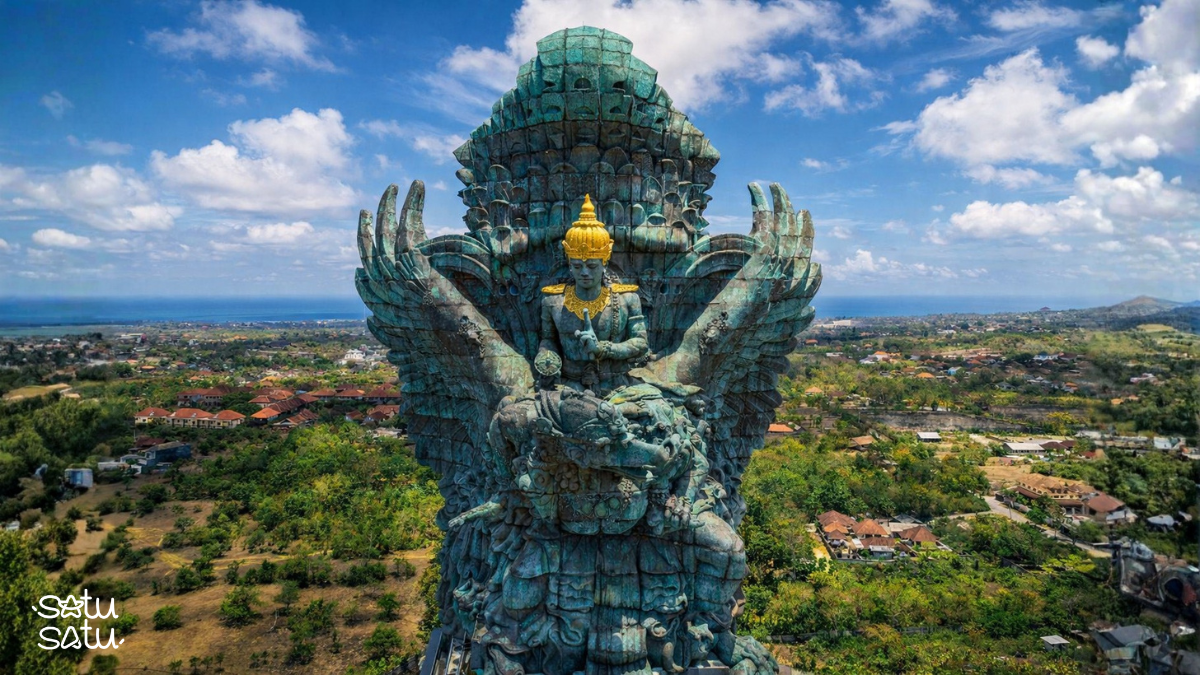
No list of Bali’s most famous statues feels complete without Garuda Wisnu Kencana (GWK). Located inside the Garuda Wisnu Kencana Cultural Park, this monumental sculpture depicts the god Vishnu riding Garuda, the mythical bird that symbolizes loyalty and protection in Hindu tradition.
Created by renowned Balinese artist I Nyoman Nuarta, the statue rises to about 121 meters, making it one of the tallest statues in the world. Its massive scale and dramatic presence have turned GWK into one of Bali’s most recognizable landmarks, visible from many parts of the island.
Although the project faced long delays before finally being completed and inaugurated in 2018, GWK today stands as a symbol of Bali’s modern artistic ambition, blending ancient mythology with contemporary engineering. For travelers, visiting the site offers a powerful sense of scale and a deeper appreciation for how tradition continues to shape Bali’s identity.
Many visitors combine this cultural encounter with nearby experiences like the Uluwatu Temple Kecak & Fire Dance, where epic stories come alive through performance rather than stone.
Satria Gatotkaca: The Warrior Who Welcomes You
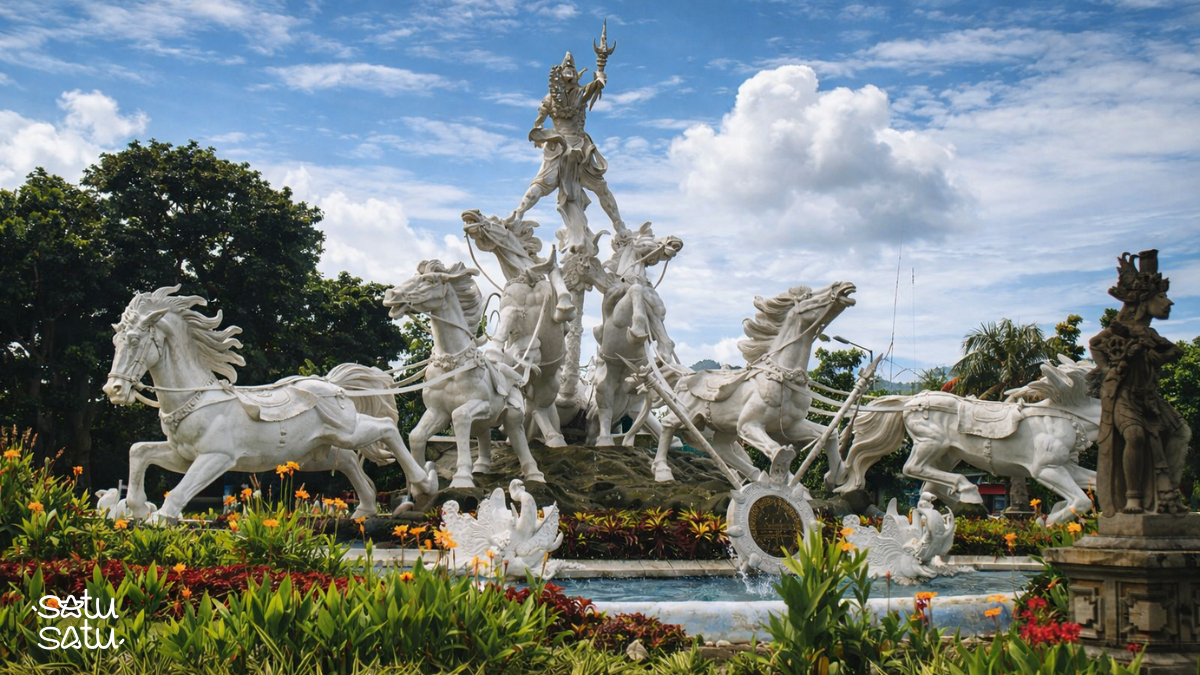
Just a few minutes from Ngurah Rai International Airport stands Patung Satria Gatotkaca, one of the first cultural landmarks many travelers encounter upon arriving in Bali. The statue depicts Gatotkaca, a legendary warrior from the Mahabharata epic, known for his strength, bravery, and ability to fly as he defended the Pandawa kingdom.
Created in 1993 by Ubud artist I Wayan Winten, the monument shows Gatotkaca standing powerfully atop a royal chariot pulled by six horses, capturing a sense of movement and heroism. More than a decorative landmark, the statue symbolizes protection and courage, offering visitors a dramatic introduction to Bali’s deep connection with mythology and storytelling.
Titi Banda: A Bridge Between Worlds
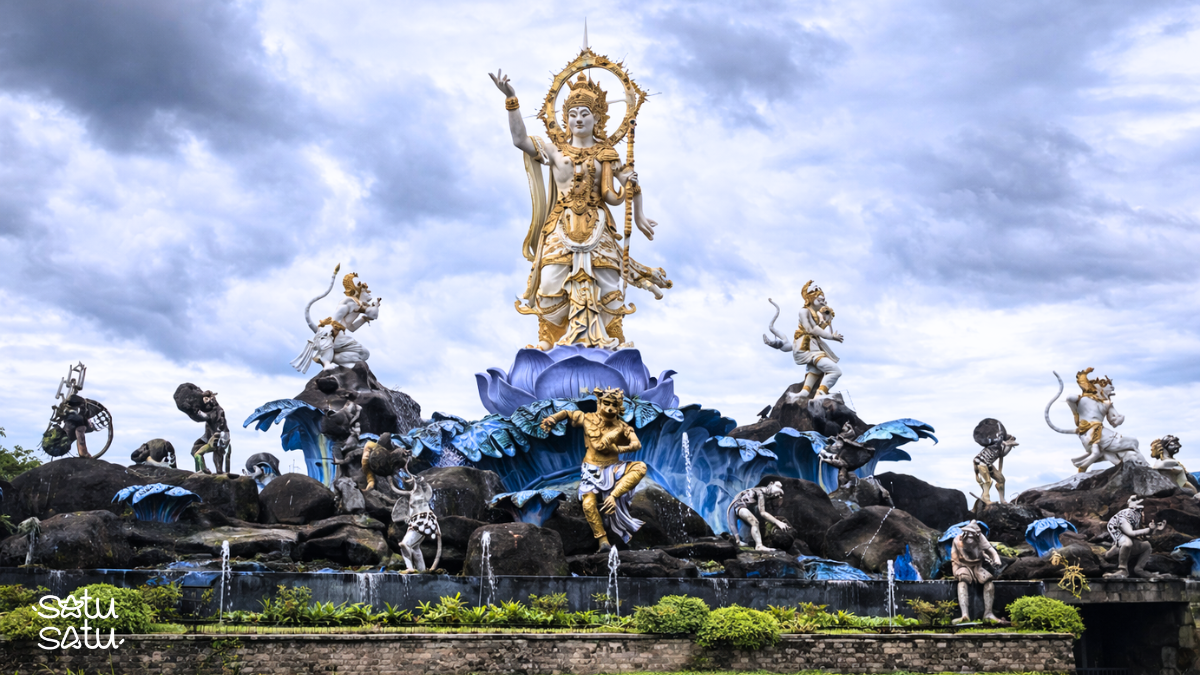
One of Denpasar’s most striking landmarks, Patung Titi Banda stands dramatically at the junction connecting Denpasar and Gianyar. Rising around 30 meters high and surrounded by landscaped gardens, the monument immediately catches the eye of travelers passing through this busy route.
Created by artist I Wayan Winten and completed in 2014, the statue draws inspiration from the Ramayana epic. At its center stands the heroic figure of Rama holding a bow, accompanied by monkey warriors who symbolize loyalty and teamwork during his mission to rescue Princess Sita from the demon king Ravana.
Beyond its impressive scale, Patung Titi Banda reflects values that remain important in Balinese culture today: cooperation, devotion, and the strength that comes from standing together. For visitors, it transforms a simple road intersection into a powerful reminder that storytelling still shapes everyday life in Bali.
Caturmuka: The Four-Faced Guardian of Denpasar
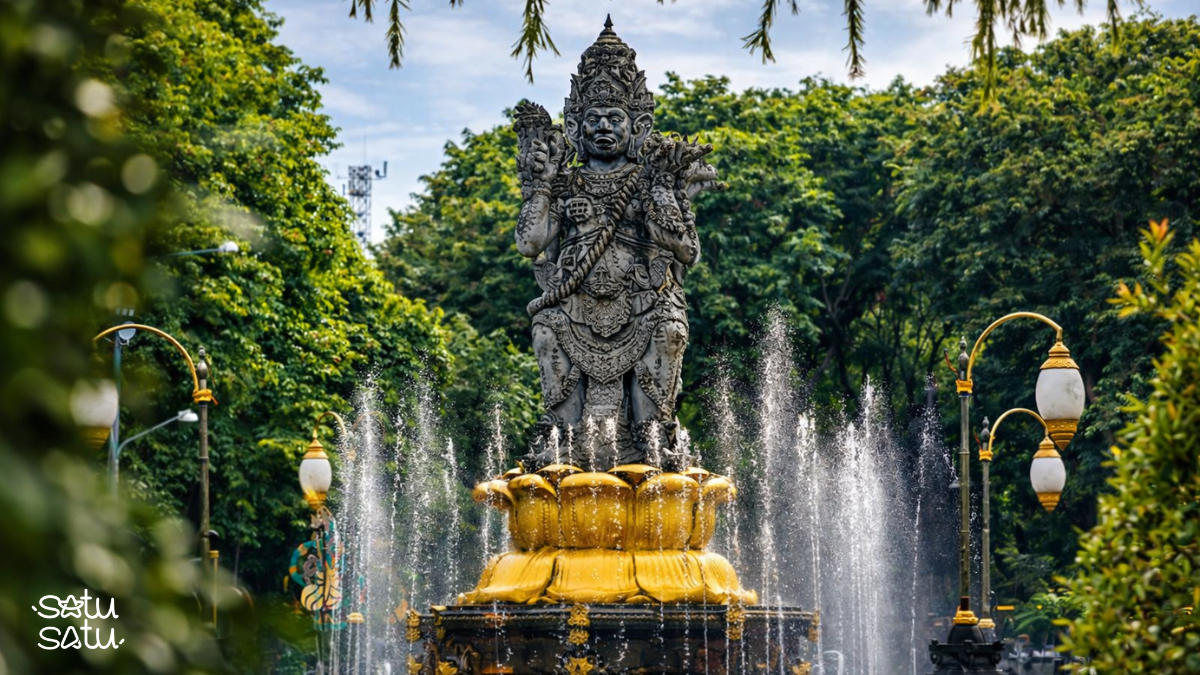
Standing across from Denpasar’s city hall, Patung Catur Muka is one of the capital’s most recognizable landmarks. Surrounded by fountains and positioned at a major intersection, the statue naturally draws attention and has become a popular photo stop for both visitors and locals.
Built in 1973 by renowned Ubud artist I Gusti Nyoman Lempad, the nine-meter sculpture is unique for its four faces, each looking toward a different cardinal direction. The design represents four aspects of the god Brahma, symbolizing wisdom, compassion, purity, and peace. Together, these faces reflect the Balinese idea of balance and harmony in all directions of life.
For travelers, the statue offers more than just visual appeal. It quietly marks the cultural heart of Denpasar, where modern city life and traditional philosophy meet in a single monument.
Dewa Ruci: Wisdom in the Middle of Chaos
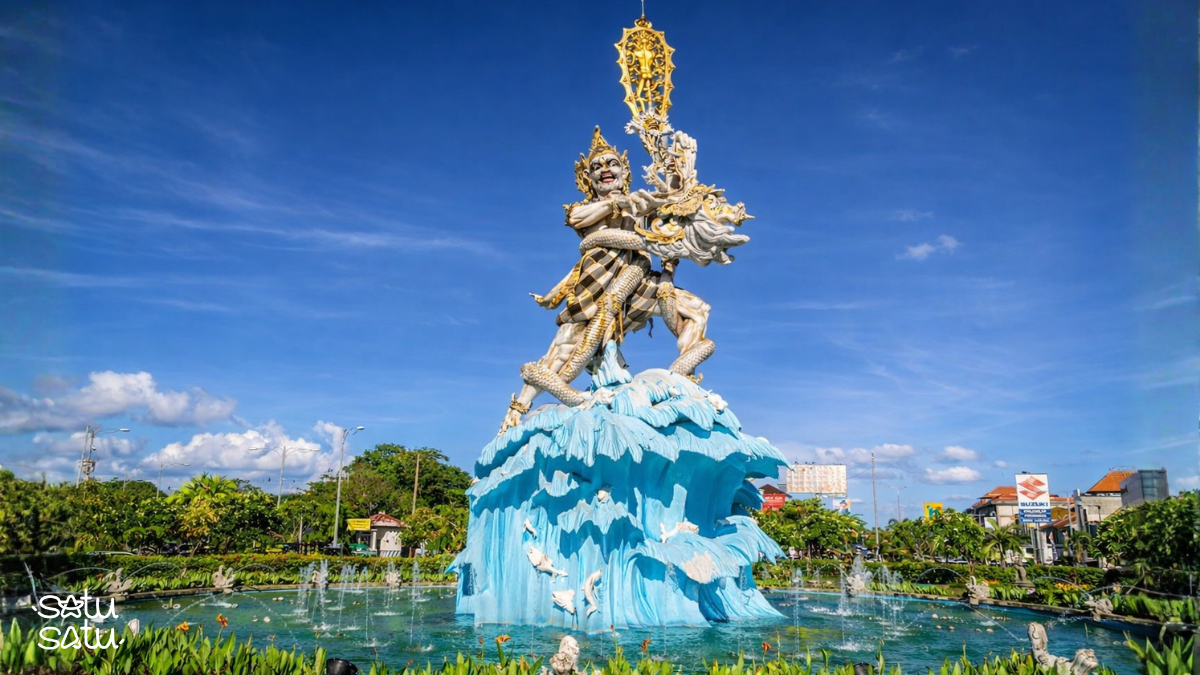
Standing at one of Bali’s busiest intersections near Kuta, Patung Dewa Ruci captures a dramatic scene from the Mahabharata epic. The statue tells the story of Bima, a powerful warrior searching for the sacred water of life deep in the ocean. During his journey, he faces sea creatures and challenges that test his strength and determination before finally meeting a small figure named Dewa Ruci, a symbolic version of himself that represents self-discovery and inner wisdom.
The monument brings this story to life through dynamic elements such as ocean waves, a serpent figure, and flowing fountains, creating the feeling of an underwater adventure frozen in motion. For travelers, the statue offers more than visual drama. It reflects a core Balinese idea that true strength comes not only from power, but also from understanding oneself.
Patung Bayi Sakah: Bali’s Most Unexpected Landmark
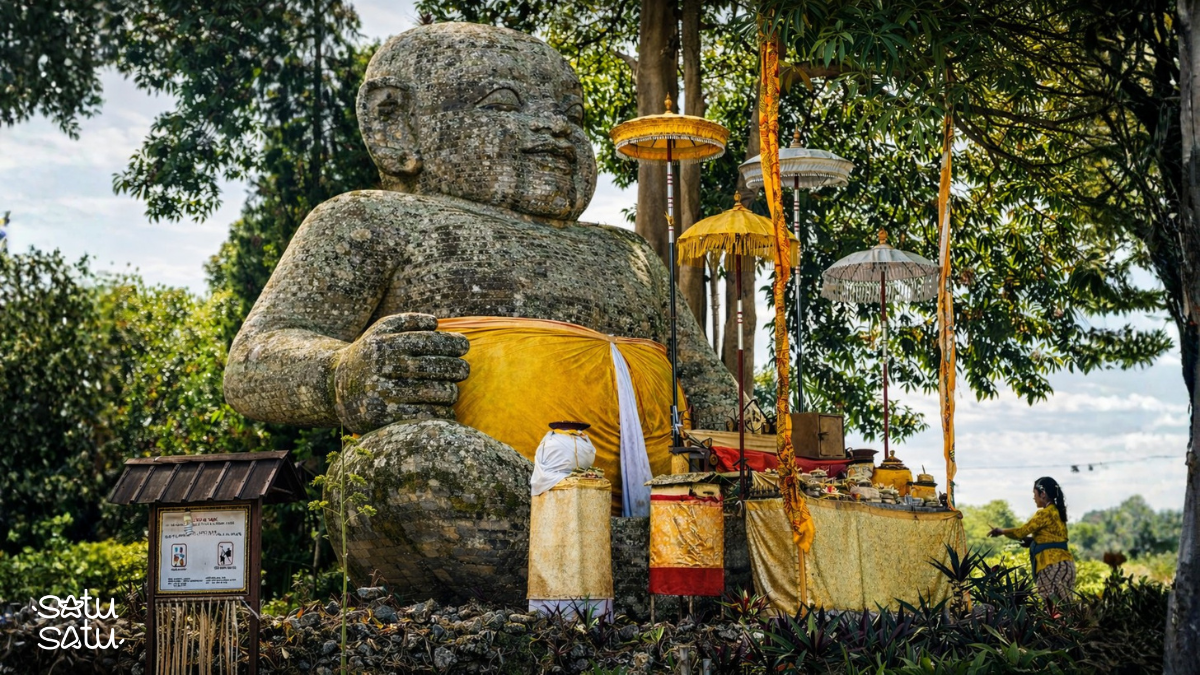
At a busy intersection in Batuan Kaler, Gianyar, travelers often stop in surprise when they see one of Bali’s most unusual statues: Patung Bayi Sakah. The six-meter sculpture shows a giant baby sitting cross-legged, instantly standing out from the heroic warriors and mythological figures found elsewhere on the island.
Built in 1990 by local artist I Ketut Sugata and his team, the statue symbolizes the beginning of life and the human journey. While it may look playful at first, many locals consider it sacred, and some visit the site to pray, especially those hoping for blessings related to family and new beginnings.
The statue also holds a special place in the local community, with ceremonies taking place at certain times of the year. For travelers, however, the real experience lies in the contrast. It feels surprising, slightly surreal, and deeply Balinese at the same time, showing how art here often blends spirituality, symbolism, and everyday life in unexpected ways.
Families exploring cultural experiences often appreciate how Bali blends storytelling with imagination, much like the sense of wonder found at Bali Zoo: A Family Day Where Curiosity Leads the Way.
Arjuna in Ubud: Elegance and Discipline
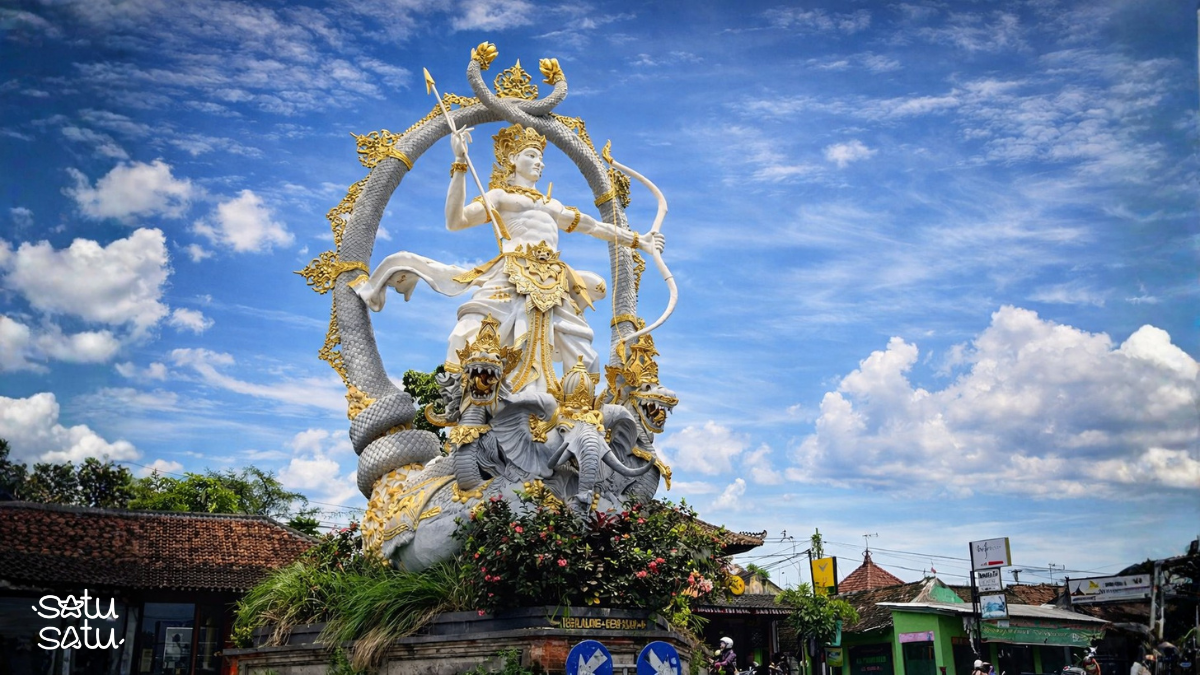
In Ubud, travelers often spot a striking statue at a busy intersection that many identify as Patung Arjuna. However, some locals also refer to it as a representation of Dewa Indra, adding a layer of mystery to its identity. Regardless of the name, the monument portrays a heroic figure inspired by characters from the Mahabharata epic, known for courage, skill, and spiritual strength.
Rising above nearby buildings, the statue has become a recognizable landmark and a popular photo stop, especially for visitors exploring Ubud by scooter or car. Even when traffic slows around the intersection, the sculpture quietly anchors the area, reminding travelers how mythology continues to shape Bali’s everyday landscape.
Visitors exploring the area often combine cultural discovery with playful experiences such as the Real Bali Swing, which offers a contrasting yet complementary perspective of Ubud’s lush surroundings.
Where Art, Myth, and Travel Meet
Seeing Bali’s statues is not about ticking landmarks off a list. Instead, it’s about noticing how deeply art lives within the island’s everyday rhythm. These carvings transform roads into storytelling spaces and remind travelers that Bali’s culture extends far beyond its beaches.
They also connect naturally with journeys into Bali’s spiritual and natural landscapes, whether through purification rituals on a Spiritual Tour to Tirta Empul or exploring volcanic culture in What to Do, See, and Eat in Kintamani: Bali’s Volcanic Highlands Guide.
Ultimately, these sculptures invite curiosity. They encourage you to slow down, look closer, and ask questions. And in doing so, they reveal a version of Bali that feels richer, deeper, and endlessly fascinating.
Discover more thoughtfully curated journeys at SatuSatu, where every experience uncovers another layer of Bali’s story.