Most people arrive in Bali expecting smooth sailing and end up spending their first day confused at the airport, stuck in traffic, or realizing they packed the wrong adapter.
A bit of preparation goes a long way on this island, and the right tips can mean the difference between a trip that flows and one that’s constantly playing catch-up.
Whether you’re sorting out transport, learning what to wear at a temple, or figuring out where to even start, this guide covers what first-time visitors genuinely need to know. And when it comes to booking your transfers and experiences, SatuSatu and SatuSatu.com are your most reliable starting point before you even land.
Sort Your Entry Requirements Before You Leave Home
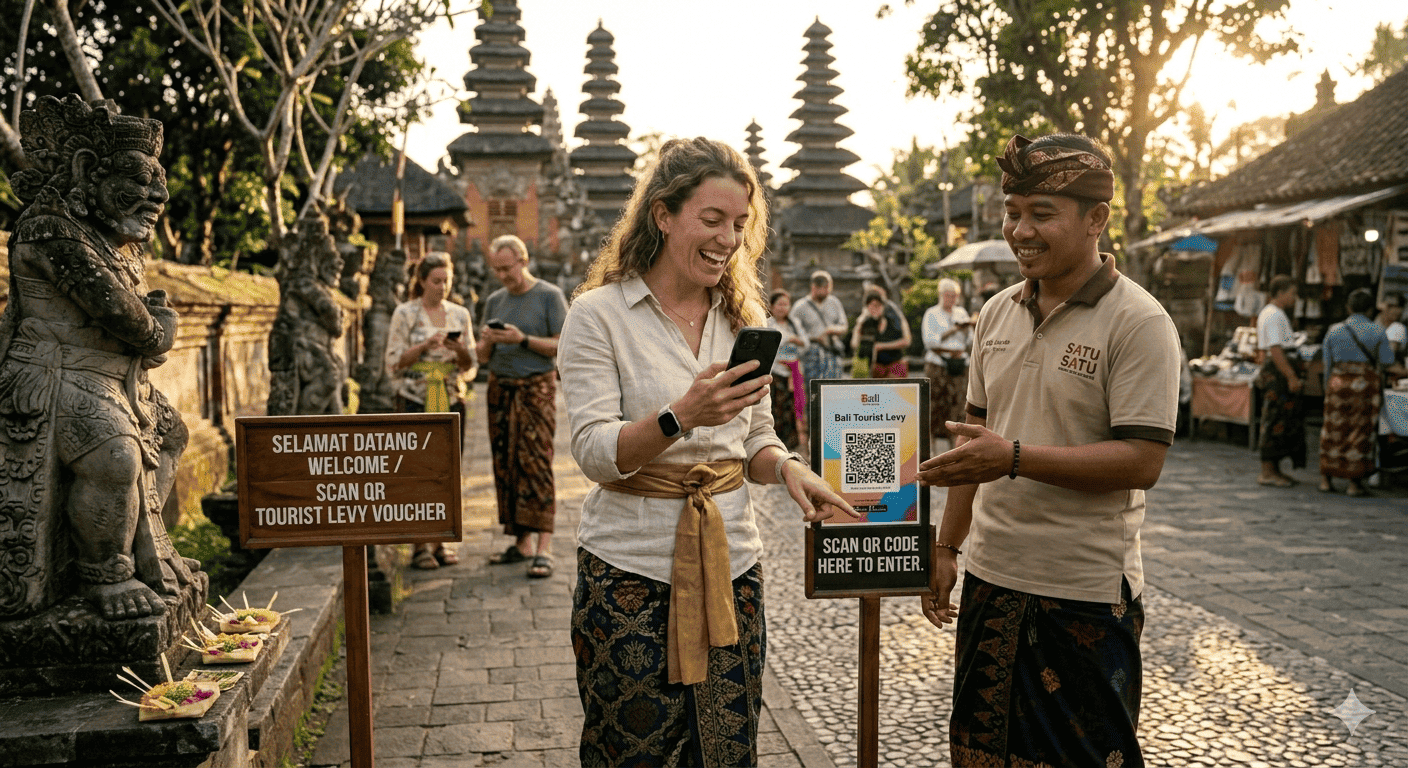
Arriving unprepared at Ngurah Rai International Airport will cost you time and stress. The two things to sort before you fly are your visa and the Bali Tourist Levy.
Most international visitors are eligible for a Visa on Arrival (VoA), which costs around USD 35 and can be paid at the airport. If you want to skip the queue, you can also apply for an e-VoA in advance through the official Indonesian immigration portal at evisa.imigrasi.go.id.
Either way, make sure your passport is valid for at least six months from your arrival date and bring a return or onward ticket.
The second thing to sort is the Bali Tourist Levy, a mandatory one-time fee of IDR 150,000 per person introduced by the Bali Provincial Government. Pay it online before your trip through the official portal at lovebali.baliprov.go.id
Once payment is confirmed, you receive a QR code voucher by email, which you scan at the airport checkpoint. Paying in advance saves you time at arrival and helps you avoid the payment counters near immigration. Only use the official government website to avoid scam platforms that charge significantly more.
You also need to complete the All Indonesia digital arrival declaration before landing. This replaces the old paper disembarkation card and covers your identity, health declaration, and customs information. Completing it during your layover or from home prevents delays at the airport.
Understand How Getting Around Actually Works
Bali looks compact on a map, but traffic is real and it will catch you off guard. The drive from Ngurah Rai Airport to Canggu can take over an hour during peak hours, and what looks like a 20-minute trip to Ubud can easily stretch to two hours or more depending on when you leave.
Private drivers are the most practical and comfortable way to get around, especially for day trips covering multiple areas. A dedicated driver lets you move at your own pace, make stops along the way, and avoid the stress of navigating unfamiliar roads. Many first-timers underestimate how much easier this makes the trip.
Scooter rental is common and cheap, but it is genuinely risky if you are not an experienced rider. Bali’s roads are narrow and busy, and tourist accidents on scooters happen regularly.
If you do rent one, you need a valid International Driving Permit (IDP) covering motorbikes, a helmet at all times, and travel insurance that covers scooter accidents. Riding without these can result in fines and, more importantly, voided insurance claims if something goes wrong.
A practical tip most guides skip: leave early for anything requiring distance. Traffic in most tourist areas does not build up until after 10am, so scheduling drives before that window cuts journey times noticeably.
Pick the Right Area for the Trip You Actually Want
Where you base yourself in Bali shapes your entire experience. Each area has a different pace, vibe, and set of trade-offs, and choosing based on a photo rather than your actual travel style is one of the most common first-timer mistakes.
Canggu is the go-to base for younger travelers, digital nomads, and anyone who wants good cafes, surf, and a social atmosphere. It is not the most cultural area, but it is vibrant and well-connected. Seminyak sits just south of Canggu and offers a more polished version of the same energy, with better restaurants and beach clubs.
Ubud is a completely different experience. It is Bali’s cultural and spiritual heart, surrounded by rice terraces, temples, and jungle. The pace is slower, nights are quieter, and the focus is on art, wellness, and nature.
Plan two to three days here as a minimum to do it justice. Uluwatu, on the southern Bukit Peninsula, suits travelers who want dramatic cliff scenery, world-class surf breaks, and a more laid-back luxury atmosphere.
Sanur is often overlooked but is ideal for families and travelers who want calm beaches, a walkable area, and easy access to ferries heading to Nusa Penida and Nusa Lembongan.
Respect the Culture, Not Just the Dress Code
Balinese Hinduism is not a backdrop for your trip. It is a living, practiced faith that shapes daily life across the entire island. Understanding this before you arrive makes your interactions with locals more genuine and helps you avoid unintentionally causing offence.
The most visible rule is temple attire. A sarong and sash are mandatory at every temple, for every visitor, regardless of gender. Most temples rent or lend them at the entrance for a small fee, so you do not need to bring your own.
Beyond the sarong, wearing clothing that covers your knees and shoulders is the respectful baseline for any sacred site.
Canang sari, the small woven palm-leaf offerings filled with flowers and rice, are placed daily on pavements, shop steps, and temple walls as spiritual offerings to the gods. Never step on them.
Walk around them carefully, especially in the mornings when they are freshly placed. Touching, kicking, or disturbing them is considered disrespectful.
Using your right hand for giving, receiving, and eating is a basic social norm across Bali and the rest of Indonesia, as the left hand is traditionally considered unclean. It costs nothing and is noticed and appreciated by locals.
Practical Things Most First-Timers Wish They Knew Earlier
Tap water in Bali is not safe to drink. Drink only bottled or filtered water, and be cautious with ice in places that do not look like established restaurants. “Bali Belly”, a common stomach illness among tourists, is almost always linked to water or food hygiene lapses in the first few days.
Staying hydrated with sealed bottled water and giving your stomach a day or two to adjust makes a noticeable difference.
Carry small notes in Indonesian Rupiah. Warungs, local markets, temple donations, and parking attendants rarely accept cards, and some smaller cafes and shops in less touristy areas are cash only.
ATMs are widely available in tourist areas, but withdrawal fees can add up. A reasonable approach is to withdraw a larger amount less frequently rather than hitting the ATM daily.
The best time to visit Bali for a first trip is during the shoulder months of April to June or September. These months offer dry weather, manageable crowds, and better value on accommodation compared to the peak July and August rush.
If you are flexible, May and September consistently offer the strongest combination of good conditions and breathing room.
Finally, do not overstuff your itinerary. Bali rewards slower travel. Travelers who try to see five areas in seven days often feel exhausted and like they barely scratched the surface of any of them. Picking two or three areas and spending real time in each delivers a far more satisfying first trip.
Plan Your Bali Trip Further with SatuSatu
Getting the logistics right before you arrive is exactly what SatuSatu is built for, giving first-time visitors a reliable, locally curated platform to handle the essentials.
The SatuSatu Airport Transfer takes the stress out of day one. A professional local driver meets you at Ngurah Rai Airport arrivals with your name on a sign, fixed transparent pricing, and same-day booking available, so you walk straight past the chaos at the exit doors.
For getting around during your stay, the SatuSatu Exclusive Car Charter pairs you with a dedicated local driver and fully flexible timing. Whether you are doing a temple loop from Ubud or hitting multiple areas in a single day, it is all bookable directly on SatuSatu.com.
Since this is your first time in Bali and you want to experience the culture properly, the Kecak Fire Dance at Uluwatu Temple, listed on SatuSatu.com, is one of the most memorable first experiences on the island.
It combines Bali’s most dramatic cliff-top temple with an iconic performance that has been running at sunset for decades, and it is the kind of thing that stays with you long after the trip is over.
All bookings are made directly on SatuSatu.com and support local payment methods including BCA, Mandiri, OVO, DANA, credit cards, and more.
FAQ about Bali Tips for First Timers
What are the most important tips for first-time visitors to Bali?
Pay the Bali Tourist Levy (IDR 150,000) online before arrival at lovebali.baliprov.go.id, complete your visa and digital arrival declaration ahead of time, book airport transport in advance, respect temple dress codes, and do not drink tap water.
Choosing the right base area for your travel style and avoiding an overloaded itinerary will make your first trip significantly more enjoyable.
When is the best time to visit Bali for a first trip?
April to June and September are the best shoulder-season windows. The weather is dry, crowds are thinner than in peak season, and accommodation is more affordable. July and August are the busiest and most expensive months.
Do I need to pay a tourist levy to enter Bali?
Yes. Since February 2024, all international visitors are required to pay a one-time Bali Tourist Levy of IDR 150,000 per person. Pay online through the official government portal at lovebali.baliprov.go.id before your arrival to receive a QR voucher.
Is it safe to rent a scooter in Bali as a first-timer?
Not recommended unless you are an experienced rider. Bali’s traffic is dense and roads can be unpredictable. If you choose to ride, a valid International Driving Permit for motorbikes is legally required. Many first-time visitors find that booking a private driver is far more practical and stress-free.
How much money do I need per day in Bali?
This depends heavily on your travel style. Budget travelers can get by on around USD 50 per day covering a guesthouse, local food, and basic activities. Mid-range travelers spending on nicer accommodation, restaurant meals, and guided experiences typically budget USD 100 to 150 per day. Luxury stays and beach clubs push costs significantly higher.