A bamboo house in Bali is exactly what it sounds like: a structure built primarily from bamboo, designed to sit inside rather than on top of the natural landscape around it.
These stays have grown from a niche curiosity into one of the most sought-after accommodation experiences on the island, and SatuSatu has seen first-hand how often travellers make them the centrepiece of their entire Bali trip.
If you are trying to decide whether a bamboo house suits you, or you want to know which ones are genuinely worth booking, this guide covers both.
What Makes a Bamboo House in Bali Different from a Regular Villa
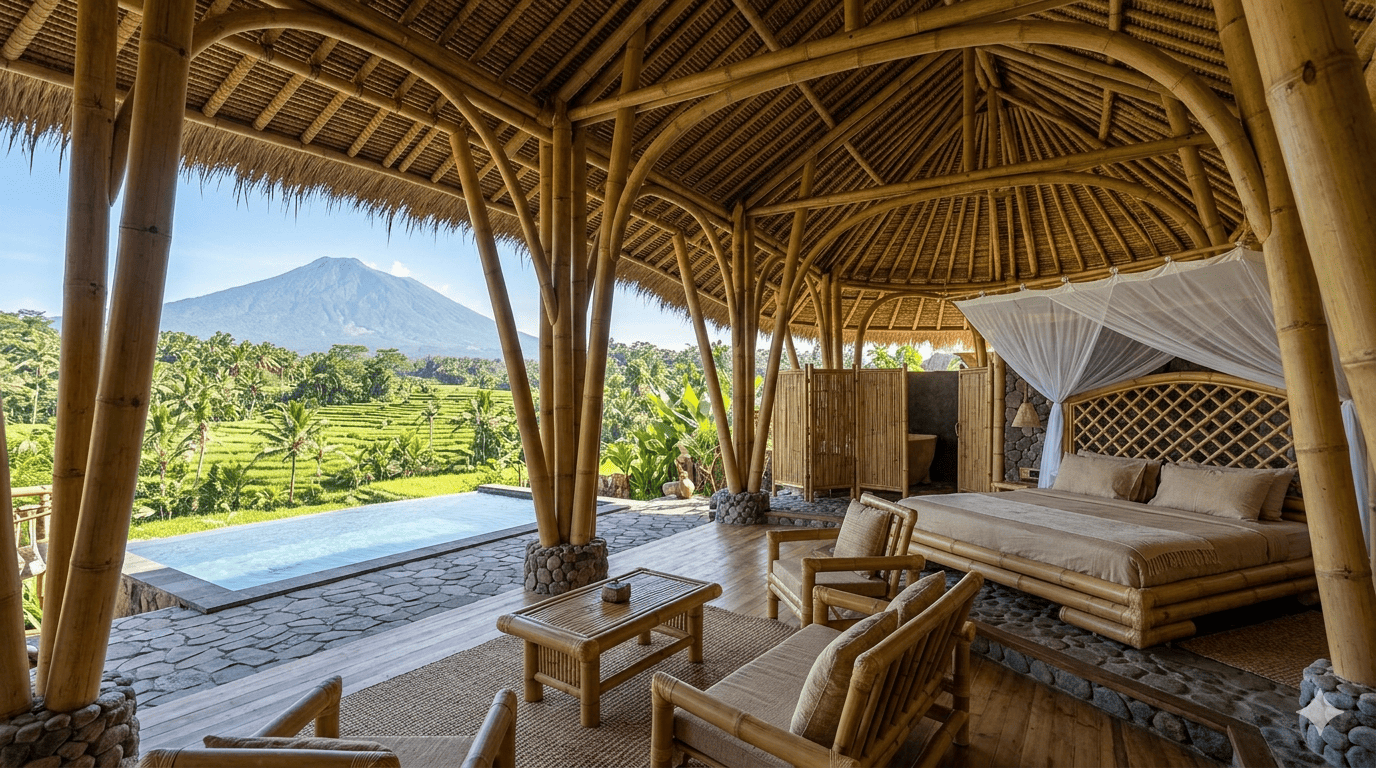
A Bali bamboo house is not simply a villa built with a different material. The design philosophy behind most of these properties is fundamentally different from a standard hotel or pool villa. Bamboo grows faster than almost any other building material on earth, and in Bali it has been used in construction for centuries.
Modern bamboo houses take that tradition and apply it with an eco-conscious mindset: locally sourced poles, minimal concrete, open-air living spaces that rely on natural ventilation rather than air conditioning, and often a deliberate decision to let the sounds and sights of the surrounding jungle, rice fields, or river valley become part of the experience.
The result is accommodation that feels alive in a way that a concrete villa does not.
Waking up to birdsong through a bamboo lattice wall, watching clouds move over a rice terrace from an open deck, or falling asleep to the sound of a river below your floor these are the details that make bamboo stays memorable. They are not for everyone, and that is important to understand before booking.
Where Bamboo Houses Are Located in Bali
The majority of bamboo houses in Bali are not near the beach. They cluster around Ubud and the surrounding jungle villages, the Sidemen Valley in East Bali, and river valleys and highland areas away from the coast.
This geography is not accidental: bamboo architecture depends on natural settings to make sense, and the cool air of higher elevations makes open-air living genuinely comfortable rather than exhausting.
Ubud is the most accessible hub, with most bamboo properties reachable within ten to twenty minutes of the town centre. Sidemen sits further east, typically one and a half to two hours from the airport, and rewards travellers who make the journey with views of Mount Agung rising above rice terraces that feel completely untouched.
From Canggu or Seminyak, a bamboo house stay usually means committing to a full day or overnight drive, making it best suited to a dedicated leg of your trip rather than a day outing.
The Best Bamboo Houses in Bali Worth Booking
- Bambu Indah
In Ubud is the most recognised bamboo resort in Bali and arguably the one that defined what this category of accommodation could be.
Founded by jeweller John Hardy and his wife Cynthia, the property on Jalan Baung Sayan sits on a jungle cliff above rice fields and the Ayung River, with 23 houses ranging from antique Javanese teak homes to wild bamboo creations built on-site.
The spring-fed natural pool, the bamboo bridge crossing to reach some of the houses, the restaurant sourcing ingredients directly from the garden every element is considered.
Nightly rates start from around $221 for standard rooms and go significantly higher for the more spectacular structures, reflecting the fact that Bambu Indah is genuinely a luxury property as much as an eco one.
- Veluvana Bali
In Sidemen takes a completely different approach. It is a single bamboo house property with five individual structures, each designed to resemble a different animal: the Owl House, Cobra House, Scorpio House, Manta House, and Octopus House.
Set in the middle of rice terraces with a direct view of Mount Agung, Veluvana is built to feel secluded and private, with a high bamboo fence and dense vegetation providing separation.
The open-concept design brings the outdoors inside, and each house has a private plunge pool. This is the right choice for travellers who want total immersion in nature without other guests nearby.
- Bird Hills Bamboo House
In Sidemen is a more affordable option built from 95% natural bamboo sourced from surrounding villages, with staff drawn from the local community. Positioned at the top of Sidemen’s hills, it offers sunrise views that guests consistently describe as among the best they experienced in Bali.
It is less polished than Bambu Indah but genuinely connected to the village around it, which for many travellers is exactly the point.
What You Should Know Before You Book a Bamboo House in Bali
Bamboo houses require an honest conversation with yourself about comfort expectations. Most are open-air or semi-open, which means insects are part of the experience. Check whether the property provides mosquito nets, screens, or naturally repellent plants as part of the design.
Some of the most visually stunning structures have uneven paths, steps carved into hillsides, and no elevator access details that matter if you are travelling with young children or have mobility considerations.
Air conditioning is not always available, and where it is offered, it often sits in the bedroom only while living areas remain open. Temperatures in Ubud and Sidemen are cooler than the coast, which makes this manageable most of the year, but in the wet season humidity rises significantly.
The trade-off is that you are closer to nature than almost any other accommodation type in Bali can offer, and that proximity is the entire point.
Most bamboo house properties are small, meaning early booking is essential, particularly for peak season between July and August and over the December and January holiday period.
Is a Bamboo House in Bali Worth It?
A bamboo house stay in Bali is worth it for travellers who want their accommodation to be part of the experience rather than just a comfortable base.
If you are drawn to Bali for its nature, its rice terraces, its quieter inland villages, and its genuine connection to sustainable Balinese craft, then spending at least one or two nights in a bamboo property will stay with you long after the trip ends.
It is not the right choice for travellers who prioritise beach access, a full hotel service experience, or proximity to Seminyak and Canggu’s dining and nightlife. But for anyone planning time in Ubud or East Bali, a bamboo house is one of the most distinctive and genuinely Balinese things you can do.
Explore Further with SatuSatu
A bamboo house stay pairs naturally with the kind of deeper Bali experience that SatuSatu specialises in.
SatuSatu is a Bali travel platform that brings together cultural experiences and curated activities in one place, all bookable directly on SatuSatu.com with support for local payment methods including BCA, Mandiri, OVO, DANA, credit cards, and more.
A stay in a bamboo house near Ubud sits beautifully alongside an evening at the Kecak Fire Dance at Uluwatu, one of Bali’s most iconic cultural performances at sunset on the southern cliffs, worth the drive for any visitor spending time across the island.

For travellers who want to combine an inland bamboo stay with a broader itinerary across Bali without the hassle of planning each activity separately, the SatuSatu Bali All-Access Pass is the most flexible way to do it.
Choose from a 1-day pass at $59.95 (IDR 999K), a 2-day pass at $104.95 (IDR 1.799M), or a 3-day pass at $144.95 (IDR 2.499M), and unlock access to 50+ top Bali experiences spanning destinations across the island, from the Kecak Fire Dance at Uluwatu to snorkeling in Padang Bai and wellness and spa experiences across Bali.
Every pass includes a free eSIM and a dedicated Bali concierge to handle all the planning for you, saving you up to 60% compared to booking individually, with 90-day validity from purchase for maximum flexibility.
FAQ about Bamboo House Bali
What is a bamboo house in Bali and why is it popular?
A bamboo house in Bali is an accommodation built primarily from bamboo, designed to blend into the natural landscape with open-air living spaces, rice field or jungle views, and a strong focus on sustainability and eco-conscious design. They are popular because they offer a genuinely immersive experience that feels unlike any standard hotel or villa.
Where are bamboo houses located in Bali?
Most bamboo houses in Bali are in Ubud and the surrounding jungle villages, or in Sidemen in East Bali, both areas known for rice terraces, cooler temperatures, and natural surroundings that suit open-air bamboo architecture.
Is staying in a bamboo house in Bali comfortable?
Yes, bamboo houses in Bali are generally comfortable, but they are open-air or semi-open, which means mosquito nets and natural ventilation replace sealed rooms and full air conditioning. Guests who check amenities carefully before booking consistently find the experience rewarding rather than rough.
How much does a bamboo house in Bali cost per night?
Bamboo houses in Bali range widely in price. Budget eco options can start from around IDR 320,000 per night, while boutique properties like Bambu Indah start from approximately $221 USD per night and reach much higher for signature structures. Veluvana and Bird Hills Bamboo House in Sidemen sit in the mid-range.
Are bamboo houses in Bali near the beach?
No, bamboo houses in Bali are not typically near the beach. They are concentrated inland in Ubud, Sidemen, and river valley areas where natural settings and cooler climates suit the open-air bamboo design. Travellers wanting beach access should plan to combine a bamboo stay with coastal days elsewhere on the island.