Before you even see the warung, you smell it. Charcoal smoke, the sweet caramel edge of kecap manis hitting the heat, a faint whiff of lemongrass drifting through the air. Somewhere nearby, someone is grilling sate over a charcoal fire, and whatever you were planning to eat next has just changed.
Chicken satay in Bali is one of those dishes that sounds simple until you actually eat it here, and then you understand why it holds the place it does in Indonesian food culture.
SatuSatu, Bali’s locally curated travel platform, breaks down everything you need to know about chicken satay in Bali: what it is, how Bali’s version differs from what you may have tried elsewhere, and where to find it done properly.
What Is Chicken Satay and Why Does Bali’s Version Taste Different?
Chicken satay, or sate ayam, consists of marinated chicken pieces threaded onto bamboo skewers and grilled over charcoal. The preparation sounds simple, but the depth of flavor in a well-made Balinese sate comes from a combination of factors that take time and knowledge to get right.
The marinade typically uses kecap manis (sweet Indonesian soy sauce), garlic, shallots, coriander, cumin, and candlenut, creating a coating that caramelizes over the charcoal fire rather than burning. The result is a smoky sweetness that layers over the savory meat in a way that plain grilled chicken simply cannot replicate.
The peanut sauce served alongside is equally important. Good Balinese peanut sauce is made from ground roasted peanuts with palm sugar, lime leaves, galangal, lemongrass, and chili, producing a sauce that is simultaneously rich, savory, slightly sweet, and alive with spice.
A thin, store-bought peanut sauce and a properly made Balinese bumbu kacang are fundamentally different dishes, and the gap between the two is the gap between a forgettable meal and one you will think about for weeks.
The sauce traditionally contains no coconut milk, unlike some regional variations, giving it a concentrated peanut intensity.
Sate Ayam vs. Sate Lilit: Understanding the Difference
Visitors who research Balinese food will quickly encounter two types of satay: sate ayam (chicken satay) and sate lilit. They are related but distinct. Sate ayam uses pieces or chunks of marinated chicken threaded onto a bamboo skewer, essentially the form most travelers recognize when they think of satay.
Sate lilit, which is Bali’s own most iconic satay form, takes a different approach entirely. Minced chicken, fish, or pork is blended with grated coconut, lime leaves, galangal, and spices, then wrapped directly around lemongrass stalks or thick bamboo sticks before being grilled.
The texture is closer to a kebab or kofta, and the lemongrass stalk infuses the meat with a citrus fragrance that makes sate lilit distinctly and unmistakably Balinese. Both are worth eating, and many nasi campur plates include sate lilit as one of the standard accompaniments.
When ordering specifically at a warung, sate ayam refers to the classic skewered piece format, while sate lilit will usually be listed or pointed out separately.
Where to Find the Best Chicken Satay in Bali
The honest truth about finding great chicken satay in Bali is that the best is often found not at international restaurants but at warungs: small, unpretentious family-run eating places where the cook has been making the same marinade for years and the charcoal is always at the right temperature.
In Seminyak, Warung Nia at Kayu Aya Square (Jalan Kayu Aya No.19-21) is specifically praised for its chicken satay served hot above the coals, with the kind of attentive, comfortable service that makes a warung visit feel like dining with the family who cooked for you.
In Sanur, Sate Lilit Bu Nyoman is a local institution for classic Balinese sate lilit, occupying the category of places where grandmothers chat over morning kopi and the recipe has not changed in decades.
In Canggu, Sate Padang Canggu on Jalan Raya Semat offers a Sumatran variation with beef, beef tongue, and chicken in a rich and complex sauce, demonstrating that Bali’s satay culture draws from across the Indonesian archipelago.
For a night market experience that brings multiple satay options together in one setting, the Gianyar Night Market near Ubud is one of the most atmospheric places on the island to eat sate alongside dozens of other local dishes, grilled fresh to order by stall vendors.
What to Know When Ordering Chicken Satay in Bali
A few practical points make the sate eating experience smoother. When ordering at a warung, sate is almost always sold by the stick rather than by the plate, with prices typically ranging from IDR 3,000 to 8,000 per stick depending on the venue and location.
Asking for “sate ayam” will get you chicken; specifying “dengan sambal” will ensure the chili accompaniment comes alongside the peanut sauce. Many warung sate plates also come with lontong (compressed rice cakes) or steamed rice, and asking for this if it is not brought automatically is completely normal.
At tourist-facing restaurants, sate ayam typically appears as a starter or as part of a mixed grill plate, usually at higher prices than warung equivalents. The quality gap between tourist-facing versions and authentic warung sate is real, and making the effort to eat at a genuine local warung at least once is worth the extra navigation.
Sate at Ceremonies and in Balinese Culture
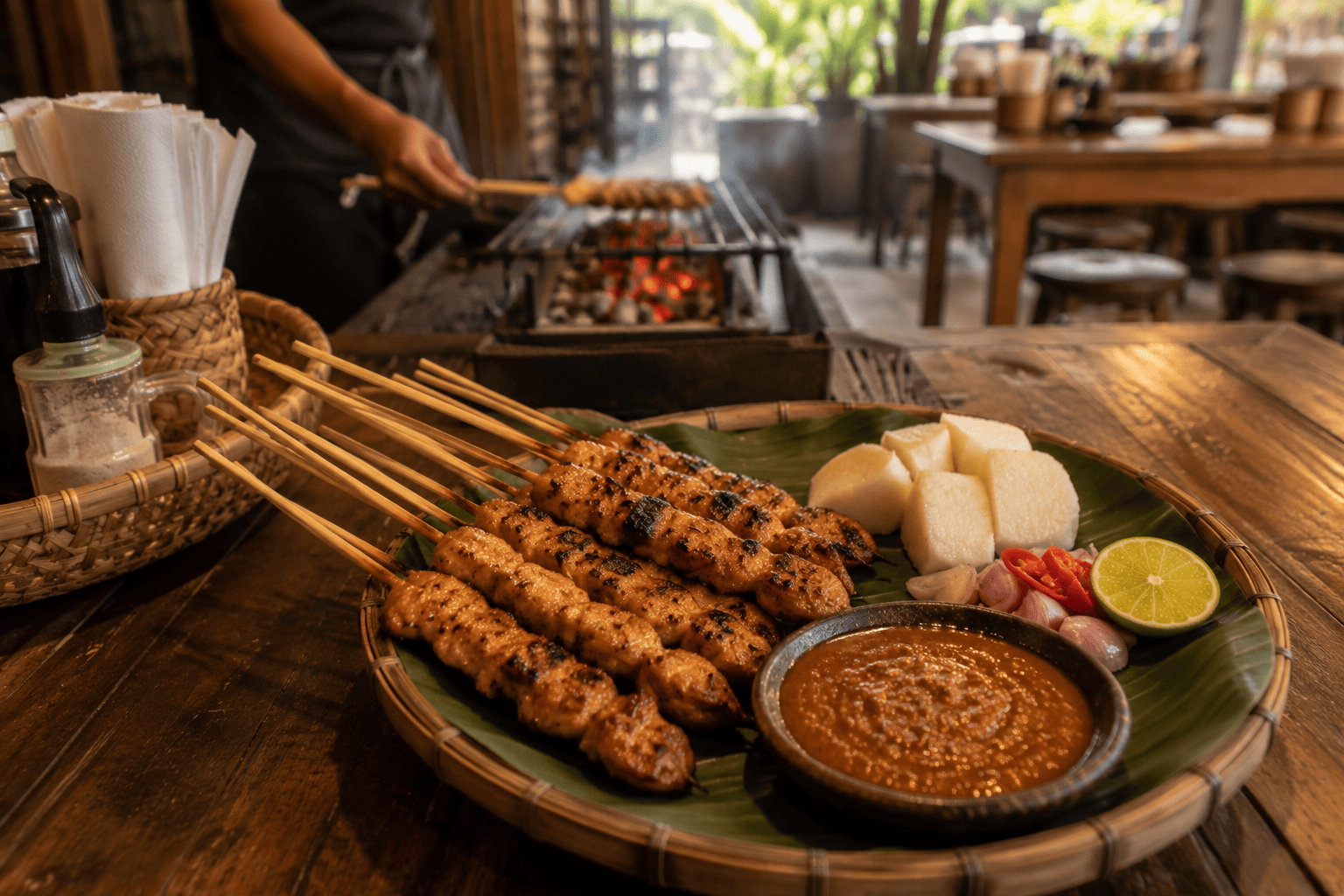
Chicken satay and sate lilit both carry genuine cultural weight in Bali beyond their place as everyday street food. Sate lilit in particular is deeply tied to Balinese ceremonial life.
During temple festivals, odalan ceremonies, and major family events like weddings and tooth-filing rituals, sate lilit is prepared communally, with family and community members gathering to make and grill large quantities together.
The process of preparing sate for a ceremony is a collective act with social and spiritual dimensions, and the lemongrass stalk on which the meat is wrapped is itself understood as having purifying properties within Balinese Hindu practice.
Travelers who are fortunate enough to witness or be invited to a ceremony where sate is being prepared are watching one of the most genuine expressions of Balinese community life. The flavors on the plate trace back through generations of practice, not just culinary preference.
Explore Bali Further with SatuSatu
Whether chicken satay leads you into Bali’s warung culture or you want to explore the island’s broader food and cultural scene, SatuSatu is the locally curated travel platform that makes it all straightforward, from your first arrival to your last evening.
Everything is bookable directly on SatuSatu.com with support for local payment methods including BCA, Mandiri, OVO, DANA, credit cards, and more.
The SatuSatu Airport Transfer starts your Bali trip on the right note, connecting you from Ngurah Rai International Airport with transparent pricing, same-day booking, and a professional driver who takes the stress out of arrival.
For exploring Bali’s food corridors across different regions, the SatuSatu Exclusive Car Charter provides a dedicated local driver for the full day with flexible timing, ideal for covering Gianyar’s night market, Seminyak’s warungs, and Ubud’s food scene in a single well-planned run.
The SatuSatu Kecak Fire Dance at Uluwatu Temple is the cultural experience that anchors any serious Bali visit: a sunset performance at the clifftop amphitheater above the Indian Ocean, with same-day booking available and a bonus merchandise pack included.

And if you want to do more across Bali without the hassle of planning each activity separately, the SatuSatu Bali All-Access Pass is the smartest way to stretch your trip further.
Choose from a 1-day pass at $59.95 (IDR 999K), a 2-day pass at $104.95 (IDR 1.799M), or a 3-day pass at $144.95 (IDR 2.499M), and unlock access to 50+ top Bali experiences spanning destinations across the island, from the Kecak Fire Dance at Uluwatu to snorkeling in Padang Bai and wellness & spa experiences across Bali.
Every pass includes a free eSIM and a dedicated Bali concierge to handle all the planning for you, saving you up to 60% compared to booking individually, with 90-day validity from purchase for maximum flexibility.
FAQ about Chicken Satay Bali
What is chicken satay in Bali?
Chicken satay, known locally as sate ayam, is marinated chicken threaded onto bamboo skewers and grilled over charcoal. It is typically served with a house-made peanut sauce (bumbu kacang) and often accompanied by rice cakes or steamed rice. It is one of the most widely eaten dishes across Bali and Indonesia.
What is the difference between sate ayam and sate lilit in Bali?
Sate ayam uses marinated chicken pieces on a skewer, while sate lilit is a distinctly Balinese form that wraps spiced minced meat (often fish or chicken) blended with grated coconut around a lemongrass stalk or bamboo stick. Sate lilit is the more culturally specific Balinese variety and is a common part of ceremonial food offerings.
Where is the best chicken satay in Bali?
The best sate ayam is generally found at traditional warungs rather than tourist-facing restaurants. Warung Nia in Seminyak, local warungs around Gianyar’s night market, and Sate Lilit Bu Nyoman in Sanur are among the specifically recommended options for genuine quality.
How much does chicken satay cost in Bali?
At a warung, sate is typically priced by the stick, ranging from around IDR 3,000 to 8,000 per skewer depending on the venue and area. A full meal with rice and sauce can cost as little as IDR 20,000 to 40,000. Prices at tourist-facing restaurants are higher.
Is chicken satay in Bali safe to eat?
Yes, when ordered from established warungs or reputable restaurants. As with all street food in Bali, choosing stalls where the food is being cooked to order over a hot charcoal fire rather than sitting out is the best practical safeguard. The cooking temperature of properly grilled satay handles any food safety concerns effectively.