Ubud attracts a certain kind of traveler health-conscious, curious, and willing to eat well as part of the experience. It’s no coincidence, then, that the town has quietly become one of Southeast Asia’s better destinations for gluten-free dining.
Between the yoga studios, wellness retreats, and a local food culture that leans heavily on fresh produce and rice-based cooking, gluten-free travelers find more options here than in most places on the island.
That said, navigating gluten-free Ubud requires knowing which spots are genuinely safe and which ones simply list “gluten-free” on the menu without really understanding what it means.
This guide gives you the reliable answers. SatuSatu, a Bali travel platform covering transport, cultural activities, and curated experiences, is a useful companion for building the rest of your Ubud trip around great food.
The Gluten-Free Landscape in Ubud: What to Know First
The honest starting point for any celiac or gluten-intolerant traveler is this: not every restaurant that says “gluten-free” in Ubud truly understands cross-contamination. Many kitchens use soy sauce which typically contains fermented wheat in marinades, broths, and stir-fries without flagging it as a gluten source.
Some venues use gluten-free bread but prepare it on shared surfaces or in shared fryers. The safest approach is to focus on 100% dedicated gluten-free kitchens first, and approach non-dedicated venues with genuine caution.
The good news is that Ubud has several fully dedicated gluten-free restaurants that have been serving celiac travelers reliably for years.
Indonesian staples like nasi goreng (fried rice), satay, and most vegetable-based dishes are naturally gluten-free when made traditionally the challenge is simply knowing that soy sauce hasn’t been added. If you’re dining at a warung, a printed Indonesian celiac card explaining your needs can make a real difference.
Fully Dedicated Gluten-Free Restaurants in Ubud
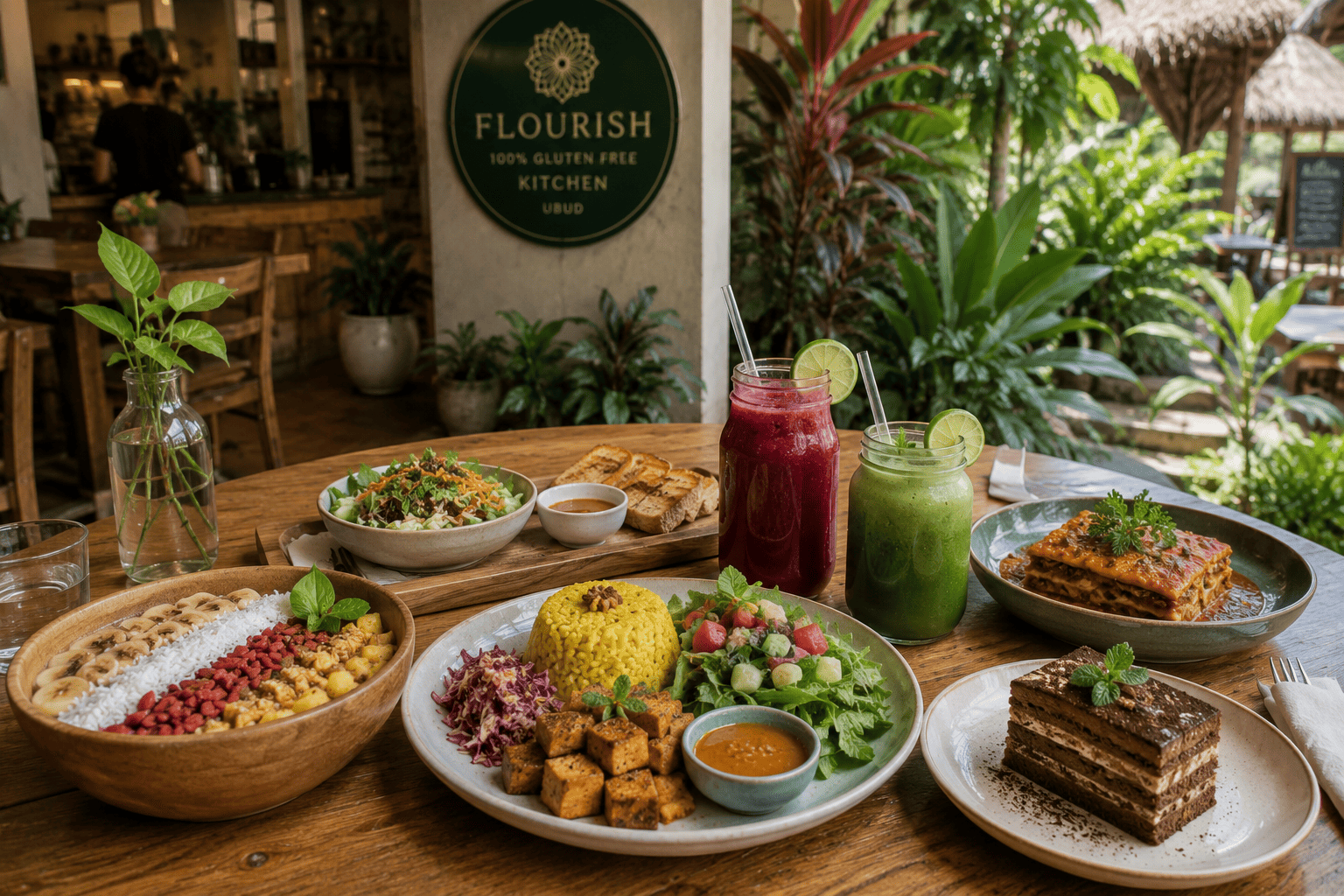
The gold standard for gluten-free dining in Ubud is a fully dedicated kitchen one where wheat never enters the building, eliminating any risk of cross-contamination at the source. Flourish, located at 1 Nyuh Kuning Road in central Ubud, is the most prominent of these.
Everything on the menu is 100% gluten-free and celiac-friendly, from the all-day breakfast options through to lunch and dinner.
The kitchen makes its own sauces from scratch, and even the breads grain, semolina, pumpkin, and sweet potato variations are made in-house without gluten. The café opens at 6:30am, making it ideal for early risers, and is open daily until 10pm.
The food at Flourish goes well beyond “safe” into genuinely good. Smoothie bowls, Moroccan-style rice bowls, salads, curries, and a selection of vegan and vegetarian mains make it a place people return to throughout a stay rather than just visiting once out of necessity.
The atmosphere is warm and relaxed, and the staff are genuinely knowledgeable about celiac needs. Another dedicated option that has earned trust among gluten-free regulars is Ubud Gluten Free Kitchen on Jalan Sri Wedari.
Open daily from 7am to 11pm, this venue serves breakfast through to late evening and offers pre-order options for items you can take away a practical solution for day trips out of Ubud. The kitchen is entirely dedicated, which makes it one of the safest choices for anyone with serious gluten sensitivity.
Strong Gluten-Free Options at Non-Dedicated Venues
Beyond the fully dedicated kitchens, a handful of Ubud’s cafes and restaurants handle gluten-free requests with enough knowledge and care to be considered reliable options, particularly for those with gluten sensitivity rather than celiac disease.
KAFE on Jalan Hanoman is a well-established health-conscious café in the heart of Ubud with a broad menu of organic, vegetarian, and health-forward dishes. Their low-carb keto plate is naturally gluten-free, and their coconut cake vegan and gluten-free has become something of a fixture for regulars.
The café’s focus on whole, unprocessed ingredients means the risk of hidden gluten is lower here than at a conventional restaurant, though it’s still worth asking about specific dishes.
Clear Café, also on Jalan Hanoman, is a beloved local institution with a menu that genuinely leans toward health and mindfulness. Several dishes are naturally gluten-free, and the relaxed atmosphere makes it easy to ask questions.
The infused water and fresh juices are a safe starting point, and the kitchen is generally responsive to dietary requests.
For something more upscale, Kebun Bistro is a well-regarded choice among gluten-free diners who specifically need a safe option for pizza the kitchen genuinely understands gluten-free preparation here, and the staff are trained to handle it properly.
Prices are on the higher side, but the peace of mind is part of what you’re paying for.
Baked Goods and Gluten-Free Treats in Ubud
One of the practical challenges of gluten-free travel is breakfast bread and baked goods. In Ubud, this is better than you might expect. Ubud Gluten Free Kitchen offers a range of baked goods including bread loaves, muffins, and desserts that can be pre-ordered and taken back to your accommodation.
The bread has real texture and flavor not the crumbly disappointment that often passes for gluten-free baking elsewhere.
Made’s Banana Flour has had a significant impact on Ubud’s gluten-free food scene by producing banana flour-based breads, burger buns, and pizza bases that are widely used in cafes offering gluten-free menu items across the area.
Their standalone products are naturally gluten-free and vegan, and their bread is considered among the better options for travelers who want something bread-like without the disappointment that often accompanies the category.
Practical Tips for Gluten-Free Dining in Ubud
The most important practical step is to carry an Indonesian celiac card a printed card explaining in Bahasa Indonesia that you cannot eat wheat, barley, or rye, and that soy sauce, flour-thickened sauces, and shared fryers are all risks.
This removes the language barrier and gives kitchen staff something specific to refer to. Several celiac travel resources provide printable versions.
When ordering at non-dedicated restaurants, specific questions to ask include whether soy sauce is used in the dish, whether a dedicated fryer is available, and whether any broths or sauces are pre-made with wheat-containing ingredients.
Nasi campur, fresh satay with no marinade added, and fresh grilled fish or chicken with rice are generally the safest choices at local warungs where communication about celiac disease can be difficult.
Ubud’s wider health food scene the smoothie bowls, fresh juice bars, and raw food cafes is largely naturally gluten-free, which gives you a wide safety net for snacks and lighter meals throughout the day.
Explore Ubud Further with SatuSatu
Ubud has so much more to offer beyond its food scene, and SatuSatu makes it easy to experience all of it from one place.
SatuSatu is a Bali travel platform that brings together transport, cultural experiences, and curated activities in one place, all bookable directly on SatuSatu.com with support for local payment methods including BCA, Mandiri, OVO, DANA, credit cards, and more.
A smooth start to any Ubud trip begins at the airport SatuSatu’s Airport Transfer connects Ngurah Rai to Ubud with fixed pricing, same-day booking, and no negotiating required when you land.
Exploring beyond the Ubud center whether that’s visiting Tirta Empul, the Tegalalang rice terraces, or further afield is best done with SatuSatu’s Exclusive Car Charter, which gives you a dedicated local driver and full flexibility over your itinerary.
After days of wellness and good food in Ubud, the Kecak Fire Dance at Uluwatu makes for a perfect evening excursion one of Bali’s most iconic cultural performances, held at sunset above the cliffs of the Bukit Peninsula.

And if you want to do more across Bali without the hassle of planning each activity separately, the SatuSatu Bali All-Access Pass is the smartest way to stretch your trip further.
Choose from a 1-day pass at $59.95 (IDR 999K), a 2-day pass at $104.95 (IDR 1.799M), or a 3-day pass at $144.95 (IDR 2.499M), and unlock access to 50+ top Bali experiences spanning destinations across the island, from the Kecak Fire Dance at Uluwatu to snorkeling in Padang Bai and wellness and spa experiences across Bali.
Every pass includes a free eSIM and a dedicated Bali concierge to handle all the planning for you, saving you up to 60% compared to booking individually, with 90-day validity from purchase for maximum flexibility.
FAQ About Gluten Free Ubud
Is gluten-free food easy to find in Ubud?
Yes. Ubud has several dedicated gluten-free restaurants, and many health-focused cafes also offer gluten-free options.
What are the best 100% gluten-free restaurants in Ubud?
Flourish and Ubud Gluten Free Kitchen are two of the most trusted fully gluten-free spots in Ubud.
Is soy sauce a problem for gluten-free diners in Bali?
Yes. Regular soy sauce contains wheat and is commonly used in Indonesian dishes, so always ask before ordering.
Can I find gluten-free baked goods in Ubud?
Yes. Both Ubud Gluten Free Kitchen and Flourish offer gluten-free breads, muffins, and desserts.
Is traditional Balinese food safe for gluten-free travelers?
Many dishes are naturally gluten-free, especially rice and grilled foods, but always confirm no soy sauce or flour-based sauces are used.