If you’ve spent any time in Bali between June and September, you’ve almost certainly looked up and seen the sky dotted with enormous kites some stretching several metres long, flying impossibly high above rice fields, beaches, and rooftops.
It’s one of those things that catches first-time visitors completely off guard. The kites here aren’t children’s toys. They’re serious, culturally significant, and in some cases, loud enough to hear from hundreds of metres away.
If you want to understand Bali beyond its temples and beaches, SatuSatu.com is a great place to start and understanding the kite tradition is a genuinely good entry point into the island’s living culture.
The Short Answer: It’s Religious and Cultural, Not Just Recreational
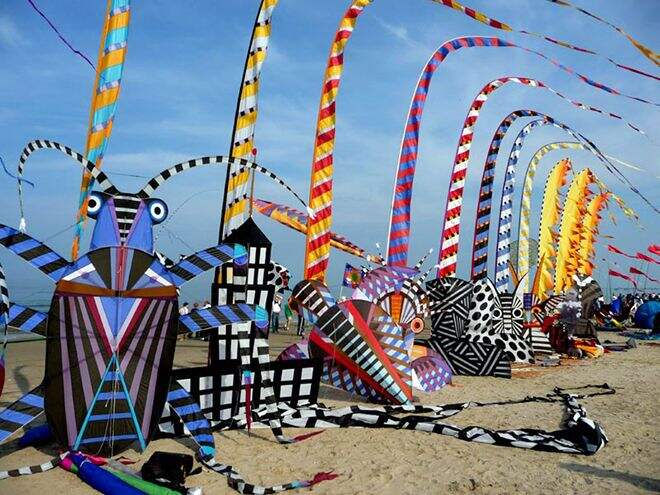
Kite flying in Bali is rooted in Hindu tradition. The practice is tied to the island’s agricultural calendar and its relationship with the gods specifically, sending kites high into the sky is believed to carry messages and prayers to the deities above, asking for good harvests, rainfall, and blessings for the community.
It’s an offering in the most literal sense: instead of incense or flowers placed on an altar, the sky itself becomes the medium.
This context matters because it explains why kite flying in Bali operates at a scale and seriousness that feels completely different from anywhere else in the world. These aren’t weekend hobbyists.
Village teams spend months preparing their kites, competitions draw massive crowds, and the tradition is passed down with the same care as any other religious practice on the island.
The Three Classic Kite Shapes
Traditional Balinese kites come in three main forms, each with its own name and symbolic meaning.
- The bebean is shaped like a fish and is typically long and wide, designed to move gracefully through the air.
- The janggan is the most dramatic of the three a kite with an extraordinarily long tail, sometimes stretching 50 metres or more, representing a bird in flight.
- The pecukan takes a leaf shape and is known for its stability at high altitude. Each of these shapes has deep roots in Balinese mythology and iconography, and competing teams will typically specialise in one form, refining their design year after year.
In recent decades, a fourth open category has emerged that allows for creative and novelty designs dragons, cartoon characters, elaborate geometric forms which has brought a more contemporary energy to the tradition without replacing its core.
The Sound You Can’t Explain at First
One of the most disorienting things about Bali’s kite season for first-time visitors is the noise. Many traditional Balinese kites are fitted with a janggar a bamboo bow strung across the frame that vibrates in the wind and produces a deep, resonant humming sound.
When a large janggan kite is flying overhead, the sound carries across an entire neighbourhood. It’s not unpleasant, but it is unexpected, and it’s one of those details that makes the experience of Bali’s kite season genuinely memorable rather than just visually interesting.
When and Where Kite Season Happens
The peak of Bali’s kite season runs from roughly June through August, coinciding with the dry season when wind conditions are most favourable. The skies above the southern coastal areas Sanur, Padanggalak, and parts of Kuta tend to be particularly active during this period.
The most concentrated event is the Bali Kite Festival, an annual competition held at Padanggalak Beach in Sanur. Teams from across the island and increasingly from international locations bring their largest and most elaborate kites to compete across multiple categories.
The event draws tens of thousands of spectators over several days and is one of the most visually striking public events on the Balinese calendar. If your trip overlaps with the festival period, it’s worth going out of your way to see it.
Outside of the formal festival, kite flying happens organically across the island throughout the season. Open fields near Kerobokan, the beach stretch at Sanur, and the flat areas around Gianyar are all common spots where you’ll see teams flying in the late afternoon when the wind picks up.
Who Actually Flies the Kites
In most villages, kite flying is organised at the banjar level the community unit that forms the basic social structure of Balinese life. Teams of young men, often teenagers and those in their twenties, take on the physical work of flying the larger kites, which can require multiple people to manage the line and keep the kite stable.
Older community members typically handle the design and construction, passing on techniques that in some families go back several generations.
The competitive element is genuine and taken seriously. Teams track their rivals, analyse wind conditions, and adjust their designs iteratively. Winning a major category at the Bali Kite Festival carries real community prestige, and the preparation leading up to the event is a months-long collective effort.
Why It Feels So Different From Kite Flying Elsewhere
Most visitors from outside Indonesia associate kite flying with childhood something light, individual, and casual. Bali’s version of the practice is almost the opposite. The kites are enormous, the organisation is communal, the purpose is spiritual, and the craftsmanship involved is significant.
A competition-grade janggan kite can take weeks to build and involves specialised knowledge of bamboo selection, framing geometry, fabric tensioning, and aerodynamics.
The result is something that occupies a unique space in Balinese life simultaneously a religious act, a community competition, a display of craft, and a seasonal spectacle that turns the sky into a kind of living gallery from June through August every year.
Explore Bali’s Culture Further with SatuSatu
Bali’s kite tradition is just one thread in a much richer cultural fabric and the best way to experience that culture properly is with people who know it from the inside.
SatuSatu is a locally curated travel platform where you can book authentic Bali experiences directly through SatuSatu.com with instant confirmation, dedicated local support, and no middlemen.
The SatuSatu Airport Transfer gets you from Ngurah Rai Airport to wherever you’re staying in Bali without the stress of negotiating fares on arrival same-day booking available, transparent pricing, and a comfortable, reliable ride.
The SatuSatu Exclusive Car Charter gives you a dedicated local driver and fully flexible timing, ideal for chasing kite season across different parts of the island or building a full day around the Bali Kite Festival in Sanur and other cultural stops along the way.
All bookings are made directly on SatuSatu.com and support local payment methods including BCA, Mandiri, OVO, DANA, credit cards, and more.
FAQ about kites in Bali
Why do people fly kites in Bali?
Kite flying in Bali is rooted in Hindu tradition and is connected to agricultural rituals and offerings to the gods. Flying kites high into the sky is believed to send prayers and messages to deities, asking for good harvests and community blessings. It’s a spiritual practice as much as a recreational one.
When is kite season in Bali?
The main kite season runs from June through August, during Bali’s dry season when wind conditions are most consistent. The Bali Kite Festival, held annually at Padanggalak Beach in Sanur, is the centrepiece event of the season and draws competitors and spectators from across the island and beyond.
What are the traditional kite shapes in Bali?
The three classic forms are the bebean (fish shape), the janggan (bird shape with an extremely long tail), and the pecukan (leaf shape). Each has its own symbolic meaning and flying characteristics, and competition teams typically specialise in one form.
Why do some kites in Bali make a humming sound?
Many traditional Balinese kites are fitted with a bamboo bow called a janggar, which vibrates in the wind and produces a deep humming sound. On larger kites at altitude, this sound carries across a wide area and is one of the most distinctive sensory features of Bali’s kite season.
Where is the best place to watch kite flying in Bali?
Padanggalak Beach in Sanur is the main hub, especially during the annual Bali Kite Festival. Outside of the festival, open coastal areas around Sanur and Kuta, and flat inland fields near Kerobokan and Gianyar, are all active spots during the June to August season.