Walk into any warung, step into a small shop in Ubud, or ask for directions along a village lane in Gianyar, and chances are the first word out of a local woman’s mouth will be a warm, unhurried “mbok.”
Tiny as it is, this word carries centuries of Balinese social grace packed into a single syllable. If you want to understand how Bali actually works as a culture, starting here is one of the smartest moves you can make.
SatuSatu a Bali travel platform that helps visitors discover and book authentic experiences across the island, always recommends learning a few key Balinese words before arrival. Mbok is at the top of that list.
What Does Mbok Actually Mean?
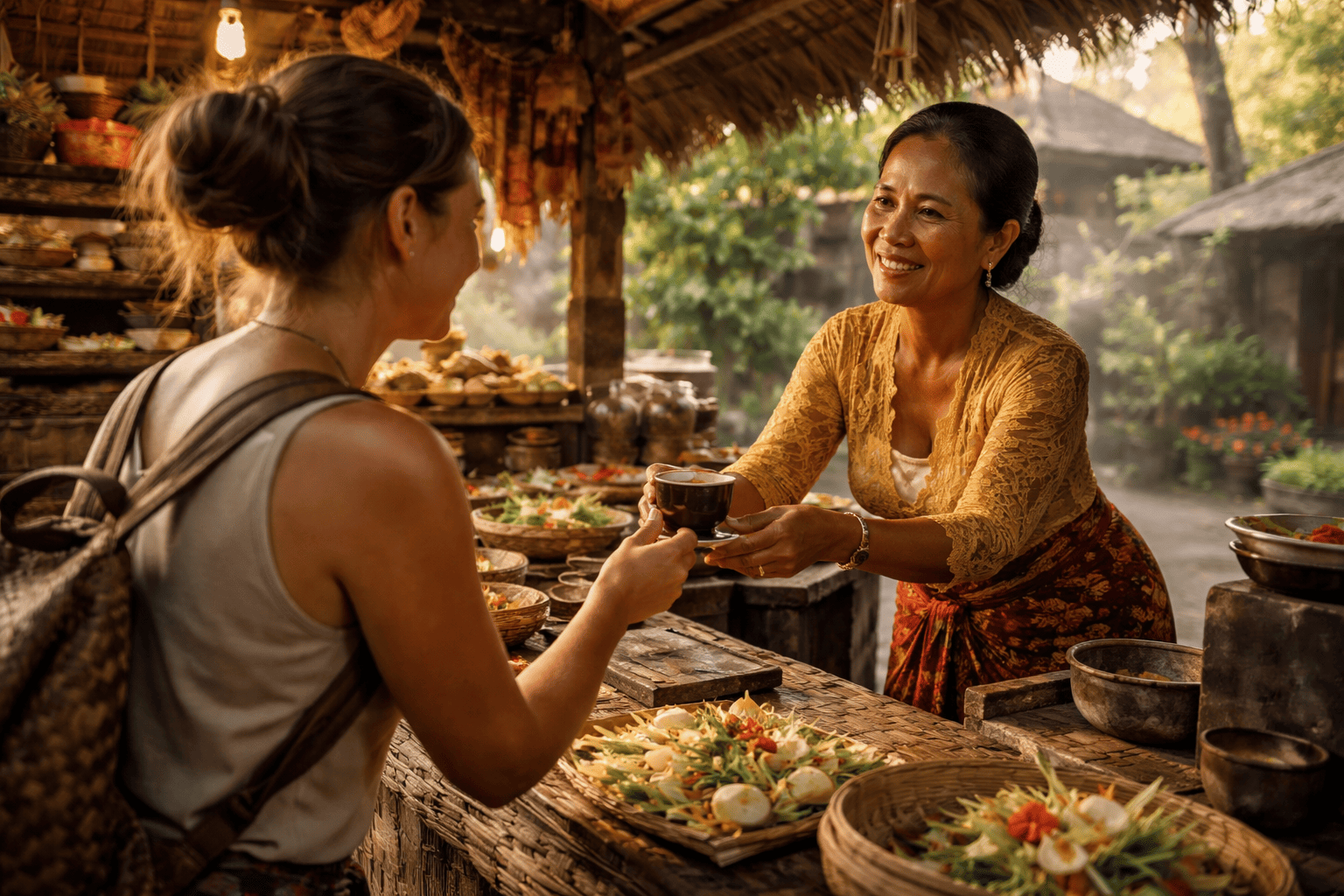
At its most literal, mbok is a Balinese term of address for an older female. It is the female counterpart to bli, which is used for men. The closest equivalent in Javanese is “mbak,” and in standard Indonesian, it sits somewhere between “Ibu” (the more formal “Mrs./Ma’am”) and a casual first-name call.
In traditional Balinese family usage, mbok originally referred specifically to an older sister, whether by blood or by social bond.
The word carries warmth without being overly familiar. When you say “mbok” to a woman running a stall at Pasar Badung or handing you a cup of Balinese coffee at a roadside warung, you are telling her, without any complicated explanation, that you see her and you respect her. That is a lot of work for a four-letter word.
How Mbok Fits Into the Broader System of Balinese Address
Balinese is not a flat language. It operates on a system of registers and social cues that shapes how people speak to one another depending on age, caste, familiarity, and context. Understanding where mbok sits in this system helps travelers use it confidently rather than nervously.
For a woman who is slightly older than you and someone you do not know personally, mbok is considered the most polite and safe choice. If the woman is significantly older, switching to “Ibu” shows greater deference.
For younger women or girls you have already built a rapport with, the term “gek” (derived from “jegeg,” meaning beautiful) is sometimes used, though it carries a more casual, familiar tone and can read differently depending on who is saying it and in what context.
The pairing of mbok with a personal name is the most natural and warm way to use it in everyday conversation. If you know the woman’s name is Komang, “Mbok Komang” immediately signals respect and familiarity at once, the kind of greeting that makes people genuinely smile back.
The Cultural Weight Behind a Single Word
What makes mbok more than just a polite label is how it functions as a social bridge. For visitors arriving from outside Bali, using mbok correctly signals something important: you have done the work to understand how this island actually communicates.
Balinese people are generous and friendly by nature, but they notice when someone treats their culture as a backdrop versus an active, living thing worth engaging with.
Historically, mbok was deeply tied to kinship. Within the family compound (called a “pekarangan”), mbok specifically referred to an older sister who held real responsibility in daily life and in the preparation of offerings and ceremonies.
Women addressed as mbok were often the ones organizing the canang sari, the small daily offerings placed at temple shrines, doorways, and family altars each morning. To call someone mbok was to recognize her role in holding the spiritual and social fabric of the household together.
The Shift in Modern Bali
Language evolves, and Balinese is no exception. In contemporary Bali, especially in tourist hubs like Canggu, Seminyak, and Ubud, mbok has expanded beyond its original kinship role.
Younger Balinese now use it more broadly to address any woman who is not a close friend, regardless of strict age hierarchy. Visitors from other Indonesian islands, particularly Java, sometimes use mbok and bli as markers of friendliness when approaching Balinese locals for the first time.
This shift reflects a broader openness in Balinese social life. The word has become, in many daily contexts, a general signal of goodwill: I do not know you yet, but I come with respect.
For travelers, this modern usage is actually good news because it means using mbok in a market, in a hotel lobby, or when flagging a local guide for directions is almost never wrong. The worst outcome is a gentle correction, which will usually come with a smile.
How to Use Mbok as a Traveler
Using mbok well comes down to a handful of practical situations most visitors encounter within their first few hours on the island. At a local market, opening with “Mbok, niki ajine kuda?” (roughly: “Excuse me, how much is this?”) will earn you a significantly different reception than pointing and speaking English from the start.
At a warung, a simple “Mbok, nunas nasi campur” (asking for mixed rice) is both polite and immediately understood.
Combining mbok with “Om Swastiastu,” the traditional Hindu greeting used when entering temples, shops, and homes, builds a complete picture of someone who genuinely respects where they are.
Locals across Bali, from Denpasar to the rice terraces of Tegalalang, consistently respond with greater warmth to visitors who try. Pronunciation is straightforward: say it almost exactly as it looks, with a short “o” sound and a soft “k” at the end.
Explore Further with SatuSatu
If learning mbok has sparked a deeper curiosity about Balinese culture, SatuSatu.com is where that curiosity turns into real experience. SatuSatu is a Bali travel platform built to connect visitors with the authentic side of the island, from essential transport to carefully selected local experiences, all bookable in one place.
Every Bali trip starts and ends at Ngurah Rai Airport, and SatuSatu’s Airport Transfer service makes that part completely stress-free. With transparent pricing, same-day booking available, and no haggling involved, it is the cleanest way to start and close your time on the island.
For getting around once you are here, the SatuSatu Exclusive Car Charter gives you a dedicated local driver and fully flexible timing, whether you are heading deep into Ubud’s village roads or chasing sunset along the Bukit Peninsula. All bookable directly on SatuSatu.com
To truly feel the culture behind words like mbok, the Kecak Fire Dance at Uluwatu Temple is one of the most powerful experiences Bali offers. Performed at the clifftop temple as the sun goes down, this centuries-old ritual brings together fire, movement, and the deep spiritual language of the Balinese Hindu tradition.
It is available to book directly on SatuSatu.com which also accepts local payment methods including BCA, Mandiri, OVO, DANA, credit cards, and more.
FAQ About Mbok
What does mbok mean in Balinese?
Mbok is a Balinese term of address used for women, equivalent to an older sister or a respected female figure. It is the female counterpart to bli, which is used for men, and carries a tone of warmth and respect.
Is it appropriate for tourists to use mbok in Bali?
Yes, and it is genuinely appreciated. Using mbok when addressing a local woman, especially in markets, warungs, or village settings, is seen as a sign of cultural awareness and respect. It is considered one of the safest and most polite forms of address.
What is the difference between mbok and ibu in Bali?
Both are respectful, but ibu is more formal and used for significantly older women or those in official contexts. Mbok carries a warmer, more familial tone and is appropriate for everyday interactions with women who are slightly older than you.
Can mbok be used with someone’s name?
Yes, and this is actually the most natural way to use it. Combining mbok with a personal name, such as “Mbok Komang” or “Mbok Wayan,” is both polite and friendly at the same time.
What is the male equivalent of mbok?
The male equivalent is bli. Together, mbok and bli form the two most common polite forms of address in everyday Balinese conversation, and knowing both will serve you well throughout your time on the island.