If you’ve ever walked through a Balinese village and heard the sound of gamelan drifting from a nearby street or spotted an elaborately decorated tower being carried by dozens of men you may have stumbled upon one of the most spiritually profound events in Southeast Asia.
Ngaben, Bali’s sacred cremation ceremony, is a window into the soul of Balinese Hinduism that very few destinations on earth can offer. Whether you’ve just landed or you’re still planning, SatuSatu is your go-to companion for experiencing Bali the right way start at SatuSatu.com
What Is Ngaben?
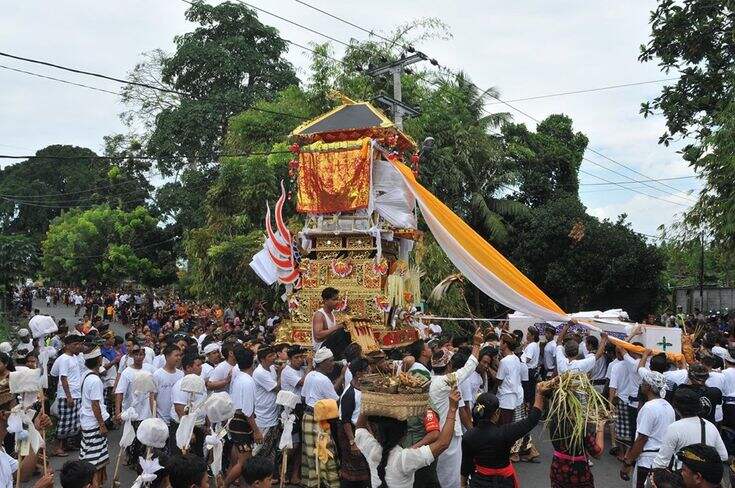
Ngaben is the Balinese Hindu cremation ceremony, a sacred ritual designed to release the soul from the physical body and allow it to return to the universe or eventually be reincarnated. The name is believed to derive from the word beya or abu, meaning ash, though its deeper meaning carries far more weight.
In Balinese belief, the human body is made up of five natural elements known as Panca Maha Bhuta earth, water, fire, wind, and space. When a person dies, these elements must be returned to nature so the soul can move freely.
Ngaben is the ritual act of doing exactly that. It is not mourning in the Western sense it is a celebration of release.
What strikes many visitors most is the absence of visible grief. Processions are colorful, the music is lively, and the atmosphere feels more like a send-off than a funeral. That is intentional crying too much is believed to hinder the soul’s journey, so families gather to honor, celebrate, and let go.
The Philosophy Behind the Ceremony
Balinese Hinduism holds that death is not an ending but a transition. The soul, called Atman, is eternal it is only the physical body that passes. By burning the body, the family liberates the soul from its earthly attachment so it can begin the next phase of its existence.
The ritual is also seen as the final responsibility of children toward their parents repaying the care received in life by ensuring a dignified and sacred passage into what comes next. Families approach Ngaben with spiritual duty and love, not just grief.
The Key Stages of a Ngaben Ceremony
- Ngulapin Seeking Permission The first stage involves the family visiting Pura Dalem, the temple associated with death and the goddess Durga, to formally request permission and blessings for the ceremony to proceed. This is done quietly and with great reverence.
- Preparing the Body If the person was buried temporarily which often happens when families need time to gather funds or wait for an auspicious date the remains are exhumed, cleaned, and dressed.
The body is then placed inside the cremation vessel and adorned according to the family’s traditions and social standing.
- The Procession This is the part most visitors witness first. The body is carried through the village in an ornate tower called a bade, constructed from bamboo, wood, and colorful fabrics. The bade can reach several stories high and requires dozens of men to carry it.
A separate structure shaped like a bull or cow, called a lembu, represents the vessel that will carry the soul to the afterlife. The procession is accompanied by gamelan music and the whole community the local banjar, or neighborhood association, contributes time, labor, and resources to support the family.
- The Cremation At the cremation site, the body is transferred into the lembu and set alight. The burning is understood spiritually as the moment of release the five elements returning to their origins in the universe.
- Larung Abu Releasing the Ashes After the cremation, the ashes and bone fragments are gathered, placed inside a coconut or small vessel, and taken to the sea or a sacred river to be released.
Common locations include the coast near Sanur, the Ayung River in Ubud, or the shoreline in Lovina. This final act completes the cycle the elements return fully to nature.
The Symbols You’ll See
The bade tower is the most visually striking element of any Ngaben procession. Its height often reflects the deceased’s social status, with royalty or high-caste families commissioning structures of extraordinary size and detail.
The lembu, shaped like a bull or sacred cow, represents the vessel for the soul’s journey. It is crafted from wood, bamboo, and richly dyed cloth, then set ablaze at the cremation site.
White and yellow fabrics appear throughout, symbolizing purity and spiritual clarity. Offerings of flowers, food, and incense accompany every stage each element chosen for its specific spiritual meaning rather than decoration alone.
When and Where Ngaben Takes Place
Ngaben does not follow a fixed calendar in the way that holidays do. The timing is determined by the Balinese Hindu calendar, with priests identifying auspicious days for cremation.
As a result, ceremonies can happen at almost any time of year though the dry season between April and October sees higher activity when outdoor gatherings are easier to manage.
Because Ngaben can be expensive and logistically complex, families sometimes wait months or even years after a death before holding the ceremony.
In many villages, multiple families coordinate to hold a ngaben massal a communal ceremony where many souls are cremated together, sharing the costs and community effort.
Ceremonies are held throughout Bali, but areas with strong traditional village life Ubud, Gianyar, and Klungkung among them tend to have more visible and frequent processions.
Desa Terunyan in Kintamani follows an entirely different tradition: the dead are placed in the open air beneath the sacred Taru Menyan tree, believed to neutralize decomposition naturally.
Etiquette for Visitors Who Witness Ngaben
Ngaben is not a tourist attraction. It is a living religious ceremony taking place in the real life of a real family. If you encounter one, or if a local invites you to observe, there are some things to keep in mind.
Dress modestly. A sarong and sash are appropriate and often required near any temple area. Keep your camera lowered unless you are clearly far from the immediate family and photography feels welcome.
Pointing lenses at the body, the grieving family, or the cremation itself is not appropriate. Stay at the edges of the procession rather than inserting yourself into it. Speak quietly, move calmly, and follow the lead of those around you. If someone asks you to step back or stop photographing, do so immediately and graciously.
Being present at a Ngaben even briefly is a genuine privilege. Treat it as such.
Explore Bali’s Culture Further with SatuSatu
Experiencing something as profound as Ngaben often deepens a traveler’s curiosity about Balinese spiritual life and culture. SatuSatu makes it easy to explore more of that side of Bali, from the moment you land to every adventure in between.
Begin your trip smoothly with the SatuSatu Airport Transfer a stress-free, fairly priced service that takes you directly from Ngurah Rai Airport to your destination with same-day booking available and zero haggling at arrivals.
Once you’re settled in, the SatuSatu Exclusive Car Charter gives you the freedom to explore Bali at your own pace with a dedicated local driver and fully flexible timing perfect for village visits, temple days, or longer journeys across the island, all bookable on SatuSatu.com
For travelers who want another unforgettable encounter with Balinese ritual and performance, the Uluwatu Temple Kecak & Fire Dance experience on SatuSatu is a natural next step.
Staged at a clifftop amphitheater overlooking the Indian Ocean at sunset, this SatuSatu-curated performance brings the Ramayana epic to life through chanting, movement, and fire a deeply cultural experience that makes the spiritual world of Bali feel vivid and real.
All bookings are made directly on SatuSatu.com with local payment options including BCA, Mandiri, OVO, DANA, credit cards, and more.
FAQ About Ngaben
What is Ngaben?
Ngaben is the sacred cremation ceremony of Balinese Hinduism. Its purpose is to release the soul from the physical body, return the five natural elements to the universe, and allow the soul to move toward reincarnation or Nirwana. It is one of the most spiritually significant rituals in Balinese culture.
Is Ngaben the same as a funeral?
Not exactly. While it marks the passage of the dead, Ngaben is far more celebratory in spirit than a Western funeral. The mood is intentionally positive, with music, processions, and community gathering designed to honor and release the soul rather than mourn its departure.
Can tourists attend a Ngaben ceremony?
In many cases, yes Ngaben is often held in public spaces and communities may welcome respectful visitors.
However, it is not a performance arranged for tourists. Visitors should dress modestly, behave quietly, stay at the margins, and avoid pointing cameras at the family or the body without clear indication that it is appropriate.
Why is Ngaben sometimes held years after someone dies?
Organizing Ngaben requires significant financial resources and must be timed according to the Balinese Hindu calendar on an auspicious day.
Many families temporarily bury their loved ones and wait until they have the funds and the right timing to hold a proper ceremony. Communal or mass cremations, called ngaben massal, help families share costs and hold the ceremony together.
What is the difference between a bade and a lembu?
The bade is the tall ornate tower used to carry the body during the village procession. The lembu is a separate structure, typically shaped like a bull or sacred cow, which serves as the cremation vessel at the final site. Both are built specifically for the ceremony and burned as part of the ritual.