If you’ve spent any time in Bali, you’ve almost certainly seen them men in black-and-white checkered sarongs standing at the edge of a temple procession, directing traffic around a ceremony, or patrolling empty streets on Nyepi.
They are the pecalang, and they are one of the most fascinating and most misunderstood parts of Balinese culture. Understanding who they are adds an entirely different layer to experiencing the island. If you’re planning a trip to Bali and want to experience its culture the right way, SatuSatu.com is the place to start.
What Is Pecalang?
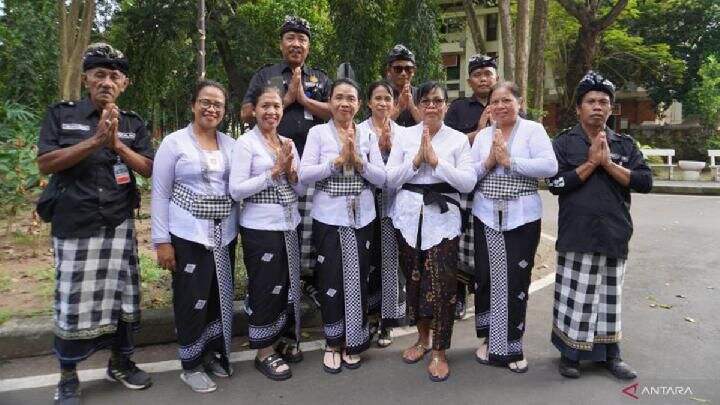
The word “pecalang” comes from celang, a Balinese term meaning sharp or vigilant. True to that name, pecalang are the traditional security force of Bali’s customary villages, known as desa adat. They are not government officials, and they don’t answer to the national police.
Their authority comes from awig-awig the unwritten and written customary laws that have governed Balinese village life for centuries. Today, nearly every one of Bali’s 1,500 traditional villages has its own pecalang unit operating under this same framework.
What makes pecalang genuinely unique is that the role is entirely voluntary. There is no salary, no pension, and no formal employment contract.
Being appointed as a pecalang is considered a form of ngayah a selfless act of service to the community and to the gods. It is one of the most respected positions a man in a Balinese village can hold.
A Brief History
Pecalang in their modern form began to emerge in the late 1970s, when the Bali Arts Festival (Pesta Kesenian Bali) required organized community security to manage large crowds.
However, the concept is far older referenced in Lontar Purwadigama Sasana, ancient Balinese manuscripts that describe the duties of village guardians under terms like ngulati kasukretan desa (investigating village difficulties) and jagabaya ikang desa (guarding village safety).
Some historians and village elders trace the roots of the role even further back to the era of Bali’s royal kingdoms.
The role gained wider national recognition in the late 1990s when pecalang successfully maintained security during a major political congress held in Bali. Today, they are formally recognized under regional law and are present in all 1,500 desa adat across the island.
Roles and Responsibilities
The duties of pecalang go well beyond what you might expect from a security force. Their primary responsibility is securing religious ceremonies Bali’s calendar is packed with Hindu observances, and every temple anniversary, cremation procession, Galungan, and Kuningan celebration requires organized crowd management and traffic control on the island’s often-narrow roads.
During these events, the coordination between pecalang and the flow of thousands of devotees is practiced and precise.
Within their villages, pecalang also act as mediators. When disputes arise between community members, pecalang are often the first point of resolution using the moral weight of their position to restore harmony before the situation escalates to formal authorities.
They coordinate with the national police when needed, but their authority within the village is culturally and legally distinct.
In recent years, their role has expanded to include supporting local tourism and environmental efforts. You may see pecalang managing crowds at popular temple festivals, guiding visitors, or participating in community beach clean-ups reflecting how the institution continues to evolve alongside modern Bali.
Uniform and Symbolism
The pecalang uniform is immediately recognizable and deeply meaningful. At its core is the kamen poleng the black-and-white checkered sarong that has become the most iconic visual symbol of Bali’s traditional security.
This checkered pattern, known as poleng, represents Rwa Bhineda the Balinese philosophical concept of duality and balance between opposing forces: good and evil, light and dark, order and chaos.
Paired with the sarong is an udeng, the traditional Balinese headcloth tied in a specific knot that indicates cultural formality. Over their shirts, pecalang wear a black vest marked with the word “Pecalang.”
Many also carry a keris a ceremonial dagger as a symbol of their authority, as well as a handheld radio for practical communication during large events.
The uniform is not decorative. Every element signals that the person wearing it carries the weight of community trust and ancestral duty.
Pecalang and Nyepi
There is no day more important to the pecalang than Nyepi the Balinese Day of Silence and Hindu New Year.
Nyepi requires the entire island to observe Catur Brata Penyepian: no fire (amati geni), no travel (amati lelungan), no entertainment (amati lelanguan), and no work (amati karya) all for a full 24 hours. Even Ngurah Rai Airport closes for the day.
Pecalang are the ones who make this observance possible. They patrol the streets from sunrise to sunrise, ensuring that no one resident or visitor breaks the silence. In 2017 alone, some 22,000 pecalang were deployed across Bali for Nyepi.
Tourists staying in hotels are required to remain inside, with lights dimmed and curtains drawn. The pecalang enforce this with genuine authority, and compliance is expected without exception.
What Tourists Should Know
Pecalang are deeply respected members of Balinese society, and visitors should treat them accordingly. If a pecalang gives you an instruction during a ceremony or on Nyepi, follow it their word carries real weight within their jurisdiction, and refusing creates real friction with the community.
During religious processions, step aside, keep noise to a minimum, and avoid pointing cameras directly at them without acknowledgment.
It is also worth knowing that while you may see people dressed like pecalang at commercial events or private venues, genuine pecalang only operate within their desa adat and during sanctioned religious and community activities.
They are village members, not hired security staff, and the distinction matters culturally. Respecting that distinction and approaching Balinese ceremonies with genuine curiosity rather than just a camera is what separates a tourist visit from a real cultural experience.
One more practical note: Bali’s religious calendar is active year-round, and pecalang are out in force during major celebrations. Traveling with a knowledgeable local driver during these periods makes navigation significantly easier and more respectful.
Explore Bali’s Culture Further with SatuSatu
Understanding pecalang is the beginning of understanding what makes Bali genuinely unlike anywhere else on earth. If you want to go deeper into the island’s living culture, SatuSatu is the right place to plan your trip.
Start with the SatuSatu Airport Transfer for a smooth, hassle-free arrival from Ngurah Rai Airport transparent pricing, same-day booking available, and no negotiating with strangers after a long flight.
To explore Bali’s villages, temple routes, and ceremony sites at your own pace, the SatuSatu Exclusive Car Charter gives you a dedicated local driver with fully flexible timing, bookable directly on SatuSatu.com
And for a direct encounter with Bali’s living ceremonial culture, the Uluwatu Temple Kecak & Fire Dance listed on SatuSatu.com is one of the island’s most spectacular cultural performances, held at sunset on the clifftop of Pura Luhur Uluwatu, where you’ll often see pecalang managing the ceremony grounds firsthand.
All bookings are made directly on SatuSatu.com with local payment options including BCA, Mandiri, OVO, DANA, credit cards, and more.
FAQ About Pecalang
What is pecalang in Bali?
Pecalang are the traditional security officers of Bali’s customary villages (desa adat). They are volunteer community members not government employees whose authority comes from Balinese customary law (awig-awig) rather than the state.
Their primary role is maintaining order and security during religious ceremonies and village life, and they are most visible during Nyepi, Galungan, Kuningan, and temple anniversary celebrations.
Why do pecalang wear black-and-white checkered sarongs?
The checkered poleng pattern represents Rwa Bhineda the Balinese philosophy of duality and balance between opposing forces. Wearing it signals that the pecalang stands at the boundary between order and chaos, maintaining harmony on behalf of the community.
The full uniform also includes an udeng headdress, a black vest, and often a ceremonial keris dagger.
Are pecalang paid for their work?
No. Pecalang serve entirely as volunteers. There is no salary, no benefits, and no formal compensation. The role is considered a form of ngayah selfless service to the village, the community, and the divine and being appointed is regarded as a significant honor within Balinese society.
What happens if tourists break the rules on Nyepi?
Pecalang have the authority to enforce Nyepi restrictions within their village jurisdiction. If a tourist is found outside or causing disruption during the day of silence, the pecalang will intervene and, if necessary, hand the matter over to the national police.
Most hotels in Bali thoroughly brief guests ahead of Nyepi, and compliance is both expected and legally enforceable under local regulations.
Can anyone become a pecalang?
No, membership is by community appointment only. A candidate must be an active, married member of the banjar (village community), be over 25 years of age, practice the Hindu faith, have no criminal record, and be known for strong moral character.
You cannot apply for the position; the village council and its elders select members based on community standing and personal integrity.