Most travel guides will tell you to “just walk around and explore” Ubud Art Market. And sure, that works but if you walk in without knowing what to expect, you’ll probably end up overpaying, missing the best stalls, and leaving feeling slightly frazzled instead of happy.
Before you go, here’s everything you actually need to know from opening hours and what to buy, to bargaining tips and the best experiences to pair it with, all handpicked by the local team at SatuSatu: a Bali-based platform that curates authentic experiences for travelers who want more than just the standard tourist trail.
What Is Ubud Art Market?
Ubud Art Market, also known locally as Pasar Seni Ubud, is a traditional market where local vendors sell handmade goods, souvenirs, and crafts aimed squarely at visitors passing through town. But it’s more than just a souvenir shop it’s a living, breathing piece of Ubud’s cultural identity.
Ubud Art Market has existed since ancient times, along with the construction of Ubud Palace, which was around the 1800s.
Back then, it used a barter system for transactions, and since the first wave of tourists arrived, this market has grown from selling household necessities to offering various handicrafts for visitors while still serving as a place for local residents to buy and sell everyday items.
The market has two main sections. The western block caters to tourists with souvenirs and artwork, while the eastern block is the traditional market where locals shop for fresh produce and everyday necessities.
If you’re here for the souvenir hunt, head west. If you want a glimpse of real local life in the early morning, the eastern side is fascinating too.
Location, Opening Hours & Entrance Fee
📍 Address: Jalan Raya Ubud No.35, Ubud, Kecamatan Ubud, Kabupaten Gianyar, Bali 80571
🕘 Hours: The market is open every day from 8:00 AM until 9:00 PM, though some vendors close around 5:00 or 6:00 PM while others stay open late.
💰 Entrance Fee: There’s no entrance fee to visit the Ubud Art Market. You can wander through, browse, and soak up the atmosphere without paying a single rupiah making it one of the easiest free things to do in Ubud.
There’s only a small parking fee of IDR 2,000–5,000, but parking is limited, so getting there early, hiring a driver, or walking is the better move.
Best Time to Visit
Timing actually matters a lot here. The best time to visit is in the morning, shortly after it opens. The Balinese also believe that the first sale in the morning blesses the rest of the day, so vendors are eager to make that first sale and are often willing to reduce prices significantly.
By late morning and afternoon, the walkways fill up fast, especially once Ubud day tour groups arrive. Parts of the market are covered but there’s no air conditioning anywhere, so light clothes and comfortable shoes are a must.
If mornings aren’t your thing, late afternoon around 4:30–5:00 PM is the next best window crowds thin out as most tourists head back to freshen up for dinner.
Best Souvenirs to Buy at Ubud Art Market
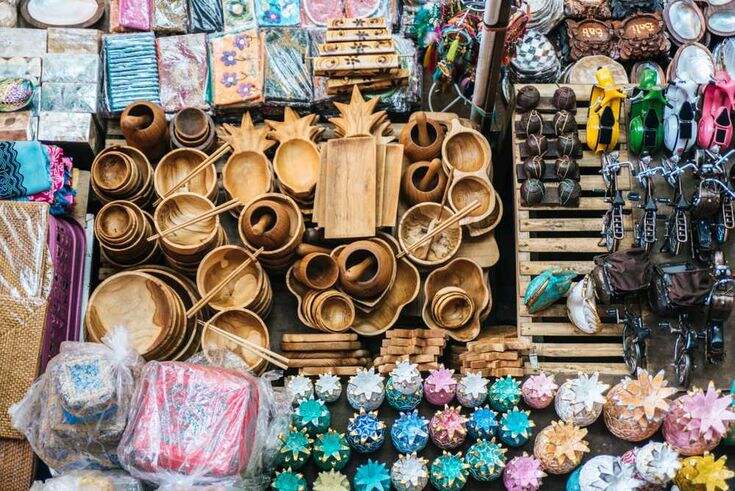
This is where it gets fun. When exploring the market, you’ll discover an incredible variety of handicrafts and souvenirs colorful textiles like sarongs and scarves, woven rattan bags, hats and baskets, alongside wood carvings, stone sculptures, and paintings.
Jewelry lovers will find beautiful silver and gold designs, while souvenir hunters can pick up keychains, hand fans, or sandals. Here are the standouts worth looking for:
- Woven Rattan Bags: The bags come in different sizes and suit perfectly with a summer dress. Make sure to compare prices from one store to another. These are genuinely one of the most popular items at the market and hold up well as practical everyday bags back home.
- Batik & Endek Fabric : Balinese traditional fabric called Endek is a must-buy item, available in various colors and patterns. You can find it as sarongs, scarves, or fabric by the meter if you want to get something made.
- Wood Carvings: You can find both typical and exemplary Balinese items, with art-producing villages nearby creating their products by hand rather than mass-producing them which makes this market rather different from others you may have encountered in Southeast Asia.
- Silver Jewelry: Ubud is one of Bali’s centers for silversmith work, and the market has plenty of handcrafted silver pieces at negotiable prices.
- Balinese Paintings: Local artists sell original works depicting Balinese life, rice fields, temples, and mythological scenes. These make genuinely beautiful wall pieces.
- Batik Clothing & Beachwear: From shirts and sarongs to beachy dresses and the classic flowy elephant pants, it’s a shopper’s paradise. Expect to spend anywhere between IDR 30,000–100,000 on these items.
- Masks & Shadow Puppets: Traditional Balinese masks are intricately carved and make for unique wall decorations. Leather shadow puppets, or wayang kulit, are another cultural keepsake worth picking up.
How to Bargain Without It Being Awkward
If you’ve never bargained before, it feels a little uncomfortable at first but it’s completely expected here and honestly part of the experience. Here’s how to approach it:
Start at around 30–40% of the asking price and work your way up from there. The vendor will counter, you’ll go back and forth a few times, and you’ll usually land somewhere in the middle that feels fair to both sides. Keep it friendly, keep smiling, and never take it personally, it’s a transaction, not a confrontation.
If a price genuinely doesn’t work for you, it’s completely fine to walk away. Chances are the exact same item is available two stalls down. Vendors know this too, which is why a polite walk-away often brings a better offer before you’ve taken three steps.
Bring cash in smaller notes, bargaining is harder when you hand over a large bill. While some vendors now accept cards, cash keeps the process smooth and gives you more negotiating leverage.
One thing to remember: if you agree on a price, you’re expected to follow through and buy. Don’t negotiate seriously unless you actually intend to purchase.
Why Ubud Art Market Is Worth Visiting?
Beyond the shopping, there’s a genuine reason this market has been on every Ubud itinerary for decades. You’re not just shopping here, you’re seeing what local artisans actually make and sell, from hand-carved wood and woven bags to artwork and jewelry that reflects everyday Balinese design, not gallery prices.
The market is more than just a place to shop, it’s where Bali’s culture, art, and daily life come together in one vibrant spot. The lively atmosphere, combined with nearby landmarks like Ubud Palace and Saraswati Temple, makes it worth visiting for anyone exploring the cultural heart of Bali.
Getting to Ubud Art Market? Book Your Transport on SatuSatu
Getting around Ubud is a lot easier when you have reliable transport sorted in advance and satusatu.com has two options that make it simple.
If you’re arriving from the airport, the SatuSatu Airport Transfer is the easiest way to start your Bali trip. Starting from IDR 110,000, you get a private door-to-door transfer with a professional driver and air-conditioned vehicle. Same-day booking available, rated 4.9 with 700+ bookings.
For exploring Ubud on your own schedule, the SatuSatu Exclusive Car Charter gives you a private car and driver for the full day starting from IDR 450,000. Set your own itinerary Ubud Art Market, rice terraces, temples, waterfalls your driver handles the rest. Rated 4.8 with 500+ bookings, same-day booking available.
Both can be booked instantly at satusatu.com and each comes with a complimentary welcoming gift as a little bonus from the SatuSatu team.
FAQ about Ubud Art Market
Is Ubud Art Market free to enter?
Yes, completely free. The only cost is a small parking fee IDR 2,000 for a scooter and IDR 10,000 for a car if you drive there.
What are the opening hours?
Most vendors are open from around 8:00 AM, with some stalls staying open until 9:00 PM. For the best experience, go in the morning when it’s cooler and less crowded.
Is bargaining required?
Practically, yes. Almost no items have fixed prices, and vendors expect negotiation. Starting at around 30–40% of the asking price is a reasonable approach. Keep it friendly and you’ll be fine.
Is it safe to visit the market?
Yes, the market is a well-established tourist spot with friendly vendors and a relaxed atmosphere. Just keep an eye on your belongings during busy periods, as it can get crowded.
Can I pay by card at Ubud Art Market?
Some vendors accept cards, but cash is strongly preferred especially if you plan to bargain. Bring smaller notes to make transactions smoother.
How long should I spend at Ubud Art Market?
Most people spend between 1–3 hours depending on how serious they are about shopping. If you’re just browsing, an hour is plenty. If you’re on a mission, give yourself more time to compare stalls and negotiate.
What should I pair with a visit to Ubud Art Market?
The market is right next to Ubud Palace, Saraswati Temple, and plenty of great cafés and restaurants. For a full day, combine it with the Legong Dance show in the evening, a waterfall tour in the morning, or a silver jewelry workshop all bookable through satusatu.com