Ubud has no shortage of beautiful temples but Pura Taman Saraswati, better known as the Ubud Water Palace, holds a different kind of energy to most.
It sits right in the middle of the town, tucked behind a cafe terrace, and yet the moment you step through the outer gate and see the lotus pond stretching out before you, the surrounding noise just drops away.
If you’re building an Ubud itinerary worth remembering, SatuSatu is your locally curated travel platform find experiences, transport, and day trips that pair perfectly with a visit like this, all bookable directly through SatuSatu.com
Ubud Water Palace officially known as Pura Taman Saraswati is a small but iconic temple tucked right in the center of Ubud town. It’s dedicated to Saraswati, the Hindu goddess of wisdom, knowledge, and the arts, which fits perfectly with Ubud’s identity as Bali’s cultural hub.
This isn’t a grand complex like Besakih or a clifftop spectacle like Uluwatu it’s intimate, walkable, and deeply woven into the daily life of the town around it.
What Is Ubud Water Palace?
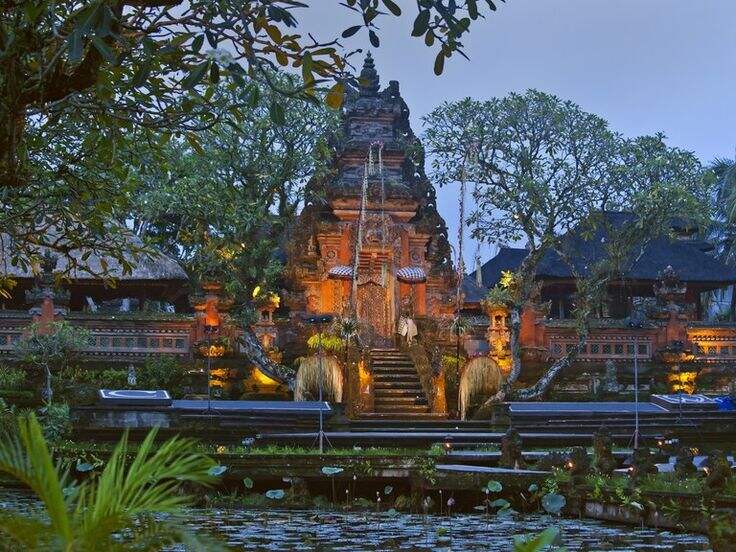
The official name of this beautiful structure is Pura Taman Kemuda Saraswati, but many fondly refer to it as the Ubud Water Palace, owing to its serene lotus ponds and picturesque surroundings.
The intricate details in the temple’s design showcase the craftsmanship that is synonymous with Balinese culture, and the temple’s gardens add another layer of beauty to this sacred place.
The temple was designed by the renowned Balinese architect I Gusti Nyoman Lempad at the request of Prince Cokorda Gede Agung Sukawati. Lempad, known for his exceptional skills in sculpture and architecture, moved to Ubud from the royal court of Blahbatuh, bringing with him a wealth of artistic knowledge.
Construction began in 1951 and was completed in 1952. Dewi Saraswati is the Hindu goddess of knowledge, wisdom, art, speech, music, and learning highly revered in Bali and throughout the Hindu world as a symbol of intellectual and creative energy.
In Balinese Hinduism, she holds a special place and is often prayed to by students, artists, teachers, and musicians seeking inspiration and clarity of mind.
That spiritual identity is visible in every element of the temple’s design from the four-armed statue of the goddess near the gate to the lotus blooms that fill the pond, each symbolizing purity and spiritual awakening.
Location & How to Get There
Saraswati Temple is in central Bali in the town of Ubud. It’s centrally located and within a 10-minute walk of most other attractions in the town, such as the Ubud Art Market and Ubud Royal Palace.
The address is Jl. Kajeng, Ubud, Gianyar directly behind Cafe Lotus on the main road. If you’re already walking the main strip of Ubud, you’ll pass right by it. From Ngurah Rai International Airport, the drive to central Ubud takes around 60 to 90 minutes depending on traffic longer during peak hours on the Bypass road.
Most visitors arrange a private driver for this journey, which is the most comfortable and flexible option. Once you’re in Ubud, the temple is entirely walkable from most guesthouses and hotels in the center.
It fits in nicely as a stop on an Ubud walking day, since it’s close to a lot of the main attractions a low-effort, high-impact addition to any itinerary.
Entry Fee & Opening Hours
The temple opens to the public at 7:00 AM each day and closes at 5:00 PM. Because it’s a temple and not just a tourist attraction, Pura Taman Saraswati is open to worshippers 24 hours a day.
Entry to the outer grounds is completely free. A sarong and sash are provided free at the entry point, so even if you arrive without one, you’ll be sorted quickly.
The one time you’ll pay is if you want to watch the traditional Balinese dance performances held in the evenings Cafe Lotus hosts evening Balinese dances including Legong and Barong, with the temple as a backdrop, at around IDR 100,000 per ticket.
It’s genuinely worth it if you’re in Ubud for the evening watching a Kecak or Legong performance with the lotus pond and illuminated temple gate behind the dancers is one of those moments that stays with you.
What to See Inside
The lotus pond is the temple’s most iconic feature a large pond filled with blooming pink lotus flowers, neatly framed by stone walls and walkways that create a magical atmosphere right at the entrance.
Along the pond’s edges, frangipani trees add color and fragrance, while a stone bridge crosses the pond and guides you toward the temple’s majestic main gate.
At the end of the bridge stands the main gate with three large doorways, decorated with golden carvings and intricate Balinese art. The gate is flanked by demon statues the entrance to the temple is guarded by two statues of demons, which are meant to ward off evil spirits.
Beyond the outer gate, the inner courtyard holds the main shrine, the Padmasana throne, and several smaller shrines. There is also an Aling-Aling Wall a unique barrier featuring the demon Jero Gede Mecaling, meant to confuse evil spirits entering the sacred space.
Visitors cannot go inside the main temple unless there’s a ceremony and they’re dressed appropriately and even then, it’s usually reserved for locals.
This is worth knowing before you arrive: the experience here is about the atmosphere, the architecture, and the pond not exploring an interior. Most visitors spend 20 to 45 minutes on the grounds, longer if they’re photography-focused or waiting for good light.
Tips for the Best Visit
A few things that make a genuine difference to how your visit goes. The best hours are early morning from 7 to 9 AM or late afternoon from 4 to 6 PM. Avoid midday when it’s too hot and crowded. Evening is great for dance performances.
Follow the dress code: wear a sarong and waist scarf. Women who are menstruating should not enter the temple area look for notices at the entrance. Respect the sacred spaces; climbing on worship areas is not allowed.
Photography is welcome in the outer areas, but avoid flash inside the shrines and be respectful when worshippers are present this is an active temple, not a museum.
The Campuhan Ridge Walk is a great activity to combine with a morning temple visit a scenic 2-kilometer walk through terraced hillsides on the edge of Ubud that most people finish in under an hour. Ubud Royal Palace is a five-minute walk from Pura Taman Saraswati and rounds out a perfect cultural morning in the town center.
What Makes Ubud Water Palace Special
The lotus pond and architecture are major highlights for photography lovers, and it’s consistently praised for its serene vibe, especially in the early morning or just after sunset when it’s quieter. But what sets it apart from a standard Ubud photo stop is the layers beneath the surface.
The Saraswati Day (Hari Raya Saraswati) is celebrated every 210 days according to the Balinese Pawukon calendar, with offerings, prayers, and temple ceremonies especially at places like Pura Taman Saraswati in Ubud.
If your visit happens to coincide with one of these ceremonies, you’ll witness the temple in its full living spiritual context flowers and offerings covering every surface, priests in white ceremonial dress, and the kind of authentic cultural moment that no amount of planning can manufacture.
The temple is also a testament to one of Bali’s most celebrated artistic figures. I Gusti Nyoman Lempad, who designed the structure, was a Ubud-based sculptor, painter, and architect whose influence on Balinese visual culture is difficult to overstate.
His architectural style blends traditional Balinese elements with fine artistic detail, visible in the intricate stone carvings and the overall layout of the temple and lotus pond. Visiting Pura Taman Saraswati with that context adds another dimension to what you’re looking at.
Explore Ubud Further with SatuSatu
Ubud rewards the kind of day where you mix cultural stops with outdoor adventure and SatuSatu makes it easy to plan everything in one place, directly through SatuSatu.com with instant confirmation and dedicated local support.
The SatuSatu Airport Transfer is the smoothest way to get from Ngurah Rai Airport all the way up to Ubud transparent pricing, same-day booking available, and no haggling at the arrivals hall after a long flight.
The SatuSatu Exclusive Car Charter is ideal for getting around on the days you want to explore beyond walking distance whether that’s Tegallalang Rice Terraces, Tirta Empul, or further into East Bali giving you a dedicated local driver with fully flexible timing, bookable directly on SatuSatu.com
For travelers who want to balance a morning of temple visits with something more energetic, the Green Bali Adventure ATV Quad Bike Experience on SatuSatu.com is based right in Ubud and offers an exhilarating ride through jungle trails and rice field paths with same-day booking and exclusive merchandise included.
All bookings are made directly on SatuSatu.com and support local payment methods including BCA, Mandiri, OVO, DANA, credit cards, and more.
FAQ about Ubud Water Palace
Is there an entrance fee to Ubud Water Palace?
No, entry to the outer grounds of Pura Taman Saraswati is completely free. You only pay if you want to attend the traditional Balinese dance performances held in the evenings, which cost around IDR 100,000 per person.
What are the opening hours of Ubud Water Palace?
The temple is open to visitors daily from 7:00 AM to 5:00 PM. It remains open 24 hours for worshippers, but tourist access is limited to daytime hours.
Can I go inside the main temple at Ubud Water Palace?
The inner sanctum is generally reserved for worshippers and is not open to tourists. Visitors can freely explore the outer grounds, the lotus pond, and the garden area which is where most of the visual highlights are.
When is the best time to visit Ubud Water Palace?
Early morning between 7 and 9 AM is best for soft light and smaller crowds. Late afternoon from around 4 PM onward is also lovely, and staying into the early evening lets you catch the traditional dance performances.
What should I wear to Ubud Water Palace?
Shoulders and knees should be covered. A sarong and sash are provided free of charge at the entrance if you don’t have one but wearing something respectful from the start shows consideration for the temple’s sacred status.