If you think Bali is just one island, you’re only seeing half the story. Some of the most unforgettable experiences actually happen beyond Bali itself out on the surrounding islands where the water turns crystal clear, the cliffs get more dramatic, and the crowds thin out. That’s exactly where island hopping comes in.
With SatuSatu and SatuSatu.com planning these multi-island adventures becomes far easier, from organizing your transport to mapping out the best routes across Bali’s surrounding islands.
Whether you’re here for snorkeling, beaches, or raw coastal landscapes, island hopping is one of the most rewarding ways to explore the region.
- Nusa Penida: The Rugged Giant
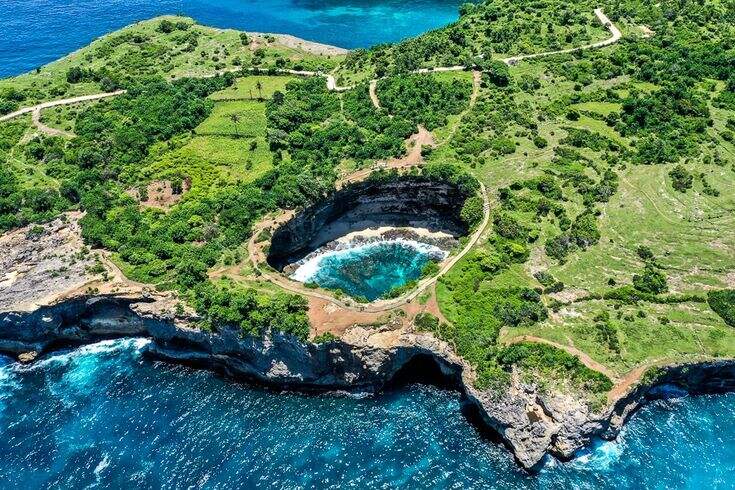
Nusa Penida is the largest of the three Nusa islands and has become a global sensation thanks to its dramatic limestone cliffs. It is a mandatory stop for any Island Hopping Bali tour, offering some of the most iconic viewpoints in the world.
The island feels wild and untamed compared to the mainland, with steep roads that lead to hidden coastal paradises.
📍 Southeast of Bali, accessible from Sanur or Padangbai harbor.
💰 IDR 500,000 – IDR 900,000 for a full-day organized tour.
👥 Best For: Adventure seekers, photographers, and nature enthusiasts.
🕐 Speedboats usually run from 07:30 AM to 05:00 PM.
✨ What Makes It Special: The prehistoric look of Kelingking Beach (T-Rex Bay) and the chance to snorkel with giant Manta Rays at Manta Point.
A visit here is physically demanding but incredibly rewarding. Most travelers choose to focus on either the West Coast (Kelingking, Broken Beach) or the East Coast (Diamond Beach) during a single-day trip.
- Nusa Lembongan: The Chill Outpost
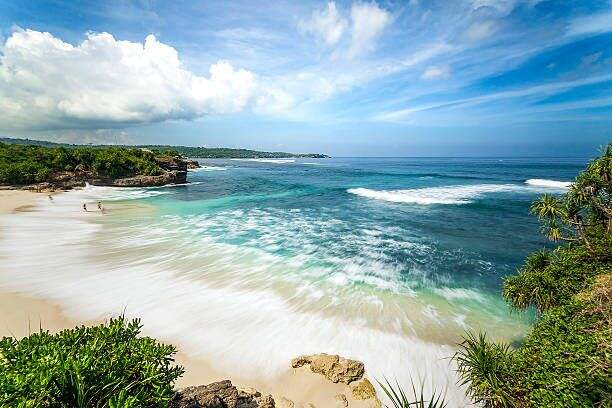
If Nusa Penida is about high-adrenaline sights, Nusa Lembongan is about total relaxation and a slower pace of life. This island is much smaller and easier to navigate, often explored via scooter or golf cart.
It is famous for its seaweed farms and its vibrant yellow bridge that connects it to the neighboring island of Nusa Ceningan.
📍Right next to Nusa Penida, a 30-minute boat ride from Sanur.
💰 IDR 350,000 – IDR 500,000 for return boat transfers.
👥 Best For: Couples, families, and those looking for a laid-back vibe.
🕐 Best visited between 08:00 AM and 06:00 PM for day-trippers.
✨ What Makes It Special: The dramatic Devil’s Tears tide pools where you can watch massive waves crash against the volcanic rock.
This island serves as a fantastic base for longer trips. Many travelers prefer to stay here overnight because it offers a great mix of boutique beach clubs and authentic local warungs.
- Nusa Ceningan: The Hidden Gem
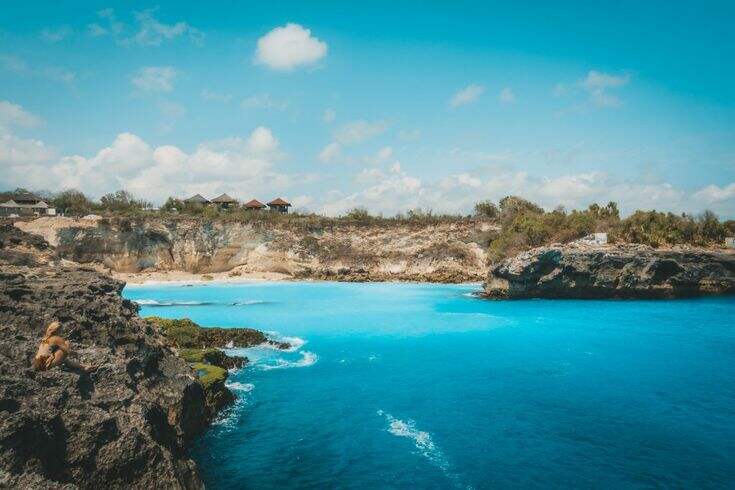
Connected to Lembongan by the iconic Yellow Bridge, Nusa Ceningan is the smallest of the three islands. It is often treated as an extension of a Lembongan trip, but it holds its own with secret lagoons and cliff-jumping spots.
The water here is a specific shade of electric blue that you won’t find anywhere else in Bali.
📍Between Nusa Lembongan and Nusa Penida.
💰 Free to enter via the bridge; activity prices vary.
👥 Best For: Cliff jumpers, explorers, and those looking for quiet beach bars.
✨ What Makes It Special: The Blue Lagoon, a stunning cove with milky-blue water that is perfect for photos and watching the tide.
Most visitors spend an afternoon here riding scooters along the narrow coastal roads. It is the perfect place to grab a coconut and watch the sunset from one of the many hammocks over the water.
- Gili Trawangan: The Social Hub
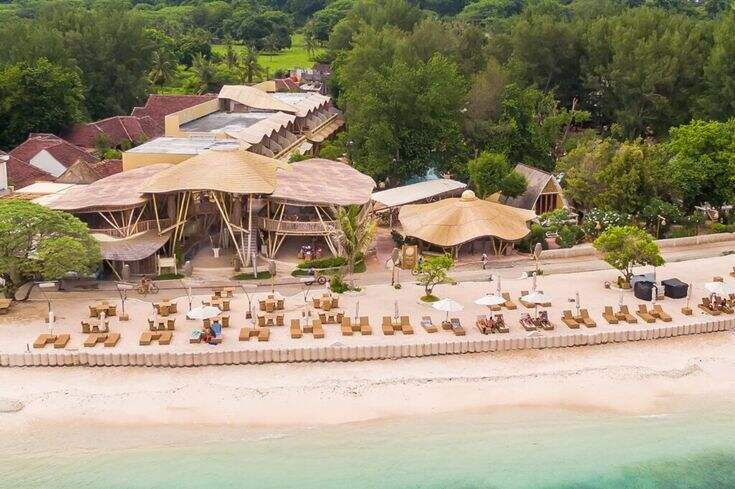
Part of the Gili Islands archipelago near Lombok, Gili T. is the “party island” that still retains an eco-friendly charm. There are no motorized vehicles allowed on the island, meaning you get around by bicycle or horse-drawn carriage. It is a staple for Island Hopping Bali itineraries that span 2 or 3 days.
📍Off the coast of Lombok, approx. 1.5 – 2 hours from Padangbai.
💰 IDR 400,000 – IDR 700,000 for a one-way fast boat ticket.
👥 Best For: Solo travelers, backpackers, and night owls.
✨ What Makes It Special: The unique “no engine” policy and the vibrant night markets serving fresh seafood.
While it is famous for its nightlife, Gili Trawangan also offers incredible snorkeling right off the beach. You can often see sea turtles swimming just a few meters from the shore in the early morning.
- Gili Meno & Gili Air: The Serene Sisters

For those who find Gili T. a bit too loud, Meno and Air are the perfect alternatives. Gili Meno is the quietest and most romantic, often called the “honeymoon island,” while Gili Air offers a perfect middle ground with a “hippie-chic” atmosphere. Both are essential stops for a snorkeling-focused island-hopping tour.
📍Situated between Gili Trawangan and mainland Lombok.
💰 IDR 20,000 – IDR 50,000 for local “island hopper” boats between the Gilis.
👥 Best For: Honeymooners, snorkelers, and peace-seekers.
✨ What Makes It Special: The underwater statues at Gili Meno, an artificial reef that has become a world-famous snorkeling spot.
These islands are best explored on foot. You can walk around the entire circumference of Gili Meno in about an hour, stopping at various turtle sanctuaries and beach shacks along the way.
Explore the Best Islands Further with SatuSatu
A successful island-hopping adventure starts with a smooth arrival and reliable transport to the harbor. Our SatuSatu Airport Transfer is designed to take the stress out of your arrival.
We offer a direct, air-conditioned ride from Ngurah Rai Airport to your hotel or directly to the Sanur Port, ensuring you don’t miss your boat departure. With fixed pricing and professional drivers, you can avoid the chaos of airport taxi haggling.
If you prefer a more tailored experience, the SatuSatu Exclusive Car Charter is the perfect way to reach the more distant harbors like Padangbai or Amed. You can book a car for 10 or 12 hours, allowing your driver to take you to the port in the morning and wait for your return in the afternoon.
This is especially helpful for day-trippers who want a guaranteed ride back to their hotel after a long day of sun and sea.
To complete your aquatic adventure, we highly recommend the Nusa Penida All-Inclusive Day Tour available through our platform. This curated experience covers your boat tickets, island transport, and a guided tour of the most famous cliffside spots, so you don’t have to worry about the logistics.
All bookings can be made directly on SatuSatu.com and we support a variety of local payment methods including BCA, Mandiri, OVO, DANA, and major credit cards for your convenience.
FAQ about Island Hopping Bali
What is Island Hopping Bali?
It is a travel activity where you visit multiple smaller islands surrounding Bali, such as Nusa Penida, Nusa Lembongan, and the Gili Islands. This usually involves using speedboats or local boats to travel between islands for snorkeling, sightseeing, and enjoying different beach atmospheres in a single trip or over several days.
Is a one-day island hopping tour enough?
A one-day tour is perfect for visiting the Nusa Islands (Penida and Lembongan). However, if you want to visit the Gili Islands from Bali, a one-day trip is very rushed due to the 2-hour boat ride each way. For the Gilis, a minimum of 2 days and 1 night is highly recommended.
Which harbor is best for departing to the islands?
For the Nusa Islands, Sanur Port is the most popular and modern choice. For the Gili Islands and Lombok, Padangbai is the most common departure point. Serangan Harbor is also an option for those staying in South Bali who want a more premium boat service.
Do I need to be a strong swimmer for island hopping?
Not necessarily. Most snorkeling tours provide life jackets and high-quality floating devices. However, you should always be aware of the currents, especially around Nusa Penida, which can be quite strong. Always follow the advice of your boat captain and local guides.
Are there ATMs on the islands?
Yes, you can find ATMs on Nusa Penida, Nusa Lembongan, and Gili Trawangan. However, smaller islands like Gili Meno or Nusa Ceningan have fewer options, and they can occasionally be out of service. It is always wise to carry enough cash for your basic needs.
What is the best month for Island Hopping Bali?
The best time is during the dry season, from April to October. During these months, the sea is generally calmer, the sun is out, and the underwater visibility for snorkeling and diving is at its peak.